Agronometrics in Charts: Blueberry imports expand at both ends of the US season
 Add Fresh Fruit Portal to Google
Each week, the series ‘Agronometrics In Charts’ examines a different horticultural commodity, focusing on a specific origin or topic and visualizing the trade market factors driving change. Check out our entire archive.
Blueberries have become one of the clearest examples of how trade can reshape a domestic market. Rising supplies from Peru, Mexico, and Chile have stretched the retail season out on both sides of the domestic harvest, meeting a wave of consumer demand and turning a once-seasonal fruit into a year-round staple.
The scale of that shift is striking.
Average annual imports nearly tripled, climbing from roughly 94,000 metric tons between 2010 and 2014 to about 278,000 metric tons between 2020 and 2025. But the growth has not been evenly spread across the calendar. It has concentrated at the edges of the United States season, where its competitive effect is most acute: average March imports more than tripled, April imports rose more than sevenfold, and October imports increased more than eightfold.
Altogether, volumes between March and May climbed 348 percent, while those reported between September and October surged 576 percent.

Imports remain comparatively low through the core summer harvest, when blueberry domestic supply is abundant. The more consequential change is that foreign fruit now reaches much further into the early- and late-season windows, the periods when domestic growers have historically relied on tighter supply and firmer fresh-market prices to recover their costs.
Blueberry imports pressuring domestic supplies
The result shows up clearly in market share. Despite rising domestic blueberry production, imports have captured a growing slice of an expanding market, climbing from 44 percent of domestic availability in 2005 to nearly 60 percent by 2018, and reaching roughly 65 percent between 2022 and 2024.
The category is larger and more accessible than ever, but also more competitive at exactly the moments when US producers have the least room to give on price.
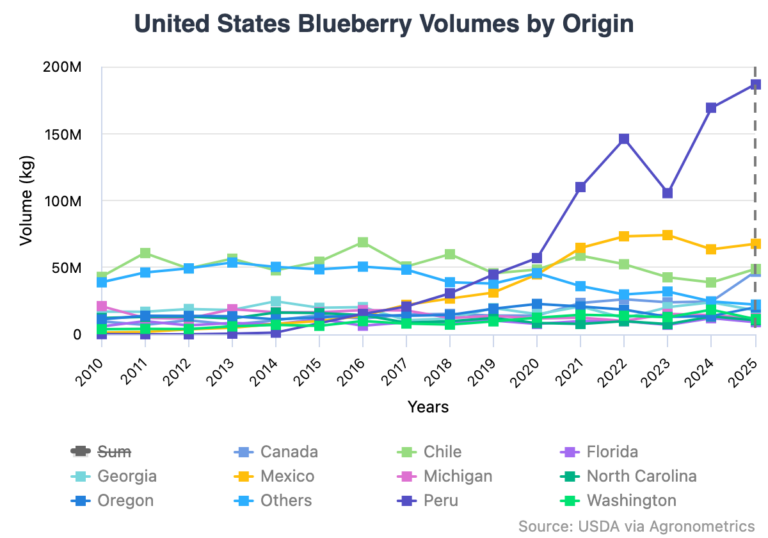
Source: USDA Market News via Agronometrics.
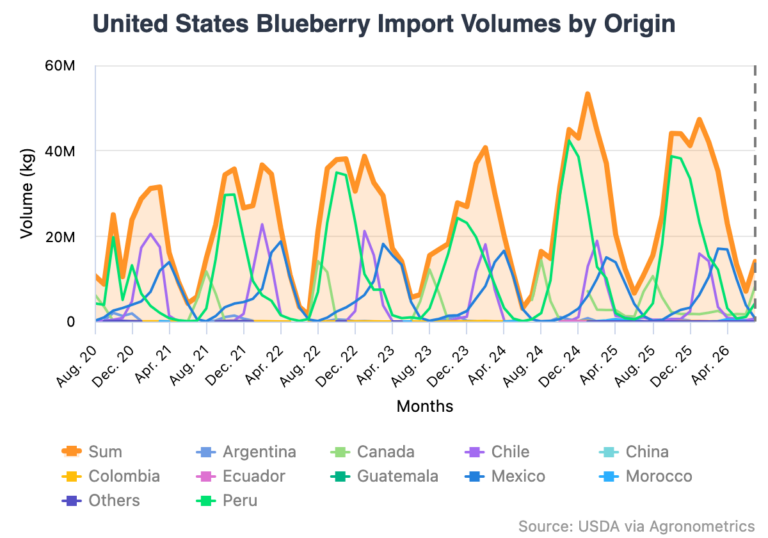
Source: USDA Market News via Agronometrics.
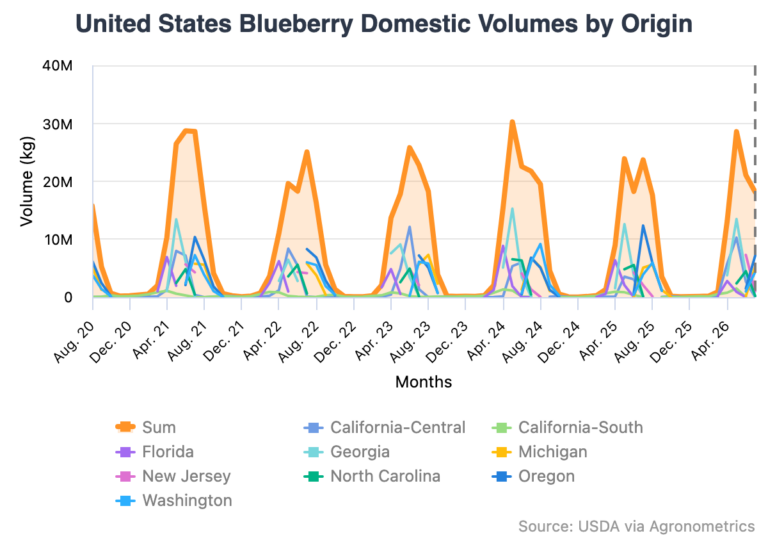
Source: USDA Market News via Agronometrics.
* Images are referential via Unsplash | Graph courtesy of Agronometrics
Related stories
Camposol kicks off its 2026/27 blueberry season in China and consolidates its Kai Péi Guǒ brand
Oppy expands Happy Berry line into premium blueberry category