Chilean kiwifruit expansion calls for a strategic overhaul. Here’s how to do it.
 Add Fresh Fruit Portal to Google
Writing and reporting by Macarena Bravo | Lee este artículo en español
The Chilean kiwifruit industry is experiencing one of its strongest periods in decades. However, rapid volume growth could present operational bottlenecks, Garcés Fruit Commercial Manager Álvaro Herreros warned.
Speaking at the International Fresh Produce Association (IFPA) Breakfast Seminar, held August 20 in Santiago de Chile, the executive highlighted the category's resurgence and addressed its key challenges.
The sector is forecasting a 17 percent year-on-year uptick in export volume, with industry estimates suggesting the numbers could double by 2035. But qualms remain.

Herreros noted that managing the expansion would call for significant capital investments across post-harvest infrastructure. Handling the projected volume alone will require up to 300 new controlled atmosphere cold storage rooms to sustain extended shipping windows.
The problem, he noted, lies in the current Chilean kiwifruit business model.
"Current incentives favor sheer volume production due to an essentially transactional commercial model where exporters compete to secure fruit. This can lead to higher crop loads per vine and less fruit selection," he said.
Flattening the Chilean kiwifruit curve
Currently, a significant proportion of the fruit is concentrated between April and May, which, if forecast volumes are attained, could entail serious operational hurdles, Herrero warned.
The executive stressed that the sector must move toward a more balanced curve, distributing approximately 35 percent of the volume in each of the first two trimesters and a larger share toward the final stretch.

The potential, Herreros said, is there. Chile has room to reach markets later, taking advantage of periods with lower fruit availability and better prices.
The United States market continues to serve as a vital driver of growth. By week 32 of the 2026 season, Chilean shipments to the US increased by 55 percent year-on-year. Garcés Fruit alone saw sales grow from $350 million in 2021 to $671 million in 2025, topping $750 million over the trailing 52 weeks as volume expanded from 125.7 million to 209.4 million pounds.
To capture full retail potential, Herreros noted that shippers must deliver consistent, ready-to-eat fruit. Unripe, overly firm kiwifruit forces consumers to wait days at home, slowing down repurchase rates.
New Zealand: The key competitor
Herreros also analyzed the global leader in the category, Zespri, identifying it as the main competitive benchmark for Chile.
For the expert, both producers possess a structure that allows them to align production, technical management, varietal development, commercialization, and marketing under a single strategy.
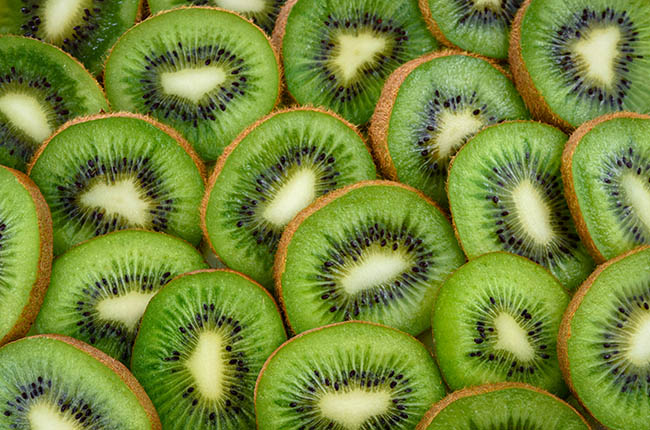
The New Zealand company has made progress in yellow and red kiwifruit and is also working on new green varieties, while Chile remains heavily concentrated on the Hayward cultivar. This reliance, Herreros said, constitutes a risk and makes it necessary to intensify research and development into new varieties.
Exporter fragmentation is also rising. While the top five shippers account for nearly 38 percent of volume, the total number of exporting firms grew from 130 in 2023 to 150 in 2026.
Herreros stated that the goal should not simply be to produce double the fruit, but to create a unified strategy to secure market absorption.
“The Chilean industry needs to leave behind a view focused exclusively on pounds and move toward a common strategy based on quality, differentiation, technology, and coordination across the entire chain,” he concluded.
*Main image is AI-generated.
Related stories
Chilean kiwifruit exports jump 16 percent as industry doubles down on quality