


By Betina Ernst, agricultural engineer and President at consulting firm Top Info Marketing.
A new Southern Hemisphere table grape campaign just ended, and despite Peru’s expansion, the rest of the industry is not doing so well. South Africa maintained its export levels from previous years, while weather disruptions forced Chile and Brazil to reduce them slightly.
Regardless of the varying results, table grapes are undoubtedly one of the most successful fruit categories in recent decades. But to achieve this status, varietal, logistical, productive, and commercial challenges had to be faced.
Some of these have been overcome; others remain.
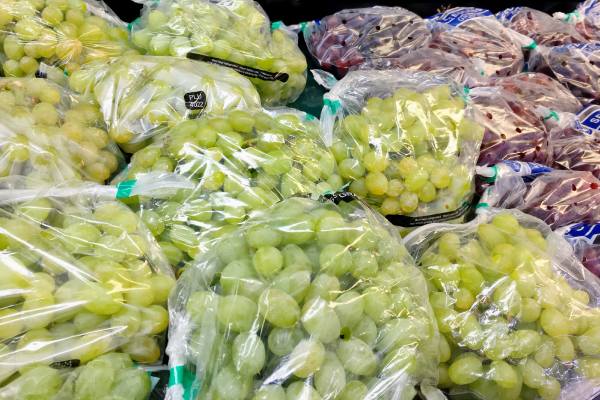
Commercial table grape production has experienced more varietal changes than any other category, to the point that current trade is monopolized by patented cultivars.
Investing in these varieties is no longer a competitive advantage, but rather a requirement to break into global trade. Some countries, such as Peru and South Africa, were ahead of the curve and renewed their portfolio in record time. Today, between 75 percent and 80 percent of what they ship abroad is protected by Plant Variety Rights (PVR).
In other countries, varietal renewal has been more difficult due to high costs, or because they already had large areas planted with traditional grapes. Such has been the case for Chile and some Mediterranean producers.
Historically, the two main markets for Southern Hemisphere table grapes have been the United States and Europe, receiving 90 percent of shipments.
However, growing competition and the expansion of local production have made shipping to these destinations more complex, reducing the possibilities for commercial growth.
Destination diversification is not an easy task, as demonstrated by data from the industry’s latest campaign. In the 2025/26 season, the US remained a main destination for Southern Hemisphere table grapes, receiving between 50 percent and 55 percent of Peruvian and Chilean shipments. Meanwhile, Europe absorbed the large majority of South African and Brazilian fruit—between 80 percent and 85 percent.
But the map is slowly but surely changing, with Asia and Latin America emerging as alternative destinations.
Even if countries in the Far East and Southeast Asia are more demanding in terms of quality and health, Southern Hemisphere producers are allocating increasing volumes of table grapes in China, Japan, South Korea, Thailand, Singapore, Indonesia, Vietnam, and Malaysia.
For its part, Latin America also presents a good opportunity. Such is the case of Mexico, which buys nine percent of Peruvian table grapes, while other countries, including Colombia, Argentina, Brazil, and Central America (Guatemala, Panama, Dominican Republic), are gradually increasing their imports.
The table grape category is one of the most perishable out there, which is why, despite considerable progress, logistics remains an ongoing challenge.
It’s easy to see why: It is not simple to maintain the cold chain and carry out phytosanitary treatments (fumigation, cold treatments, product application, etc), all while perfectly coordinating loading and unloading ports and avoiding ship delays.
Peru and Chile have made significant strides in reducing inherent complications, but South Africa, for example, is not as lucky. The country’s exporters depend on the Port of Cape Town, which has time and time again been ranked among the worst in the world. For them, logistics remains one of the greatest obstacles for the table grape business.
Like all other fresh produce categories, table grapes are feeling the impact of volatile, unpredictable weather, with increasingly frequent extreme events that can decimate crops in a matter of hours.
This presents a real headache for a sector that handles such a weather-sensitive product.
A good example is the Super El Niño threat in Peru, but the Inca nation is not alone: South Africa and India are experiencing heavy rainfall, which is flooding plantations and destroying access roads.
Solving for these unforeseeable variables requires major flexibility, including having more than one supplier.
The Southern Hemisphere table grape season is concentrated in about three to four months.
Peru registers its highest exports between October and January; South Africa ramps up shipments between December and February, while Chile sees its peak between January and April. These are very intense months of work and dedication.
Changing this schedule is not an option, as agro-climatic conditions required by the fruit make expanding the campaign difficult. Additionally, any delays or advances in the season don’t generally mean a clear commercial advantage, as there are other suppliers occupying the market at that time.
Only occasionally is it attractive to have very early or very late grapes, as would be the case with an early end to the Northern Hemisphere campaign (in California or Italy) or harvest delays (like in Mexico or Egypt).
Table grapes will continue to be a good business for Southern Hemisphere countries, but it requires constant effort, search for better alternatives, and increasing efficiency and productivity.
It is not a business that allows you to give up—you have to remain vigilant so that it remains attractive.
This story was originally published on Top Info’s website on June 18, 2026.
On August 12, 2026, Monticello Conference Center, in Santiago, Chile, will host a new edition of the Global Grape Convention.
Organized by Yentzen Group, Frutas de Chile, Provid, Global Grape Group, and Mexico Table Grapes, the event will bring together leading international experts in an unmissable day of strategic content, key trends, and high-level analysis to anticipate market challenges.
The convention is a unique platform to connect with buyers, distributors, exporters, and retail leaders, generating real business opportunities and strengthening networks in a highly specialized environment.
For more info, contact events@yentzengroup.com
Tickets available at globalgrapeconvention.com
Related stories
California table grape season: San Joaquin Valley fruit is ready for the relay
Chilean table grape sector finds balance as US demand shifts