



Mexican mango faces the great postharvest challenge: quality as a passport to conquer the world
 Add Fresh Fruit Portal to Google
by Francisco Seva Rivadulla, international agri-food journalist
Mexico is one of the world's major powerhouses in mango production. With an annual production exceeding two million metric tons, the country has privileged conditions to consolidate and expand its presence in international markets. However, the main challenge is no longer merely producing more, but ensuring that the fruit reaches the consumer with the highest quality.
In this context, postharvest management has become one of the key strategic challenges for the Mexican mango industry.
This view is shared by Jorge Alberto Osuna, a renowned researcher specializing in postharvest technology, now retired from the National Institute for Forestry, Agriculture and Livestock Research (INIFAP).
Image by Shutterstock
Osuna analyzed the current postharvest situation in Mexico, the mistakes still being made, international market opportunities, and technological advancements that could allow the Mexican industry to reach increasingly distant destinations.
"A physiologically immature mango will reach the market as a fruit lacking quality and can destroy the entire reputation built previously," warns the specialist.
Mango quality begins long before reaching the packing house
One of Osuna’s central messages is that postharvest management does not start when the fruit enters the packing house. In reality, the quality that ultimately reaches the consumer is built right in the field.
Pest and disease control, irrigation, nutrition, and overall orchard management are essential factors in obtaining fruit capable of competing in world markets.
However, according to the expert, one moment stands out as particularly decisive: the harvest.
A mango picked before reaching physiological maturity can develop flavor, texture, and quality issues during ripening. The risk is not merely losing a single commercial deal, but directly undermining consumer trust.

Image by Shutterstock
Conversely, fruit that remains on the tree for the appropriate length of time develops superior color, flavor, and nutritional profiles.
The complication arises when commercial pressures prompt early harvesting to meet immediate market demands.
Pressure from buyers can create situations where immediate availability is prioritized over quality.
When fruit is scarce, the market may demand higher volume even if production has not reached optimal maturity for harvesting. This forces decisions that, according to the specialist, can have negative repercussions across the entire supply chain.
An unripe mango may physically arrive at market shelves, but it will not necessarily deliver the taste experience expected by the consumer.
"If we deliver a fruit that doesn't taste like mango, a consumer might buy it once, but it could take weeks before they buy another mango," Osuna notes.
For this reason, responsibility must be shared among all stakeholders in the value chain: growers, buyers, exporters, and importers.
Image by Shutterstock
The goal should be to build a stable market founded on quality and consumer trust, rather than pursuing immediate profits that could harm the product's reputation in the medium and long term.
Europe and Asia: An opportunity for Mexican mangoes
Europe, Japan, the Middle East, and other Asian destinations represent prime growth opportunities for the Mexican industry. While these markets demand higher quality standards and more complex logistics, they can also command premium prices for differentiated products.
To reach these long-distance destinations, postharvest practices become even more crucial.
Air freight ensures fast arrival, but costs can be three to four times higher than sea freight. Consequently, developing technology to extend the commercial shelf life of mangoes is vital.
Osuna highlights that techniques currently exist to help fruit arrive in prime condition at markets located several weeks away.
Refrigeration remains one of the most effective tools for preserving mangoes during transit, but it is not the only one.
Relative humidity management is essential during long journeys. Mangoes have high water content, and excessive moisture loss can significantly impair their appearance and market value.
Image by Shutterstock
Edible coatings and technologies designed to reduce water loss and regulate the ripening process are also available.
Ethylene management is another critical factor. While this plant hormone is necessary for mangoes to ripen and develop color, texture, and flavor, controlling its activity commercially is required to prevent fruit from ripening prematurely.
Deploying technologies that inhibit ethylene action can significantly extend shelf life and facilitate shipments to far-off markets.
According to the expert, modern technology makes it possible to manage shipments lasting up to five or six weeks, provided the fruit possesses proper initial quality at origin.
Mexico has the potential to grow
The Mexican mango industry possesses exceptional conditions to sustain its growth.
Beyond fresh export opportunities, vast potential exists for developing value-added products, such as frozen mango, dried mango, purees, and juices.
At the same time, the domestic market remains hugely important. Mexico is one of the world's leading consumer markets for mangoes, and domestic demand represents a major opportunity for growers.
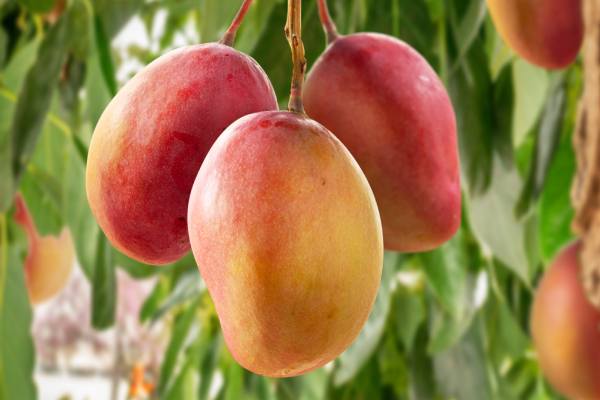
Image by Shutterstock
Osuna's primary conclusion is that Mexico possesses production, knowledge, technology, and experience. The key challenge lies in leveraging all these assets in a more coordinated manner.
Postharvest management will be one of the most vital tools to achieve this goal.
The future of Mexican mangoes will depend on the industry's capacity to improve organization, enhance training, eliminate premature harvesting, and commit to quality throughout the journey from orchard to consumer.
*All images are referential.
Related stories
Mexican mango output faces sharp decline amid weather extremes
Mangos México, the platform driving the sector’s transformation and international expansion