



Ruy Barbosa and the Chilean blueberry season: “There is an opportunity, but we must be responsible”
 Add Fresh Fruit Portal to Google
The new Chilean blueberry season kicks off with favorable expectations. The smaller Peruvian crop, hard hit by El Niño, creates opportunities for the Andean country to boost its presence in international markets and meet demand that could otherwise go partially unmet.
However, capitalizing on this scenario will require quality, commercial responsibility, and the capacity to tackle weather challenges, said Ruy Barbosa, President of the Blueberry Committee of Frutas de Chile and general manager of North Bay Produce in Chile.
“Peru has done a spectacular job that we are capitalizing on,” he said, noting that the country’s expansion in recent years has benefited the industry as a whole, boosting confidence among supermarkets, distributors, and international consumers.

This gap presents an attractive opportunity for Chilean exporters, but capitalizing on it is not as easy as it seems, as local orchards have also been hit by abnormal weather events. Rain and hail could compromise the fruit’s condition and its performance during transit, making it essential to maintain rigorous standards during selection and export.
“We can’t declare victory until our fruit reaches its destination,” Barbosa warned, insisting the industry must prioritize quality over chasing high demand immediately.
Traditional markets and new opportunities for Chilean blueberries
The United States and Europe will continue to account for a large portion of shipments, driven by what the industry leader describes as very strong demand. However, Chilean blueberries are also finding opportunities for diversification.
India and the Middle East are emerging destinations where Chile is ramping up commercial efforts, while Korea is an intriguing alternative, with shipments already underway since September, according to the industry leader.
Latin America also offers growth potential, but the industry still needs to develop a strategy to expand consumption and consolidate neighboring markets.

For Barbosa, one of his industry’s main strengths is precisely its broad market diversification, which allows supply to be distributed based on market conditions and specific requirements. That is why the Blueberry Committee is preparing promotional strategies in Chile, Argentina, and Brazil.
Varietal renewal: The bet on regaining competitiveness
Beyond immediate opportunities, the future of the Chilean blueberry industry is closely linked to adopting new varieties. The process gained momentum in 2020 but initially faced resistance because of high costs and production uncertainty.
Today, the landscape is changing. Varieties such as Suziblue and Blue Ribbon have shown strong results in Chile, while newer generations, including the Sekoya and MBO lines, are sparking growing interest among growers.
Barbosa notes that these varieties are proving they can compete on quality with supply from countries like Peru, Mexico, and Morocco, though he cautions that adopting them requires substantial investment and high-level technical management.
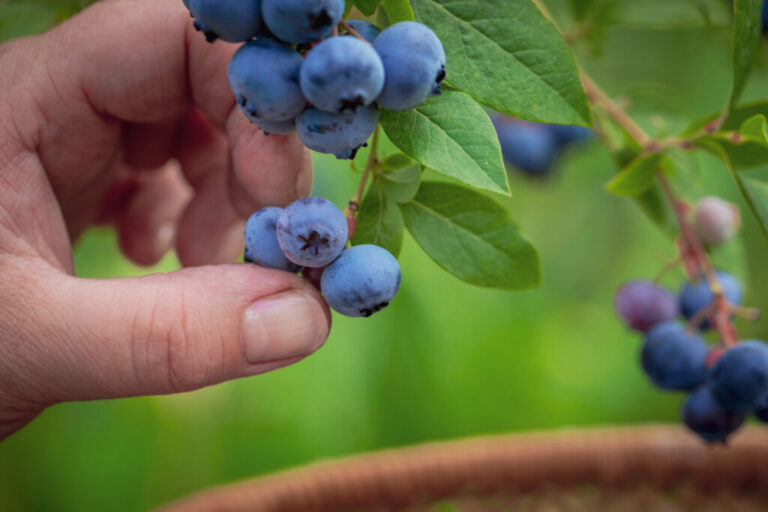
In this context, he projects that starting in 2027, Chile could reach a replacement rate of 3,000 acres to 3,200 acres per year with next-generation varieties. The results of this shift would begin to reflect more strongly in export volumes around 2028 and 2029.
Despite the challenges, Barbosa remains optimistic about the national industry’s future. In his view, Chilean growers have shown they can reinvent themselves, boost efficiency, and improve quality, though he acknowledges a competitive gap with Peru still exists.
In this regard, he notes that the frozen segment is a viable and attractive alternative for fruit that cannot guarantee a successful arrival in fresh export markets.
With an evolving product offering and favorable international demand, Chile enters a season that could strengthen its market positioning. The challenge will be to capitalize on this window without compromising buyer trust, while consolidating an industry that can compete on quality and complement South America’s blueberry supply.
This story was originally published on the International Blueberry Organization’s website on November 9th, 2026.
*Ruy Barbosa's portrait courtesy of the IBO. All other images are referential via Shutterstock.
Related stories
New Chilean blueberry varieties to score 39 percent export uptick