

Chilean agricultural industry assesses frost damage in cherry-growing regions
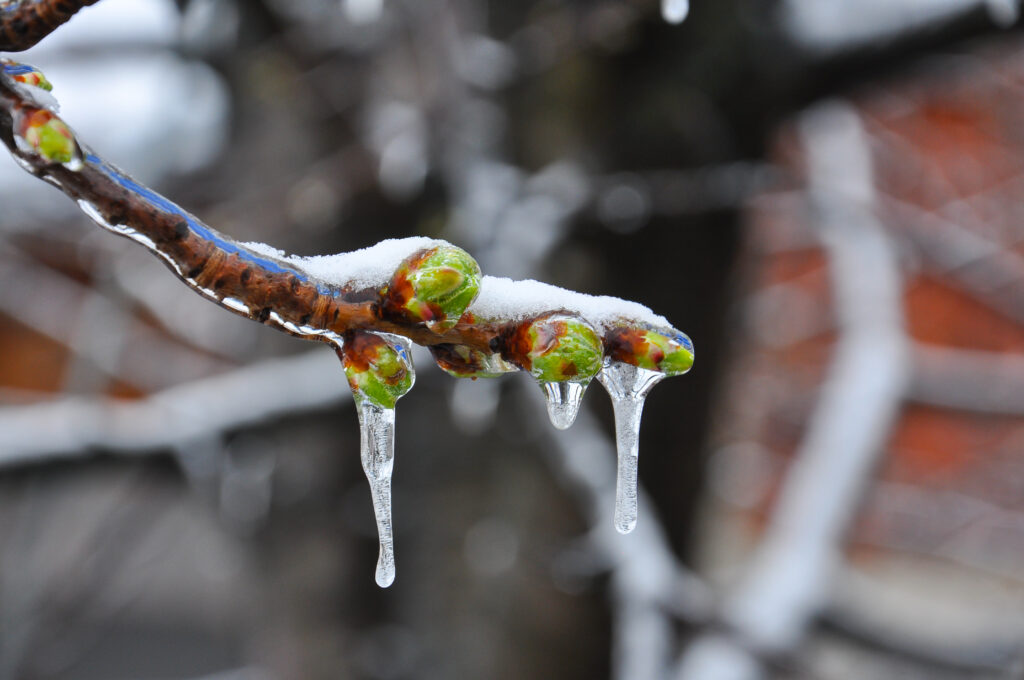

Last week, a cold front brought frost, wind, rain, and snow to a large area in Chile's fertile central valley, going from Coquimbo in the north to Biobío in the south. The timing was less than convenient, as cherry trees are going through a critical phenological phase.

Industry experts are still assessing the resulting damage, but they are warning of significant negative impacts on early varieties in parts of the O’Higgins region in the south, and the high-altitude areas of the Valparaíso region, near Santiago.
A critical growing stage for cherries
Currently, cherry cultivation in Chile is at a critical stage. In the north, growers are already seeing flowering, while in the central-south region, buds are beginning to develop. These two scenarios make cherry trees particularly vulnerable to frost.
To understand the weather's impact on cherry crops, FreshFruitPortal.com sat down with technical advisor and cherry specialist Walter Masman, who was clear in saying that "this is still a developing story."
There's no clarity regarding the real impact of the cold weather front, he says, as many producers have not yet reported damages, while others are in the process of assessing bud health conditions.
While no damage has been detected in the Coquimbo region, Masman has seen the opposite in the high-altitude areas of Valparaíso. Although this is a low-production area for cherries, he said the negative impact could be significant because the frost was "very powerful."
Similarly, while the weather did not cause major effects in the Metropolitan region of Santiago, the expert says that in O’Higgins, "there is a more affected sector, encompassing Graneros, Codegua, and Chancón."
Some varieties have been hit harder than others
For his part, Víctor Catán, President of the Chilean Fruit Federation (Fedefruta), shared reports he has heard from farmers with FreshFruitPortal.com, indicating specific damage to early cherries in the O’Higgins region, particularly to the Royal Dawn and Rainier varieties.
Catán added that he has spoken with producers in the southern Maule region, who indicated that in the areas of Curicó and Molina, they were able to adequately control the frost.
Assessing damage
Masman took the opportunity to offer some recommendations for growers amid this weather uncertainty.
"The most important thing is to quantify and take good samples to know what my damage is," he says.
He added that once producers gather their damage data, they can strengthen management and fruit set on their trees by applying synthetic auxins, products to improve flower viability, or biostimulants that help plants recover from significant stress.
Meanwhile, Catán said that "damage can still appear, more so because of the number of hours the frost lasted, rather than its intensity."
This is a developing story...
Related stories
Chilean cherry industry looking ahead: "The challenge today is big"



Subscribe to our newsletter