








Trade and tensions collide: The US and Colombia clash over tariffs
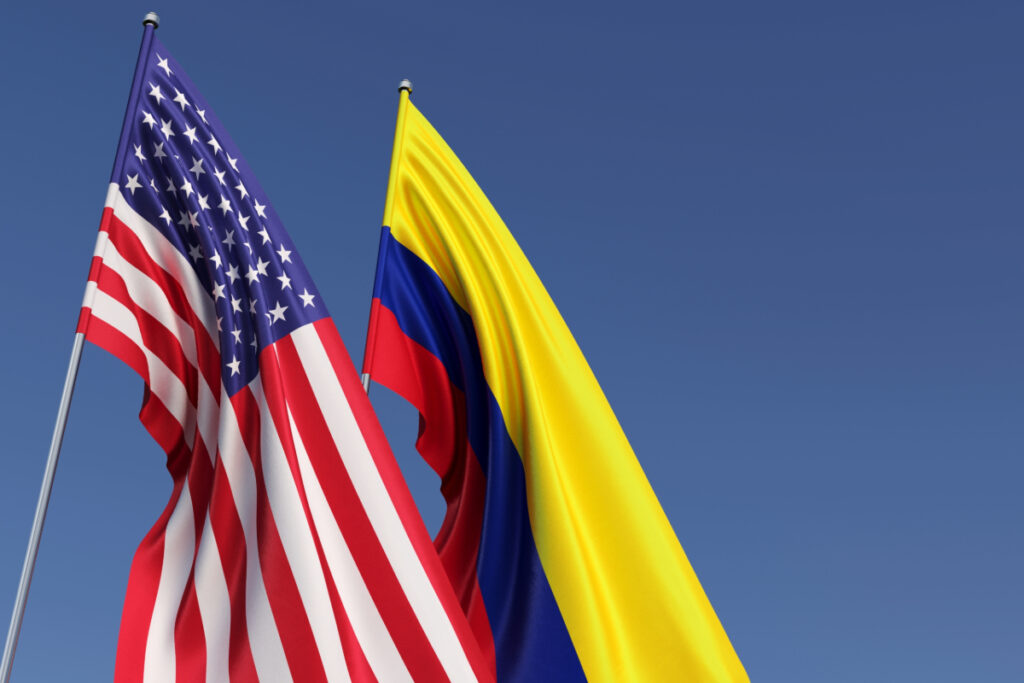



Tension between the United States and Colombia is escalating once again after days of back and forths between their presidents.

The two countries have long been major trade partners, but things have been rocky ever since the US struck a vessel on October 18 that, according to US Defense Secretary Pete Hegseth, was carrying “substantial amounts of narcotics.”
This Sunday, US President Donald Trump said he would halt any form of payments to the South American country through a post on Truth Social, and accused Colombian President Gustavo Petro of “encouraging the massive production of drugs.”
On Monday, as a response to the President’s statements, Colombia recalled its ambassador to Washington, and President Trump told reporters aboard Air Force One that, in addition to a payment halt, he is planning to impose higher tariffs on the country.
Petro responded by urging Trump to take a step in the opposite direction: remove tariffs on Colombia’s agricultural products and strengthen the trade relationship between the two economies. The Colombian president’s request aligns with the two countries’ bilateral trade agreement signed in 2006, which eliminates tariffs and other barriers in the trade of goods and services between Colombia and the US.
Food trade between the US and Colombia
Today, the US is Colombia’s main export destination and investment partner, accounting for over 35 percent of all exports. Meanwhile, the South American country is the US’s third-largest trade partner in Latin America.
In 2024, 40 percent of all Colombian produce exports were sent to the US. The main products were plantains (of which Colombia is a leading supplier), Hass avocados, and Tahiti limes, which together account for 81 percent of all Colombian exports to the US.
The US, a major importer of plantains, purchased around 75,000 tons of the fruit from Colombia last year. This is only a fraction of the 5.24 million tons of bananas the US imports, but it corresponds to 44 percent of all Colombian plantain exports.
Álvaro Ernesto Palacio Peláez, the Executive President of Colombia's Horticultural and Fruit Association (Asohofrucol), said exports haven't slowed despite the 10 percent levy the US imposed on the commodities.
"Comparing the first half of 2024 with the first half of 2025, Colombian exports to the US have grown over 46 percent, reaching a total of $277 million," he explains.
Palacio Peláez attributes the lack of variation to the optimization of production and logistics costs carried out by both producers and trading companies. But the executive is clear: this resilience doesn't mean producers, packers, and exporters in all crop categories won't be critically impacted by higher tariffs.
"Even if they adjust to the higher prices and implement new strategies, the risk Colombian exports to the United States face is uncontrollable, because they are competing against the entire world."
Producers have come to terms with the 10 percent levy, but Palacio Pelaéz said they have definitely felt the brunt of higher costs.
"Purchase prices paid to farmers have shown a downward trend under the new costs," he said. "Now the concern is even greater if tariffs increase, since prices could fall so low that production costs cannot even be covered."
The industry representative is clear in stating that this issue affects not only small growers but also the heads of international trading companies. Palacio Peláez explained that big producers "have sales programs contracted with US importers and must fulfill their commitments at all costs." Additional tariffs could put their numbers in the red.
Best case scenario, he said, the countries come to an agreement that strengthens commercial ties, ensuring the positive trade momentum continues to flow.
The cost of trade tensions
The mandataries have been engaged in disputes since the beginning of the year, mainly over tariffs. Trump initially threatened Colombia with a 25 percent levy in January after its president barred two US military planes carrying deported migrants from landing in the country. As a response, Petro threatened to impose the same levy on the US.
Things quickly calmed down after the White House released a statement saying the government of Colombia had “agreed to all of President Trump’s terms” and that the “tariffs and sanctions will be held in reserve.”
Still, Colombia did not escape the 10 percent baseline tariff levy Trump imposed on most trade partners. Now, Colombia has once again become a target for the White House since the maritime incident back in mid-October.
According to Hegseth, the boat was linked to a Colombian guerrilla group and was “traveling along a known narco-trafficking route.” Petro pushed back and criticized the strike by saying the US government committed murder and violated Colombia’s sovereignty in its territorial waters.
Trump told reporters at the White House that he would specify how much tariffs would increase on Monday, October 27th, but has not yet provided a specific number.
Petro, on the other hand, said he had a “long, frank, and constructive” meeting with the US chargé d’affaires in Colombia, John McNamara, and the Colombian ambassador in Washington, Daniel García-Peña.
Related stories:
A ripening opportunity: US trade shift could boost Colombian fruit exports






Subscribe to our newsletter