

Mexican mango momentum rolls on in the US, EMEX president says

Lee esta noticia en Español. | Writing and reporting by Macarena Bravo.

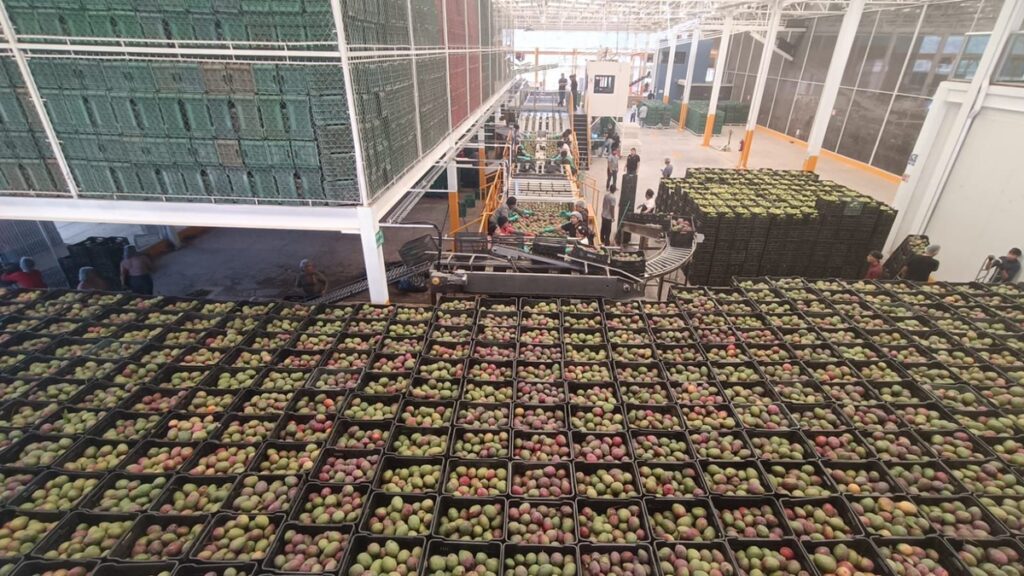
Mexican mango exports continue to flow overwhelmingly into the United States. In fact, American demand is driving the sector's growth, says José Ángel Crespo Durán, who was recently reelected president of the country’s Association of Mango Export Packers (EMEX) for the next two years.
Between 90 and 92 percent of Mexican mangoes go into the US market, a result of geographic proximity, production capacity, and consistent retail demand, Crespo tells FreshFruitPortal.com.
“Mango is no longer an occasional product. Today, it is a product that consumers demand all year round,” he said.
From family orchards to US shelves

EMEX President José Ángel Crespo.
Crespo comes from a multigenerational mango-growing family. His father began producing mangoes for export in the mid-1980s, initially targeting Europe, where phytosanitary requirements were less complex than in the US market at the time.
This decision laid the foundation for what is now the Crespo Group, a vertically integrated operation with production fields and packing houses in Mexico, and marketing and distribution operations in the US.
“Since we were children, we have been involved in the fields, orchards, and packing houses,” Crespo said. Along with his three brothers, he took on different responsibilities within the business, covering production, sourcing, regional operations, and international marketing.
Today, Crespo is based in McAllen, Texas, where he oversees distribution and marketing to the eastern US while remaining closely connected to operations in Mexico.
“When we talk to customers, they are talking directly to a producer,” he adds
Climate pressures continue to shape production
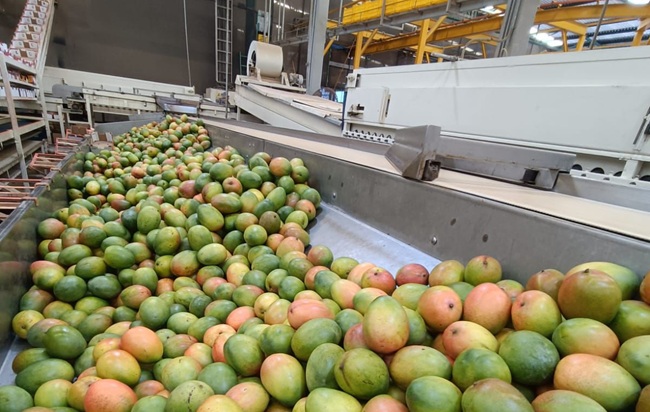
Crespo identifies climate change as one of the most significant challenges facing Mexico’s mango sector. Temperature fluctuations, water shortages, and changing rainfall patterns have led to shifts in harvest timing, smaller fruit sizes, and, in some cases, lower yields.
These conditions have forced growers and exporters to continually adjust agronomic practices and commercial planning. Despite those pressures, Mexico remains one of the world’s leading mango suppliers and the largest source of the fruit for the US market.
Crespo says US consumers have increasingly incorporated mangoes into their regular diets, with expectations of consistent availability. According to him, retail gaps now generate complaints, underscoring how well-established the fruit is.
He attributes this trend to promotional efforts, consumer education, and supply chain coordination to maintain quality and continuity.
EMEX is looking beyond the US
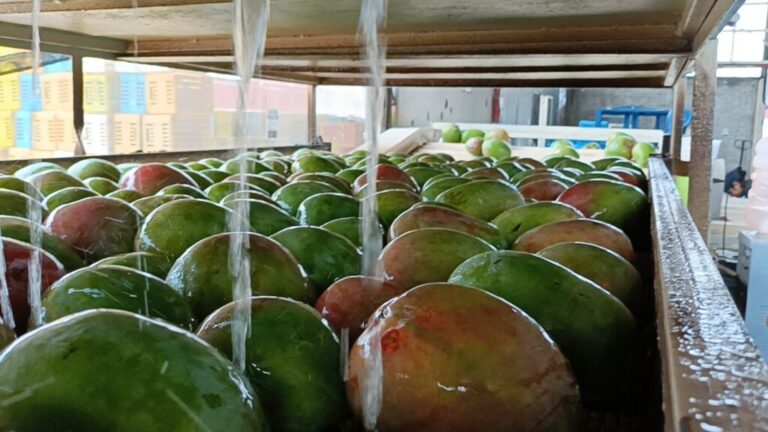
While the US remains the industry’s primary destination, EMEX is pursuing market diversification. Crespo says Europe, the Middle East, and Asia offer opportunities, though logistical hurdles and regulatory requirements continue to limit volumes.
Japan and South Korea already import Mexican mangoes, while China remains inaccessible due to the absence of phytosanitary and trade agreements.
“They are interesting and large markets, but they require conditions that are not yet in place,” Crespo explained.
His reelection comes as EMEX continues to navigate changes in its relationship with the US Department of Agriculture, including adjustments to inspection schedules and times, as well as working conditions at Mexican packing houses. Crespo says these changes require ongoing binational coordination.
During his new term, EMEX plans to advance a long-term initiative to create a dedicated marketing department to provide members with data, analysis, and decision-making tools.
“This is not something that can be achieved immediately, but rather it involves building a structure that has continuity and benefits the industry in the long term,” Crespo says.
Organics, processing, and new varieties
Organic mangoes from Mexico continue to grow steadily, driven mainly by US consumers who prioritize certifications, traceability, and good agricultural practices. Crespo described the segment as niche relative to conventional volumes but said it shows stable, long-term development.
Processed mango products have also expanded rapidly in Mexico, particularly frozen and dehydrated, with new processing plants opening across several production regions. EMEX does not directly represent processors, but Crespo acknowledged the segment’s importance as an alternative outlet for growers.
EMEX is also working on programs to introduce new mango varieties and expand supply, differentiate Mexican offerings, and respond to changing consumer preferences. According to Crespo, the process requires careful evaluation of regional adaptability, postharvest performance, and market acceptance.
Looking ahead, Crespo said his company supplements Mexican production with mangoes from Peru, Ecuador, and Brazil to meet customer demand for a year-round supply.
“We hope that 2026 will be a great season, that the problems of previous years will be reversed, and that all players in the chain will have a positive year,” he concludes.
Related articles
Mango exporters overwhelmingly back National Mango Board with highest approval rate in 20 years
Mexican mangos’ biggest challenge remains market diversification


Subscribe to our newsletter