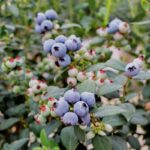
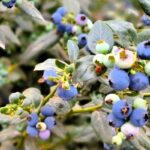
Bubblegum pink blueberries are disrupting an increasingly price-pressured Chinese market
 Add Fresh Fruit Portal to Google
Written and reported by ChinaFruitPortal.com staff | 阅读这篇中文报道
China’s blueberry market is currently experiencing what could be described as two extremes.
Conventional blueberry prices continue to decline, with local media highlighting deals such as “10 yuan for two boxes” (approximately $1.40). At the same time, pink blueberries priced as high as 400 yuan per jin (about $55 per pound) have surged in popularity.
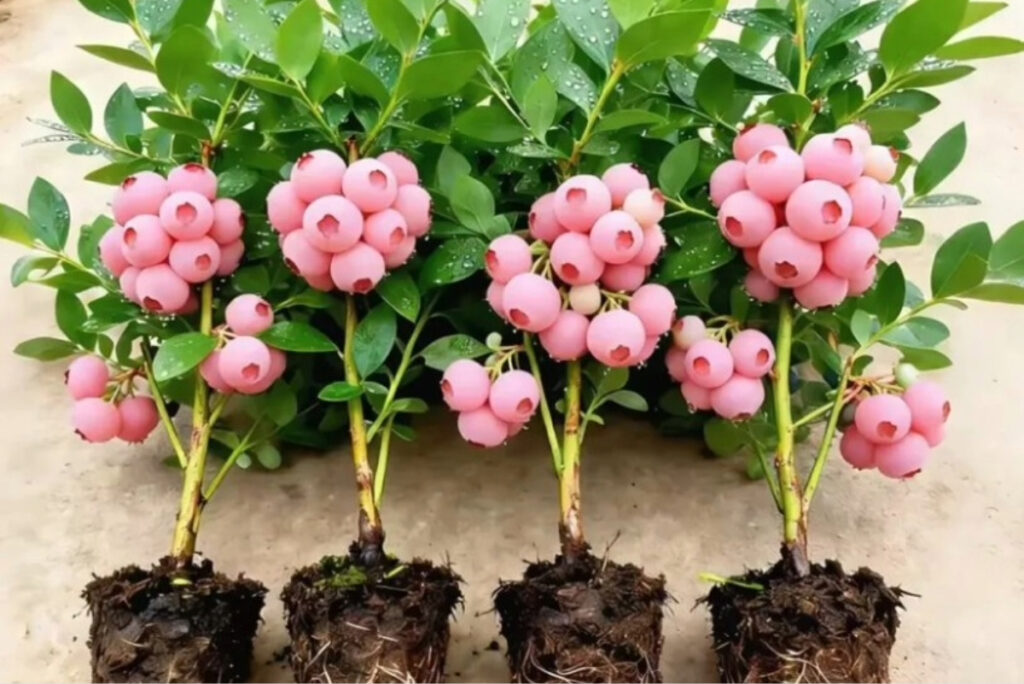
With their striking rosy appearance, pink blueberries quickly went viral in China. Many users commented that they never imagined blueberries could be pink, while others described them as the industry’s newest “visually striking fruit.”
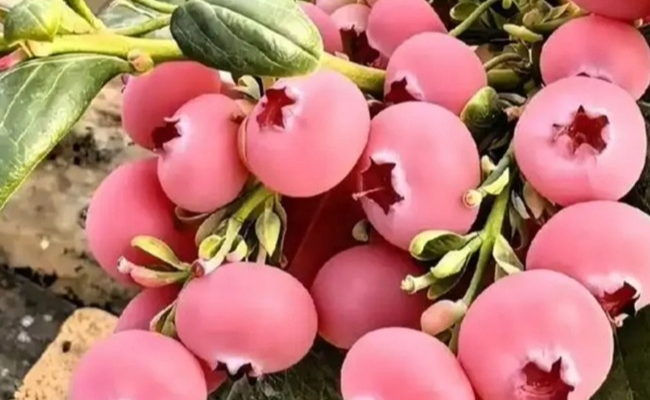
According to a report by local news outlet Beijing News, pink blueberries are indeed a real variety. The most commonly mentioned type in the local market is “Pink Lemonade” (粉红佳人), a southern highbush blueberry suitable for both ornamental and edible use, developed by the United States Department of Agriculture in 2006.
Where do the show-stopping pink blueberries come from
Pink blueberries were introduced to China for cultivation trials in 2012. However, challenges with adaptation, management, and market acceptance have prevented large-scale production.
Alongside Pink Lemonade, other known pink varieties include US cultivars such as Pink Popcorn (粉色爆米花) and Pink Cosmo (粉红宇宙), as well as the locally developed Fen Dai (粉黛. All of these varieties are grown in small-scale trials or regional experimental cultivation, and have yet to enter mass commercial production.
He Jiawei, Director of the Alpine Economic Plants Research Institute at the Yunnan Academy of Agricultural Sciences, told local news outlet China Daily that the pink color is a natural result of blueberry breeding, not genetic modification or artificial coloring. These varieties also have strict requirements for soil acidity and organic matter content, limiting suitable growing regions.
Despite growing attention on social media, fresh pink blueberries are rarely seen on major e-commerce platforms or in brick-and-mortar supermarkets. Only a few consumers claim to have purchased the actual fruit, which costs 10 times as much as traditional blueberries.
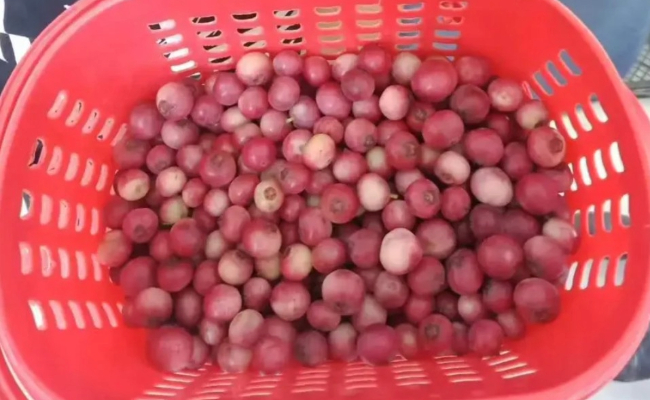
Small-scale, experimental plantings exist in regions such as Yunnan and Hangzhou, but only ensure a limited supply, which, combined with high production costs, results in extremely high prices. The situation is compounded by the fruit’s thin skin, which leads to poor storability and significant logistical losses during transit.
Experts also noted that naturally ripened Pink Lemonade blueberries are not uniformly pink, as they often show pink and purplish tones, with white or greenish areas near the stem.
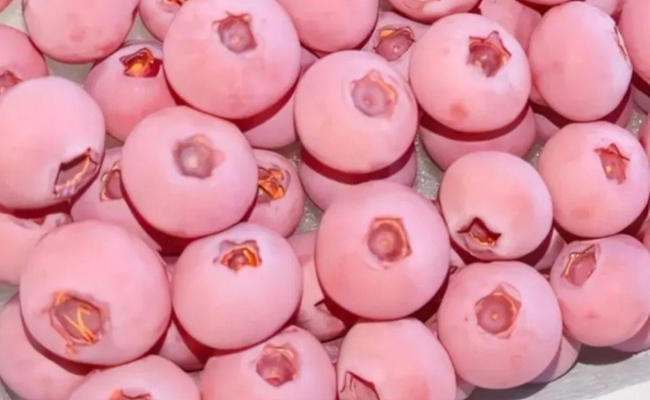
However, despite the hype and virality, the pink blueberry market has been flooded with either false or questionable claims. Market experts warn that images circulating online showing uniformly bright pink berries are likely edited or retouched, while health claims saying pink blueberries contain “five times more anthocyanins” than conventional varieties have also been explicitly debunked.
Specialists emphasized that anthocyanin content—water-soluble plant pigments responsible for red, purple, and blue colors in many fruits—does not directly equate to nutritional value. In fact, some pink varieties may be less nutrient-rich than traditional blueberries.
Growing pink blueberries
In sharp contrast to the scarcity of fresh fruit, pink blueberry plants are selling strongly on e-commerce platforms. Some sellers claim they can be grown nationwide, produce fruit in the first year, and achieve a 95 percent fruiting rate.
On one product page, seedlings between three and 15 years of age are marketed as “virus-free tissue culture plants that fruit in the first year,” with prices up to 627 yuan (approximately $87). The listing recorded more than 900 views and over 500 add-to-cart clicks in the past seven days.
However, most customer reviews only show plants sprouting, with no real images of mature plants bearing pink fruit.
Experts warn that growing pink blueberries in home pots is quite difficult. Varieties such as Pink Lemonade largely belong to the Rabbiteye group, which requires other self-pollinating plants to produce fruit, and often exhibit low fruit set and unstable yields. Many sellers market common or unimproved blueberry seedlings as pink varieties, which often result in plant death or specimens that produce only leaves, not fruit.
Industry players note that the current popularity of pink blueberries shows clear signs of marketing hype. With immature varieties and an incomplete supply chain, excessive promotion could disrupt the market. Consumers are advised to approach the trend cautiously, avoiding overpriced fruit or attempts to grow it solely for novelty.
For the industry, pink blueberries may contribute to diversification, but they are unlikely to become a mass-market product in the short term.
*All images via Beijing News.
Related stories:
Chilean blueberry exports exceed projections amid a transformative varietal renewal process