


Writing and reporting by Macarena Bravo | Lee esta noticia en Español.
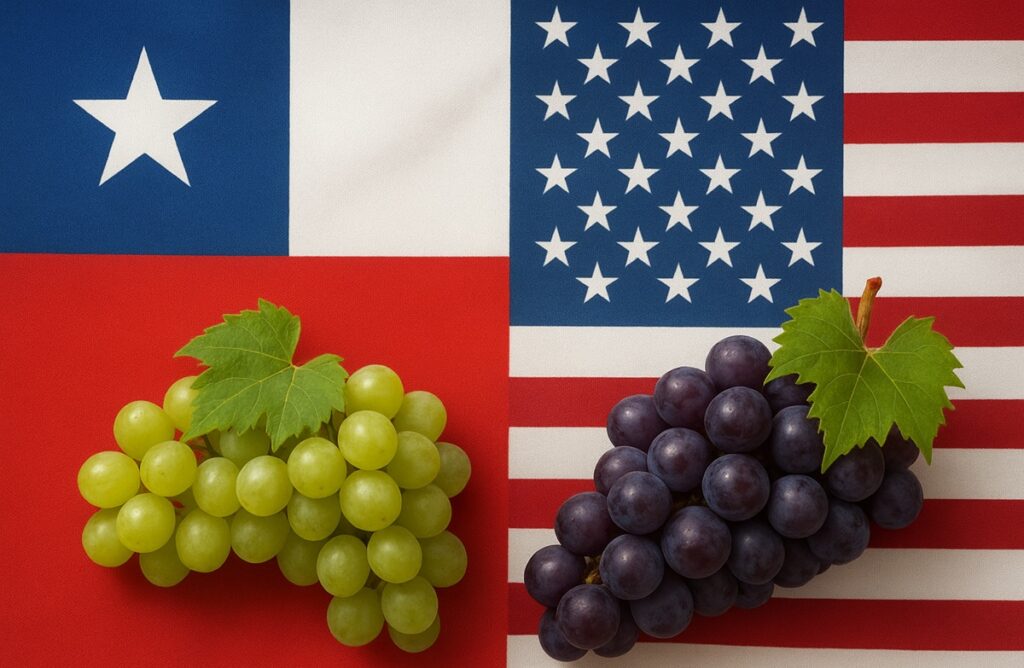
Lower-than-expected cluster weights and heavy rains took a toll on export volumes for the 2025/26 Chilean table grape season. However, industry leaders say improved supply discipline and stronger alignment with US demand helped stabilize the market during a challenging year.
By week 17, Chile had exported about 57 million boxes of table grapes, after early projections of 66.5 million boxes were revised downward several times during the season.
Despite the smaller crop, exporters reported relatively stable market conditions in the US, the Chilean fruit’s top destination.
“There was never a weekly surplus that disrupted the US market,” said Rafael Rodríguez, President of the Chilean table grape research commission, Uvanova.
Growers entered the season with optimism after favorable spring weather supported vine development, raising expectations for a large crop.
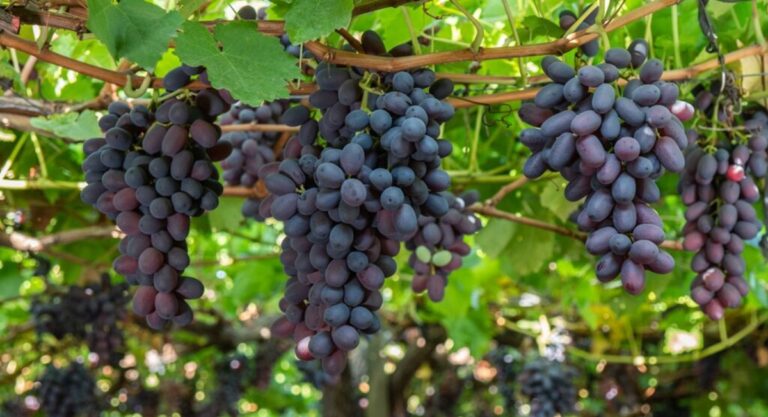
But as harvest began in northern regions, growers found actual volumes lagged behind projections. Rodríguez said an extended flowering period produced bunches with lower-than-expected weight.
“Berries looked nice, with good size, but were somewhat more uneven, and that ended up skewing the cluster weight,” he said.
The season faced a larger setback after two major rain events struck southern production areas, particularly in the O’Higgins region.
Andro Vidal, commercial manager of the table grape program at exporter Subsole, described the storms as a major blow for some growers.
“In the days that followed, entire harvests were lost, orchards were devastated, and fruit was spoiling rapidly,” he said.
Production concentrated north of O’Higgins escaped the weather events relatively unscathed.
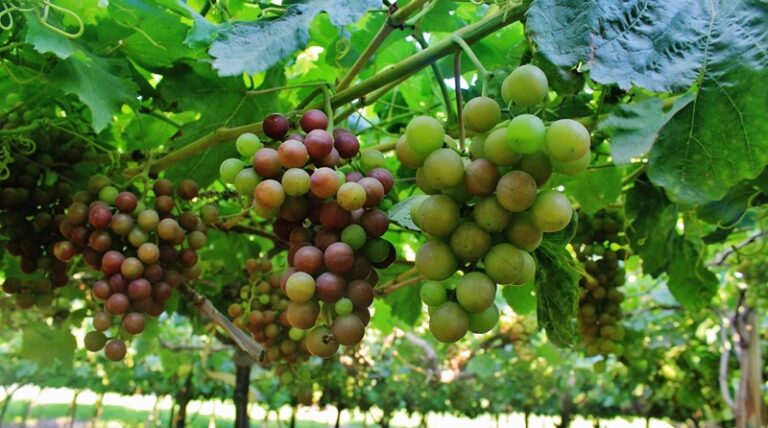
The US market continued to favor green grape varieties during the season, accelerating a long-term shift away from red and black grapes.
“Previously, the market consisted of about 50 percent white varieties and 45 percent red. Today, we’re closer to 60 percent white, 35 percent red, and just one percent or three percent black,” Rodríguez said.
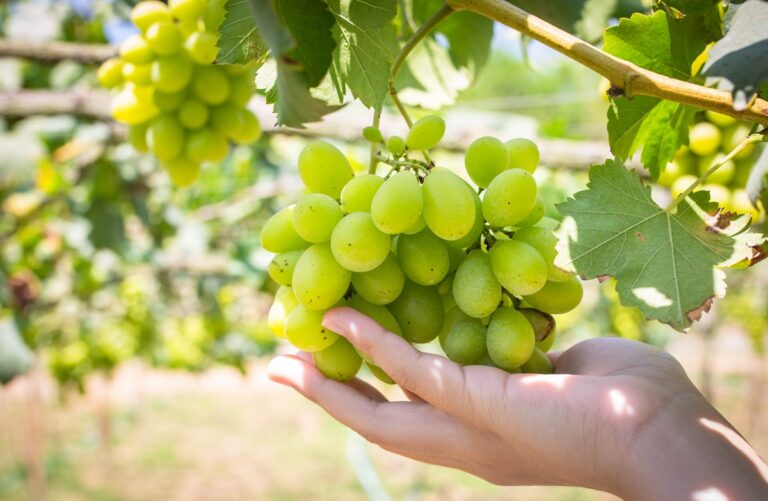
Vidal said importers adjusted orders accordingly during the season.
“There were times when importers asked us to slow down on red and black varieties because consumption was much more focused on green ones,” he said.
The transition has coincided with Chile’s broad varietal renewal. Rodríguez said legacy varieties such as Thompson Seedless and Superior have nearly disappeared from export programs, replaced by newer patented varieties including Sweet Globe, Autumncrisp, and Allison.
Rodriguez and Vidal agree that the pace of new plantings has slowed as growers face higher establishment costs and tighter margins for error.
The Subsole executive estimated that planting a new vineyard can cost about $12,140 per acre before adding technologies such as plastic covers.
“Making a mistake with a variety today is extremely expensive,” he said.
Both executives said the industry now focuses more on operational consistency, especially given the logistical challenges tied to mandatory fumigation requirements for US-bound fruit.
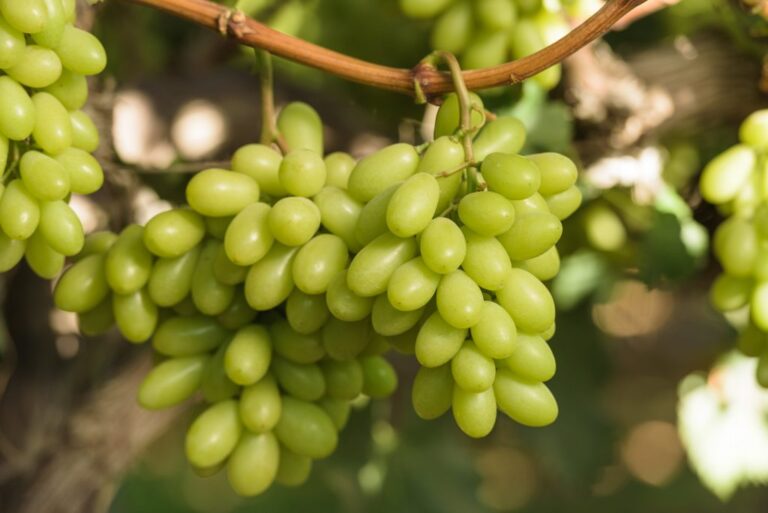
“We have to improve harvesting, packing, postharvest handling, and logistics to be more consistent as a country,” Rodríguez said.
Vidal added that growers continue to evaluate new varieties cautiously while prioritizing proven performers and meeting established market demand.
Rodríguez said the industry’s restructuring phase has largely concluded, with the next challenge centered on execution.
“We have already carried out a very successful restructuring of our supply. Now the challenge is to continue improving quality, condition, and consistency,” he said.
Chilean table grape imports into the US had previously been approved under the Systems Approach, which replaces methyl bromide fumigation with mitigation measures at the point of origin. This, industry experts agree, preserves fruit quality and condition.
However, the measure was officially suspended in September of last year, following a lawsuit presented against the US Department of Agriculture by the California Table Grape Commission, the National Grape Research Alliance, and the California Table Grape Export Association.
*All images are referential.
On August 12, 2026, Monticello Conference Center, in Santiago, Chile, will host a new edition of the Global Grape Convention.
Organized by Yentzen Group, Frutas de Chile, Provid, Global Grape Group, and Mexico Table Grapes, the event will bring together leading international experts in an unmissable day of strategic content, key trends, and high-level analysis to anticipate market challenges.
The convention is a unique platform to connect with buyers, distributors, exporters, and retail leaders, generating real business opportunities and strengthening networks in a highly specialized environment.
For more info, contact events@yentzengroup.com
Tickets available at globalgrapeconvention.com
Related stories
DOJ withdraws USDA appeal, ratifying ruling against Systems Approach for Chilean table grape exports
USDA fights Systems Approach suspension for Chilean table grape imports