




Fresh-cut produce market set for $231 billion boom by 2034
 Add Fresh Fruit Portal to Google
The global fresh-cut produce market is undergoing a structural shift, says marketing insight firm DataIntelo. Recent data reveals an evolution transforming the market from a niche convenience offering to a primary pillar of the global fruit and vegetable supply chain.
Valued at $142.6 billion in 2025, the fresh-cut produce market is exhibiting robust growth, with a projected CAGR of 5.5 percent through 2034, putting it at an estimated $231 billion.
The industry’s expansion is shaped by distinct regional drivers across the United States, Asia, and Latin America.
As consumer demand for "ready-to-eat" (RTE) formats matures, the industry is moving beyond basic slicing toward advanced post-harvest technologies that preserve organoleptic quality and extend shelf life without chemical additives.
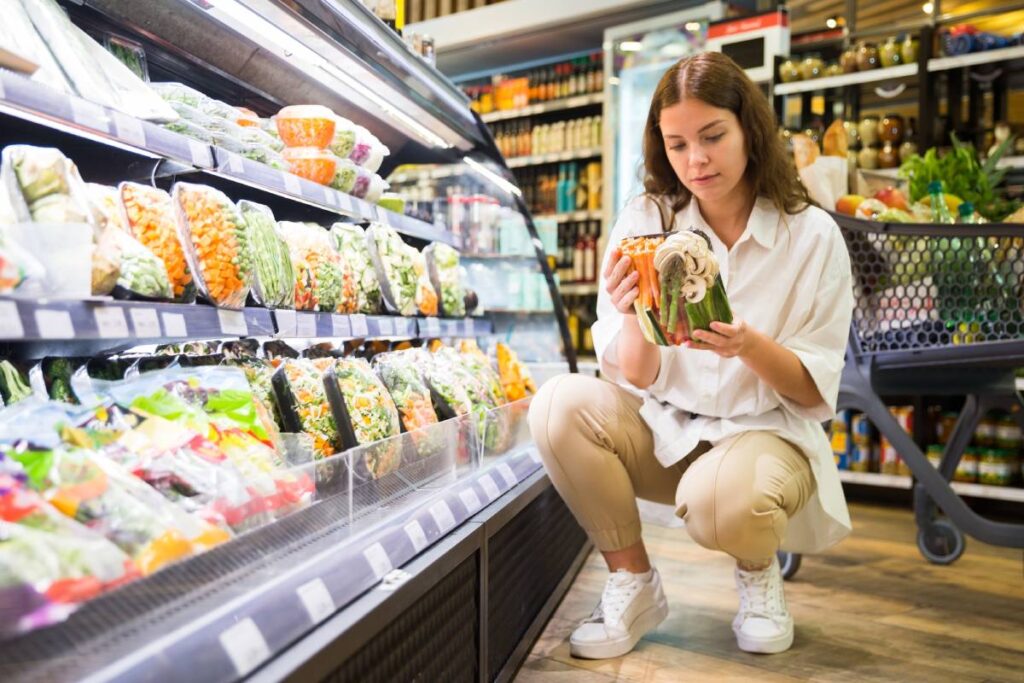
Pre-cut veggies are leading the way
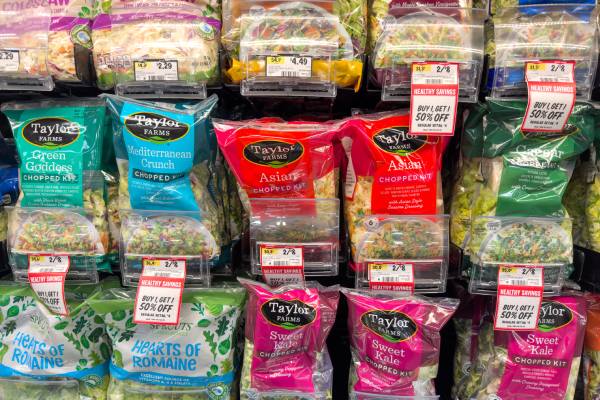
Vegetables remain the dominant category within the product mix, securing a 34 percent market share in 2025. This is driven largely by the integration of pre-cut greens and meal-prep kits in retail and foodservice sectors.
The intersection of convenience culture and a sweeping health and wellness trend in developed countries is driving demand for these products, satisfying two essential needs in modern life.
Consumers not only want "ready-to-eat" and "ready-to-cook" formats after a hard day’s work, but they also want that good-for-you factor—fresh, nutrient-dense snacking and meal alternatives over processed foods.
Likewise, the category has expanded significantly in foodservice environments, where pre-cut produce helps mitigate rising labor costs and reduce preparation time in restaurants.
The United States: From convenience to "functional fresh"
North America continues to lead the global fresh-cut produce market, accounting for nearly 37 percent of total market revenue in 2025. This dominance is supported by sophisticated cold-chain infrastructure and high consumer adoption rates.
But a closer look reveals something else, says DataIntelo, as the US fresh-cut market is no longer driven solely by time-starved consumers. A significant trend is the rise of value-added growth, particularly in the fruit-and-yogurt parfait and meal-kit segments.
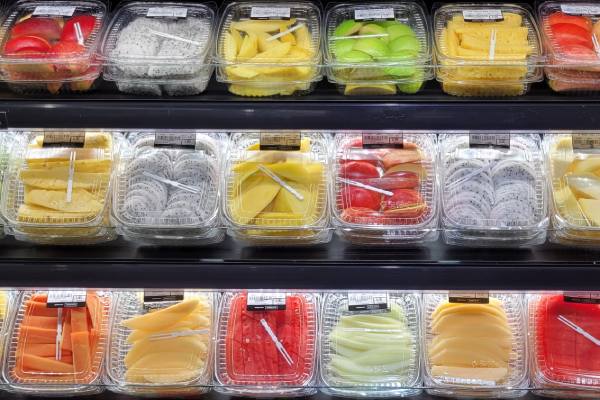
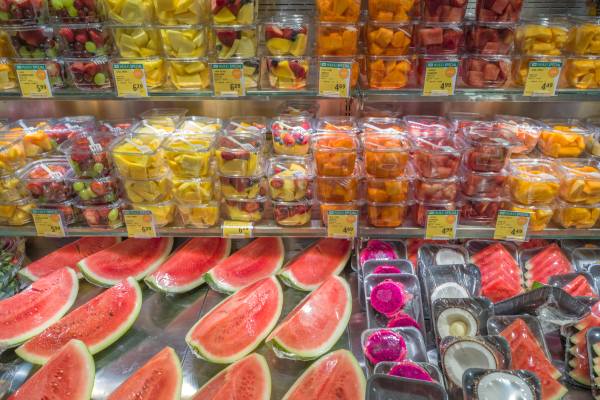
Market data suggests a shift toward "Fruit as the main," where fresh-cut fruit currently holds a 38 percent market share in North America's value-added produce segment.
On the supply side, US retailers are increasingly investing in localized, high-tech greenhouses and controlled-environment agriculture to reduce the "farm-to-processing" window. This ensures freshness for consumers and also helps support sustainability claims anchored in the think-global-buy-local trend.
Fresh-cut produce is booming in Asian urban centers
While the US is the largest market for fresh-cut produce, Asia is the fastest-growing, with China experiencing a 6.2 percent compound growth rate—among the highest of tracked global markets. DataIntelo projects Asia Pacific to be the fastest-growing market globally, with a nearly 7 percent CAGR.
This is primarily fueled by a massive shift from informal wet markets to modern retail channels where cold-chain integrity is guaranteed.
Just like in the US, Asian consumers are also willing to pay more for convenience. In urban hubs like Singapore, Tokyo, and Shanghai, this is the primary driver, where a surging demand for pre-washed, portion-controlled leafy greens has emerged and now accounts for a significant portion of the fresh vegetable market.
A closer look at the region reveals a more detailed picture, with particularities emerging.
By 2034, China is expected to command nearly 45 percent of the Asia Pacific market. This dominance is fueled by the rapid adoption of e-commerce grocery platforms—such as Meituan, JD.com, and Alibaba’s Hema—which have revolutionized the sector through same-day delivery of fresh-cut items.
In more mature economies such as Japan and South Korea, the fresh-cut market is highly sophisticated, particularly within convenience store channels. These outlets currently account for between 22 and 26 percent of the total fresh-cut retail volume, reflecting a deeply embedded culture of convenience.
Meanwhile, India represents the region's most significant emerging opportunity, with a projected 8.4
percent CAGR. Growth is being accelerated by a booming foodservice sector and critical new investments in cold chain infrastructure.
Latin America: From raw commodity to value-added
Latin America is transitioning from being a "raw commodity exporter" to a leader in value-added and processed produce.
The region currently accounts for over 30 percent of global net food trade surplus, according to DataIntelo, with countries such as Mexico, Peru, and Brazil leading the charge. Brazil, for instance, saw fruit export volumes rise by 29 percent in 2023, demonstrating strong international trade potential for processed formats.
This shows in the industry’s bet on post-harvest tech, the firm said, which has driven heavy investment in emerging technologies such as UV-C light, cold plasma, and high-pressure homogenization. These zero-thermal impact methods allow Latin American exporters to ship fresh-cut pulp and slices while preserving the fruit’s natural texture and flavor profiles
Potential market challenges: Traceability, logistics, and higher costs
The integration of fresh-cut produce into global food systems faces two primary hurdles: high processing costs and logistics inefficiencies.
Approximately 45 percent of fresh produce is currently lost due to inefficient logistics and a lack of preservation facilities globally, said DataIntelo. However, the rise of automated precision cutting and sustainable packaging is mitigating these risks.
For the US and Asian markets, the success of the fresh-cut segment will depend on traceability.
Consumers are demanding proof of sustainable sourcing—a requirement that Latin American producers are increasingly meeting through certifications and temperature-controlled infrastructure, with nearly 68 percent of top players now investing in cold-chain upgrades.
As the industry moves toward 2033, the "fresh-cut evolution" will be defined by the ability to deliver a "fresh-from-the-field" experience in a "ready-to-eat" format, bridging the gap between consumer health goals and increasingly busy lifestyles.
*All images are referential.
Related stories
Buying fresh just got easier: Taylor Farms launches one-tap shopping on TikTok with Instacart
Grocery shoppers value convenience and fresh food, report shows










