Shift to sustainable plastic packaging faces regulatory and market hurdles, Rabobank reports
 Add Fresh Fruit Portal to Google
Rapidly evolving plastic packaging laws across key global markets are pushing agribusinesses into a complex era of compliance and operational adjustments.
According to an August report by RaboResearch Food & Agribusiness, producers navigating the European Union’s Packaging and Packaging Waste Regulation (PPWR) and strict Extended Producer Responsibility (EPR) mandates in US states like California and Oregon face significant structural changes.
Image by Shutterstock
Understanding these regulatory and market dynamics, the financial institution says, is critical for food and fresh produce companies seeking to maintain export market access and manage rising supply chain costs.
Europe leads the wave of sustainable plastic packaging in the world
The general application of the PPWR in Europe began on August 12, with immediate mandates requiring conformity assessments, strict heavy-metal limits, and compliance with PFAS thresholds for food-contact packaging.
Looking ahead, a second set of rules will take effect in 2030, introducing minimum recycled-content thresholds and a five percent reduction in packaging waste relative to 2018 levels.
However, transitioning to sustainable flexible plastics remains difficult for producers in the region and exporters from all over the world, the report says. High European energy and labor costs, persistent competition from cheaper virgin resin, and weak offtake are straining local recyclers.
Fresh produce exporters and local packers face a looming supply bottleneck, as CEFLEX projects annual demand for post-consumer recycled (PCR) flexible packaging will jump from 1.5 million to 2.5 million metric tons in the next five years.
Rabobank notes that non-EU exporters failing to comply with PPWR regulations risk market restrictions or product withdrawals, emphasizing that successful adaptation requires investing early in quality recycling capacity and establishing non-packaging end markets to absorb future volume.
Image Shutterstock
California and Oregon are making waves in the US
Across the Atlantic, California’s landmark SB 54 law is driving major shifts in packaging design and cost structures, the financial institution says.
Operating through the Producer Responsibility Organization (Circular Action Alliance), the state's EPR framework will invoice roughly 5,741 producers for up to an estimated $9.3 billion to $17.2 billion between 2027 and 2031.
The situation is compounded by the Golden State’s SB 343 ("Truth in Labeling") bill, which restricts recyclability claims (such as the chasing-arrows symbol) to materials accepted by programs serving over 60 percent of residents.
Although a federal court issued a preliminary injunction pausing parts of SB 343 in July, Rabobank advises producers to keep developing recyclable monomaterial alternatives, as fee models will heavily penalize non-recyclable formats.
Meanwhile, Oregon's EPR law faced a trial in July over due-process challenges to private-entity fee-setting. The document notes that the outcome of the legal action will serve as a key indicator for state-level EPR programs nationwide, potentially impacting fee structures across North America.
PPWRs and sustainable packaging: A global issue
Global packaging compliance is further complicated by macroeconomic and geopolitical disruptions, Rabobank says.
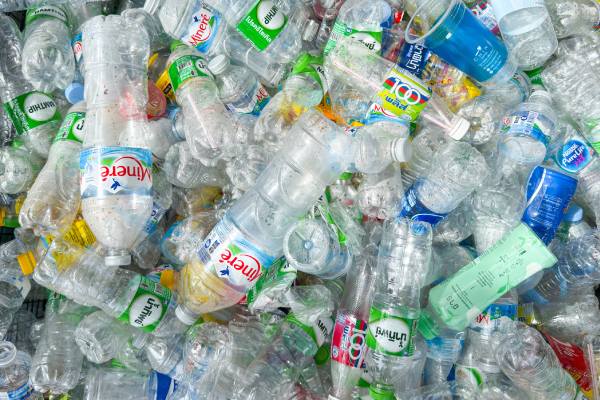
Image by Shutterstock
Six months into the conflict in Iran, supply disruptions constrained global petrochemical feedstocks. This affected 70 percent of polypropylene (PP) and 20 percent of polyethylene (PE) capacity, raising input costs by up to $500 million for major packaging converters.
Furthermore, while North American resin producers benefit from low-cost shale gas feedstocks, the report notes, global export demand continues to pull domestic prices up toward global export parity.
Added to trade volatility, such as recent US Section 338 tariff measures impacting transpacific and cross-border logistics, agribusinesses must build operational plans around persistent pricing and regulatory uncertainty.
*All images are referential.
Related stories
Plant-based edible film coatings: a sustainable solution to cut food waste and plastic use
The best innovations in eco-friendly materials for fresh produce