


This year’s California table grape season is running ahead of the calendar, leaving the sector with a familiar conundrum: making supplies last long enough to bridge the transition to Southern Hemisphere imports. However, industry sources say the real challenge is keeping an eye on quality, demand, and retail affordability.
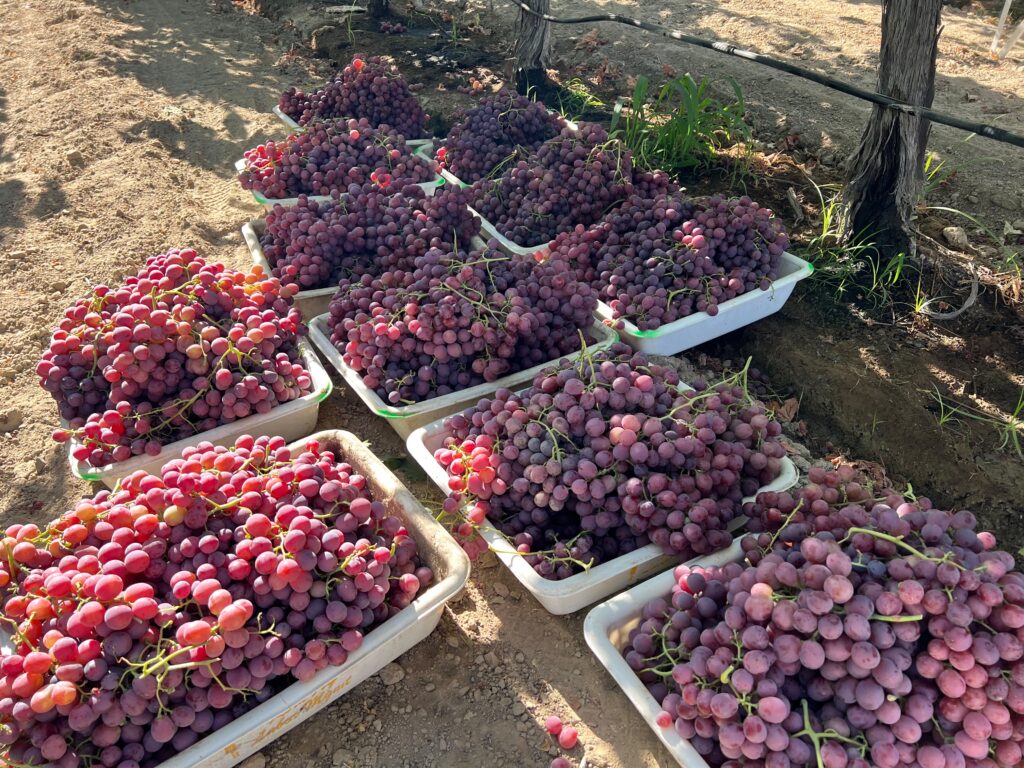
The San Joaquin Valley harvest began two to three weeks earlier than normal and, after 14 weeks, still remains ahead of schedule, according to John Pandol, special Projects Director at Pandol Brothers. Rather than the 21- to 22-week season that often follows an early start, the Golden State is on track for a roughly 20-week harvest ending in mid- instead of late November.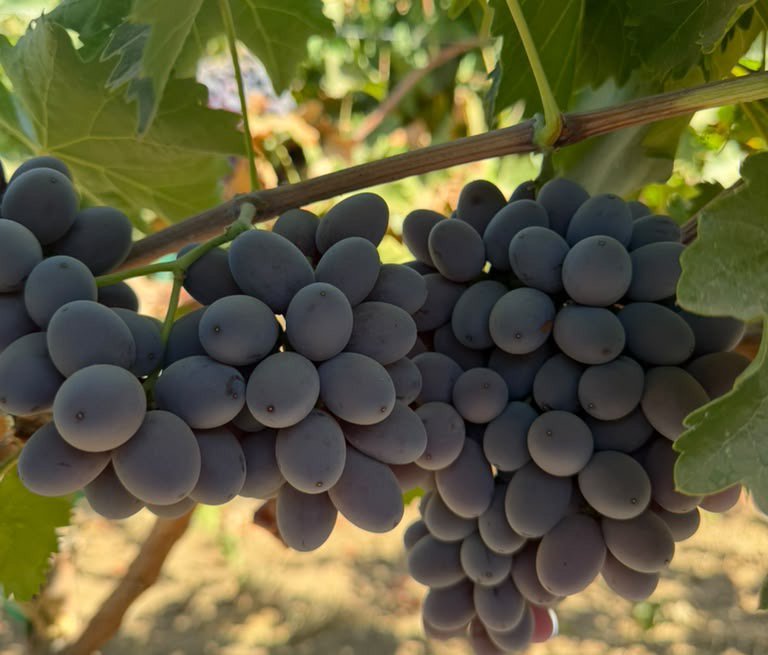
That accelerated timeline, combined with record storage inventories, has raised questions about how California table grape supplies will carry through Thanksgiving and into December—if at all.
Meanwhile, CJ Buxman, founder and president of Sunny Cal Farms, said growers and shippers are managing harvest on a case-by-case basis to extend the season where fruit conditions allow.
“What we're dealing with is a basic supply and demand curve. I think that we're going to see pricing pressure come up, based on this dynamic,” he explained to FreshFruitPortal.com.
Although the first six weeks of the California season saw robust shipments, Pandol reported that weekly August and September volumes fell as much as 10 percent year-on-year, citing data from the United States Department of Agriculture (USDA)’s shipper survey.
“In supermarket sales data, we see the same trend: most weeks have lower volume for grapes than the same week last year,” he stressed.
The executive noted that, according to Circana, retail volumes for many other fresh fruit and produce categories also declined, which he said suggests a broader consumer spending pattern rather than a grape-specific demand issue.
The USDA's September 30 storage report recorded 15 million boxes of California grapes, about four to five million more than the previous two years. Pandol said the total marked the highest inventory recorded on any date since 2018.
“If harvest is faster and shipping is normal, it logically follows storage should be higher,” he emphasized.
At Sunny Cal Farms, Buxman said the relatively dry fall has allowed growers to manage picking schedules without widespread weather-related pressure to remove fruit from the vines.
“Fruit quality is good,” Buxman said. “What was damaged in the summer was damaged, and that's gone. But for what made it through, we're seeing good quality.”
Harvest pacing remains flexible, however, and growers will accelerate picking whenever vineyard conditions or quality concerns require it.
“Pacing as appropriate is what the industry is doing in general. Of course, there are situations where fruit needs to come off the vine quickly, and in those cases, that has to happen. And that is to make the supplies last, basically,” he stressed.
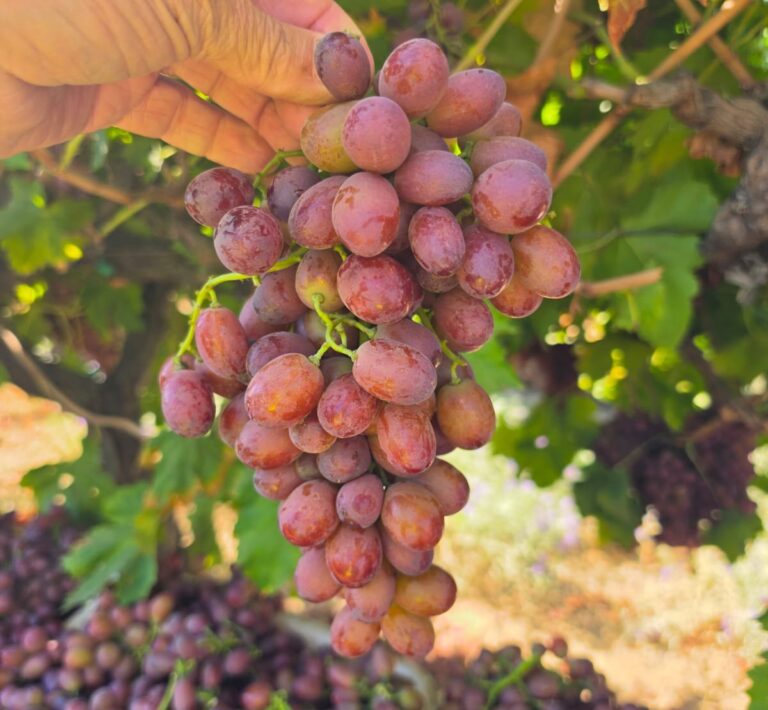
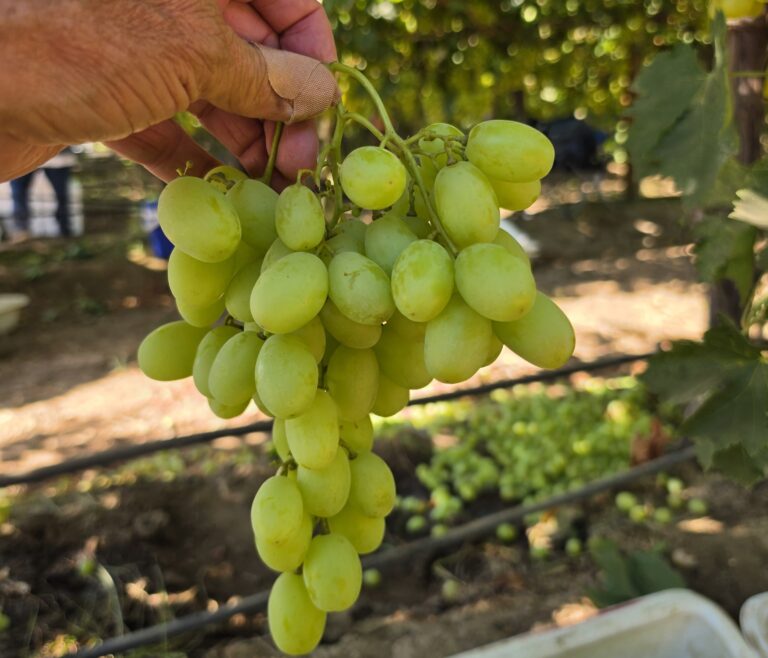
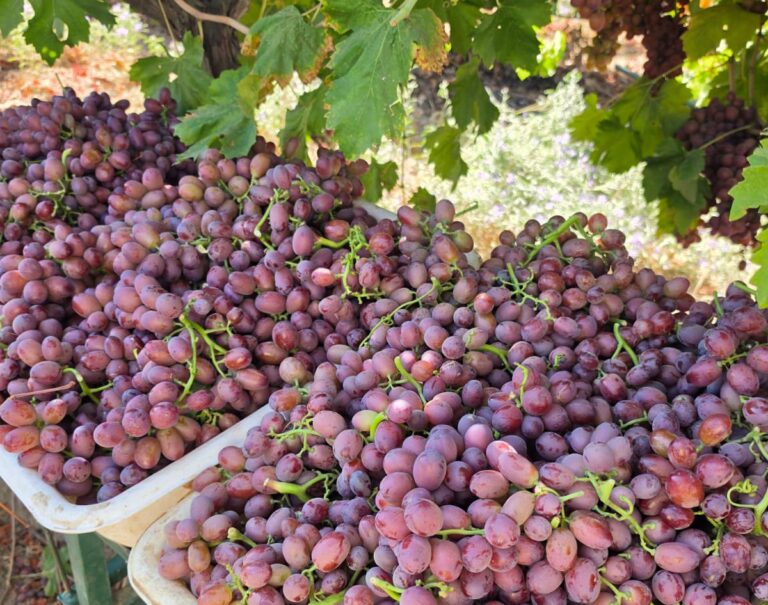
Among the later-season varieties performing well, Buxman identified Autumncrisp among green grapes and Scarlet Royal among red, alongside other late-season red varieties.
Despite the early start, Buxman foresees a more challenging supply picture as the season progresses. He does not anticipate a complete absence of California table grapes, but expects fewer shippers to have fruit available as November advances.
“I think there are going to be situations where there's going to be more demand than supply. Supply is not going to be able to meet demand,” he said.
Buxman said the three-week advance in the season makes the objective of carrying through Thanksgiving harder, requiring coordination across harvesting, packing, storage, and retail planning.
“I'm not saying that's impossible, but I think it's going to be a challenge,” he said.
On that note, Pandol said retailers are looking at the whole supply picture as Chilean and Peruvian imports approach. However, hope remains that California table grape availability will likely hold firm.
“Every retailer speaks with their domestic and import suppliers and makes their own decisions. There is no doubt many in California are preparing to keep shipping late into December,” he said.
Retailers' confidence in California supply also contrasts with uncertainty surrounding Peru's grape outlook. Pandol pointed to recent reductions in the Andean country’sblueberry estimates, which he said have heightened retailers' concerns about similar supply shortfalls in Peruvian grapes.
As supplies tighten, higher prices will likely influence how retailers manage grape promotions and shelf space during the transition. However, Buxman expects adjustments to simply reflect the volume available rather than signaling an abandonment of the category.
“I anticipate some of the shelf space coming down, but it's not necessarily a concern because it's just going to match what's available and what makes sense at the retail level,” he indicated.
Pandol raised a related concern about consumer affordability. With supermarket prices drawing increased public and political attention in the US, he said retailers may face difficult decisions if grape prices rise too far.
“If grapes get too expensive, do they simply not put them on the shelf?” he asked.
The question extends beyond supply availability to whether consumers will keep buying grapes at higher prices and whether December demand, which typically represents a lower-volume month for grapes, will follow historical patterns.
Buxman said the early harvest has been widely anticipated for months, leaving little uncertainty for an industry that, in his view, has had ample time to prepare.
“I think that any potential panic can be very much alleviated with planning and setting expectations. It's really easy to fly an airplane when you're already in the air— The tough parts are the takeoffs and the landings,” he said.
As the California season is setting up for its landing, the Sunny Cal Farms executive argued that the main challenge now is coordinating the season's final weeks and the handoff to imports, and called on the industry to “Plan, plan, plan, and communicate.”
Buxman urged field teams, sales departments, retailers, and wholesalers to share forecasts and vineyard updates frequently so buyers can set realistic expectations and prepare for changing availability.
* Images courtesy of Sunny Cal Farms
Related stories
California grapes and the San Francisco 49ers bring a taste of California to Mexico