


Global kiwifruit export value hits record high despite flat production
 Add Fresh Fruit Portal to Google
A newly published independent analysis of the global kiwifruit sector reveals a market defined by surging export values, shifting varietal preferences, and mounting agricultural threats.
The State of World Kiwifruit 2026 report by Kiwifruit Atlas is based of FAOSTAT production and trade numbers through 2024 with industry season forecasts through November 2026. The data shows that while global harvest volumes have plateaued over the past five years, the financial value of the category’s international trade has expanded significantly.
The report highlights major structural shifts reshaping the industry, including Greece’s impending rise as Europe's top producer, the rapid commercial expansion of yellow and red varieties, record-breaking harvests in New Zealand, and severe biological and climatic risks threatening major growing regions.

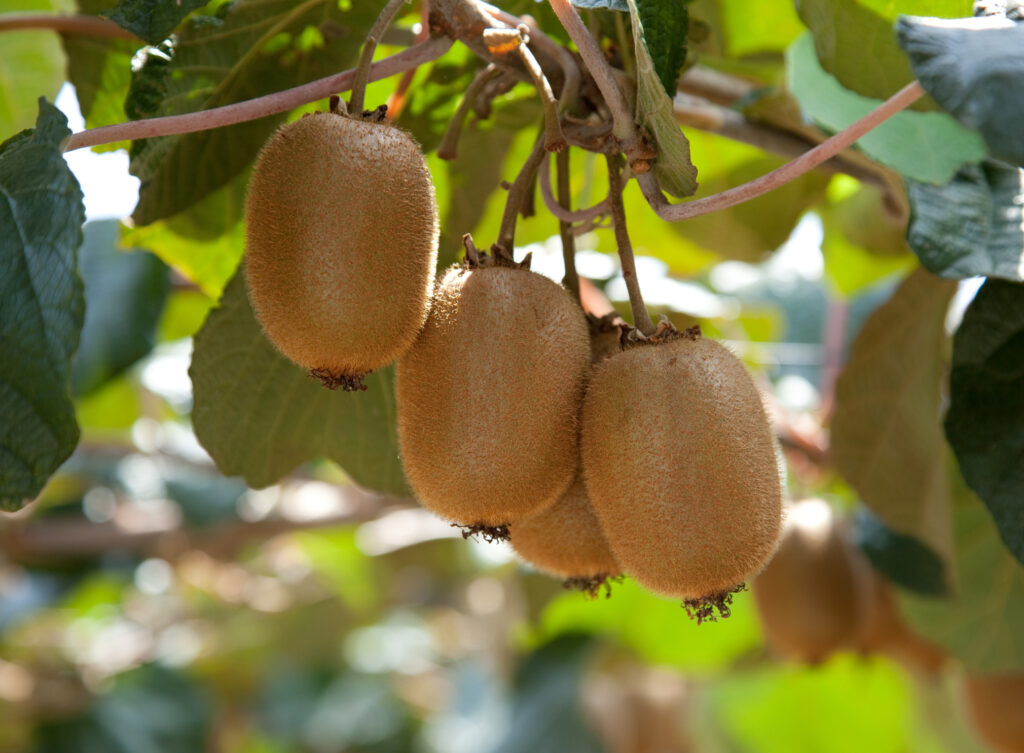
Image by Shutterstock
Stagnant volumes and concentrated supply
Global kiwifruit production reached 4.42 million metric tons (MT) in 2024 across more than 670,000 acres in 26 reporting countries. Although this represents a 22 percent increase from 2014, total output has risen only 1 percent since 2019, signaling a five-year plateau.
Production remains heavily concentrated, with China, New Zealand, and Italy accounting for 74 percent of the global harvest. China alone produced nearly half of the world's crop.
Export values surge to record highs
Despite flat production, the financial value of global kiwifruit exports climbed to a record $4.44 billion in 2024, a 52 percent jump from 2019. Total export volume grew by a modest seven percent over the same period to 1.68 million MT.
Consequently, the average global export price reached $2.64 per kilogram, the highest level recorded since data tracking began in 2000.
New Zealand dominates export earnings
New Zealand continues to capture a disproportionate share of industry revenue: The country generates more than $2 billion, nearly half of the world's total export income, from just 15 percent of global fruit production.
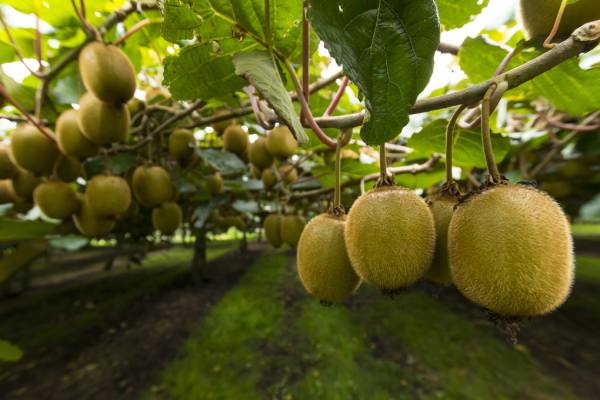
Image by Shutterstock
Driven by proprietary varieties and strong branding, New Zealand fruit commanded an average export price of $3.01 per kilo in 2024, outperforming key competitors such as Chile ($1.94 per kilo) and Greece ($1.76 per kilo).
Greece poised to overtake Italy in Europe
A major shift is underway in European production. Over the past decade, Greek kiwifruit output surged by 156 percent, whereas Italian production declined by eight percent.
For the 2026 season, the International Kiwifruit Organization projects Greece will harvest 447,000 MT compared to nearly 368,000 MT for Italy, positioning the Balkan country to become Europe’s largest kiwifruit producer.
Yellow and red varieties drive growth
While traditional green Hayward remains the most widely planted cultivar, yellow- and red-fleshed varieties are fueling market expansion.
Italy’s 2026 yellow crop is forecast to rise 19 percent, while its red crop is poised to grow 34 percent. Meanwhile, the country’s green production is expected to dip by three percent. Similarly, New Zealand marketer Zespri expanded its RubyRed sales from three million trays to over five million trays within a single year.
Record New Zealand crop faces Asian price pressure
New Zealand is experiencing another record-breaking campaign in 2026, with Zespri marketing 225 million trays (roughly 810,000 MT). The milestone surpasses the company’s previous record of 215 million trays in 2025.
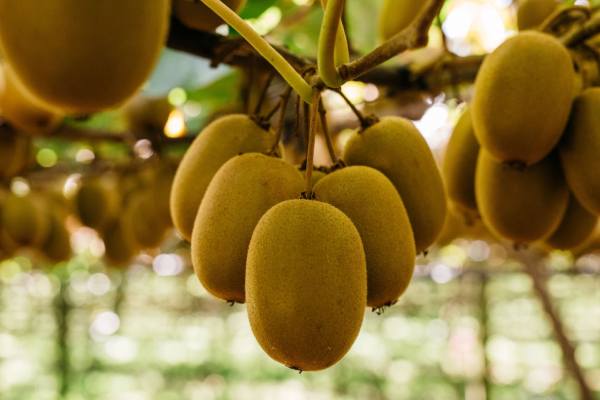
Image via Shutterstock
However, Zespri noted that higher volumes and pricing pressures in parts of Asia are weighing on returns for gold fruit growers. For June 2026, the company forecasted grower returns of up to $5.7 a tray for green fruit, $6.7 for SunGold, and $9.4 for RubyRed.
Disease, climate, and China pose top risks
Finally, the report identifies three primary threats to the sector: incurable kiwifruit vine decline syndrome, extreme weather, and market dependence on China.
Vine decline has already impacted roughly a quarter of Italy's orchards and has now been confirmed in France and Türkiye. Meanwhile, heat and drought cut 2025 production in China's top growing province by an estimated 40 percent, while unlicensed Chinese plantings of gold kiwifruit now rival Zespri's entire sales volume in the country.
*All images are referential via Shutterstock
Related stories
Zespri confirms that Gold3 variety protection in Chile will expire in 2029
Chilean kiwifruit expansion calls for a strategic overhaul. Here’s how to do it.
US kiwifruit availability set to hit historic high amid surging imports