A fresh squeeze on citrus greening: University of Florida breakthrough tree shows HLB tolerance
 Add Fresh Fruit Portal to Google
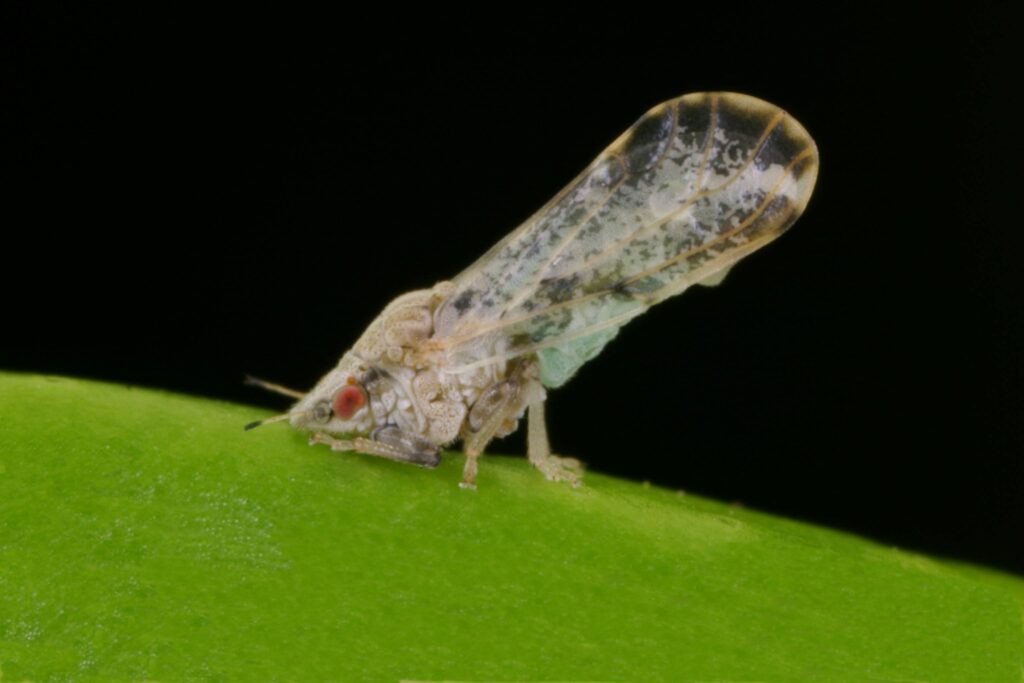
After nearly two decades of battling citrus greening’s unrelenting chokehold on Florida’s groves, a University of Florida breakthrough could finally offer growers some breathing room. The new development is called NuCitrus, a new orange tree showing tolerance to the Sunshine State’s long-time enemy.
Scientists at the university fortified the new cultivar with an Arabidopsis—also known as thale cress—gene, a naturally occurring protein that supercharges the plant’s immune system. The result is a citrus tree that can tolerate the deadly disease, maintaining yields and fruit quality where conventional trees fail.
NuCitrus was developed through collaboration between the UF’s Institute of Food and Agricultural Sciences (UF/IFAS)’ Crop Transformation Center and the Department of Microbiology and Cell Science.
A leap forward to hit shelves soon
The findings were published in Plant Biotechnology Journal earlier this month. Lead author Zhonglin Mou tells FreshFruitPortal.com he and his team have received a USDA permit for experimental use. They expect EPA and FDA approvals for commercial use in “less than two years.”
“During this period, additional NuCitrus plants will be propagated and prepared for commercial deployment,” he explains. “Once approvals are granted, these mature NuCitrus trees will be ready to enter production within a few years.
Once approved, pathogen-free trees will be made available to growers through partnering nurseries.
The researcher explains that he and his team have obtained ‘Hamlin’ NuCitrus lines, while ‘Valencia’ NuCitrus lines are still under evaluation. “Our goal is to generate NuCitrus plants across multiple commercial varieties,” he adds.
Turning defense into offense
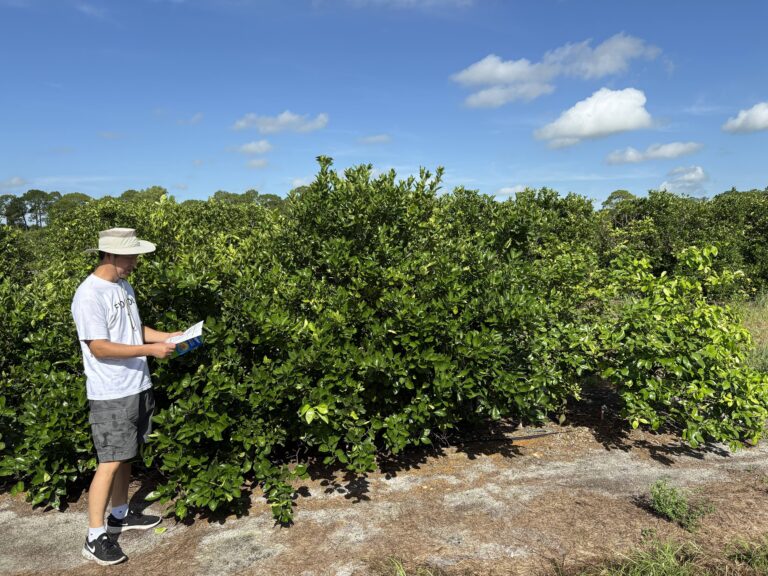
The added gene in NuCritrus produces a natural protein that occurs in many common foods, such as broccoli and cauliflower.
“Our recent paper shows that very little of this protein is found in NuCitrus fruit; it’s not toxic to humans, and, if eaten, is rapidly digested in the stomach, just as it is with other vegetables that contain it,” explains Mou.
In contrast to resistance, which prevents infection but can lead to pathogen adaptation, tolerance enables plants to be infected while remaining productive, offering more durable field performance.
“Although developing resistant varieties remains a long-term goal, tolerant varieties play a critical role in sustainable HLB management,” Mou explains. “This is because resistance exerts selective pressure on the pathogen, which can eventually lead to the emergence of resistance-breaking strains.”
From lab breakthrough to grove recovery
UF/IFAS researchers are collaborating with nurseries to propagate large quantities of NuCitus plants for yield trials and eventual distribution to growers.
“There is a series of new documents needed for an EPA application. We expect to have these EPA documents completed by the end of next week,” Mou says.
Mou also notes that the rollout will depend on the pace of industry adoption, but expects NuCitrus to play a significant role in restoring production levels across Florida. UF/IFAS is also conducting consumer research under a USDA National Institute of Food and Agriculture grant to identify potential market barriers and shape public communication strategies around gene-edited citrus.
Although not a cure-all, NuCitrus represents a promising advance in the fight against HLB, a disease that has dropped the state’s citrus output by more than 70 percent since the mid-2000s.
“Tolerance allows citrus and the pathogen to coexist, providing durable field performance over time,” Mou adds.
*All photos courtesy of the University of Florida.
Related stories