


California avocado growers face renewed lace bug threat as second invasion spreads
 Add Fresh Fruit Portal to Google
A once-dismissed pest is now emerging as a growing concern for California’s avocado industry. A new, more aggressive strain of avocado lace bug is spreading through key production regions and targeting the state’s star product: the Hass variety.
Mark Hoddle, Biological Control Specialist at the University of California, Riverside, tells FreshFruitPortal.com that the current outbreak differs significantly from the original infestation detected in 2004, which showed little interest in the Hass cultivar.
“Sometime around 2019, I started getting phone calls from pest control advisors in Northern San Diego County, parts of Riverside County, who were seeing avocado lace bugs in Hass trees,” Hoddle says.
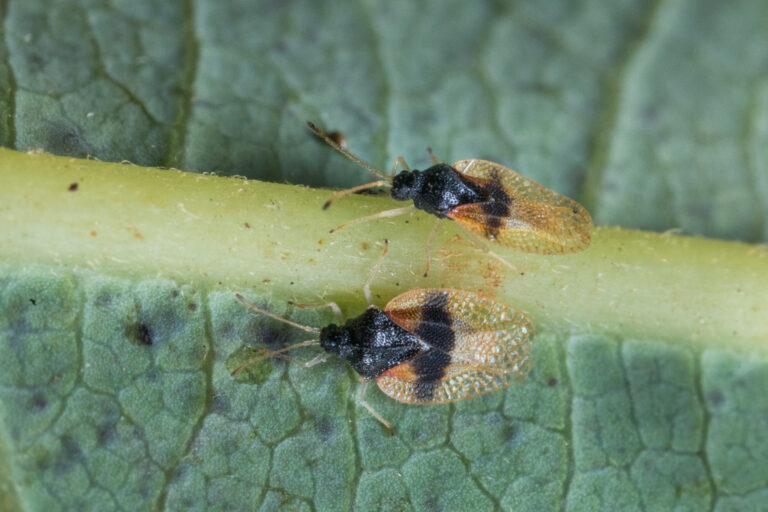
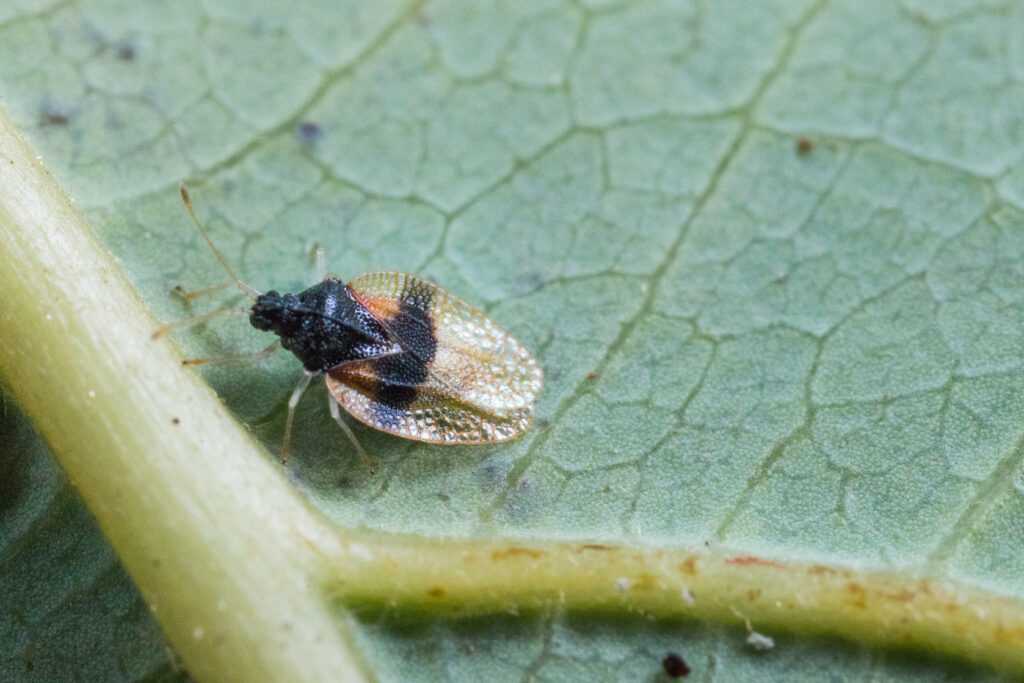
Photo by Mark Hoddle, UC Riverside.
Genetic analysis confirmed the shift. “The population that was causing problems had a genetic fingerprint that was different from the original population,” he notes. The newer strain closely matched populations from Florida and the Caribbean, where the pest is more aggressive on Hass avocados.
Hoddle said the introduction likely resulted from human movement of infested plant material. “Somebody illegally moved infested plants, probably from Florida,” he explains. “And lace bug obviously loves Hass, loves the climate here, and started to spread.”
The pest has now reached as far north as Santa Barbara County and continues to expand its range.
The avocado lace bug: A “hitchhiker” pest with long-distance reach
Hoddle emphasizes that human activity—not natural dispersal—is driving the rapid spread of the pest. Insects can travel via contaminated bins, clothing, vehicles, or nursery stock. The pest’s ability to “jump” long distances makes it difficult to predict its rate of spread.
The same dynamic appears to have facilitated its arrival in Hawaii, where it’s doing “immense amounts of damage,” Hoddle says.

Photo by Mark Hoddle, UC Riverside.
Globally, the insect is also appearing in Europe and parts of Africa, reinforcing concerns about international plant movement as a key pathway.
While avocado lace bug feeds on leaves rather than fruit, its impact on tree health and yields remains uncertain.
“The advice from Pest Control Advisors now is that if you start seeing damage and obvious visual infestations of lace bugs, you should probably think about applying a foliar treatment,” Hoddle adds.
Unchecked populations can build quickly in favorable climates and cause defoliation.
Despite concerns, the direct relationship between leaf damage and yield loss has not been quantified. However, secondary effects are already visible in orchards.
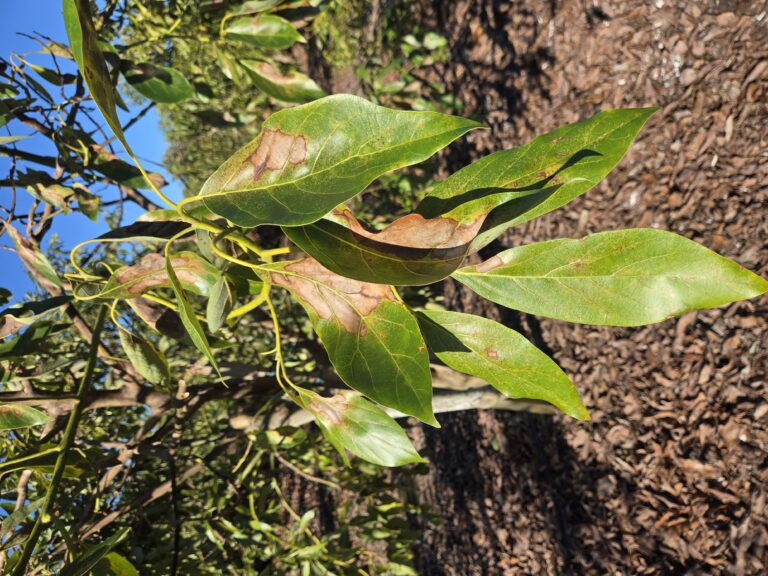
Photo by Mark Hoddle, UC Riverside.
“You can end up with sunburnt fruit because the leaves aren't providing the shade,” Hoddle explains. “You could see five, seven percent of your fruit now sunburnt.”
Hoddle adds that cooler, coastal growing areas appear more favorable for the pest than hotter inland regions, based on survey data from San Diego County.
Biological control still unresolved
Efforts to identify effective biological control agents have so far yielded limited results. Recent DNA work suggests the pest’s true origin may be Mexico’s Pacific coast, prompting a shift in research focus.
“Maybe what we need to do is spend more time in western Mexico to find natural enemies of the avocado lace bug,” he said.
In the meantime, researchers and industry stakeholders are prioritizing practical management tools.
“We definitely need more work on insecticides that are going to be compatible with integrated pest management programs,” Hoddle says. He notes that little evaluation has been done since the early 2000s, when the lace bug was first identified in the United States.
He also highlights the need for improved sampling protocols and economic thresholds. “How many lace bugs do you need to see on a leaf before you should do something? That's a really important question we need to answer,” he said.
As the pest continues to spread, early detection and rapid response remain the primary tools available to California’s avocado industry.
*All photos by Mark Hoddle, UC Riverside. | Courtesy of Mike Hoddle.
The second edition of the Global Avocado Summit will be held on November 11, 2026, at the Monticello Casino Events Center in Santiago, Chile. Organized by the Chilean Avocado Committee and Yentzen Group, the meeting seeks to bring together the main players in a growing industry.
The event has established itself as a key space for addressing commercial and sustainability issues in the industry, bringing together producers, exporters, buyers, certifiers, and innovators to analyze the sector’s challenges and opportunities.
For more info, contact events@yentzengroup.com
Related stories
Sunblotch viroid—the silent avocado killer raising concerns in Florida groves
Tech traps and gene hacks: Pest control market grows as regulations tighten+
The biological revolution: Global biopesticide market set to reach $12.65 billion by 2031