









Nearly half of Americans are struggling to afford food, study finds
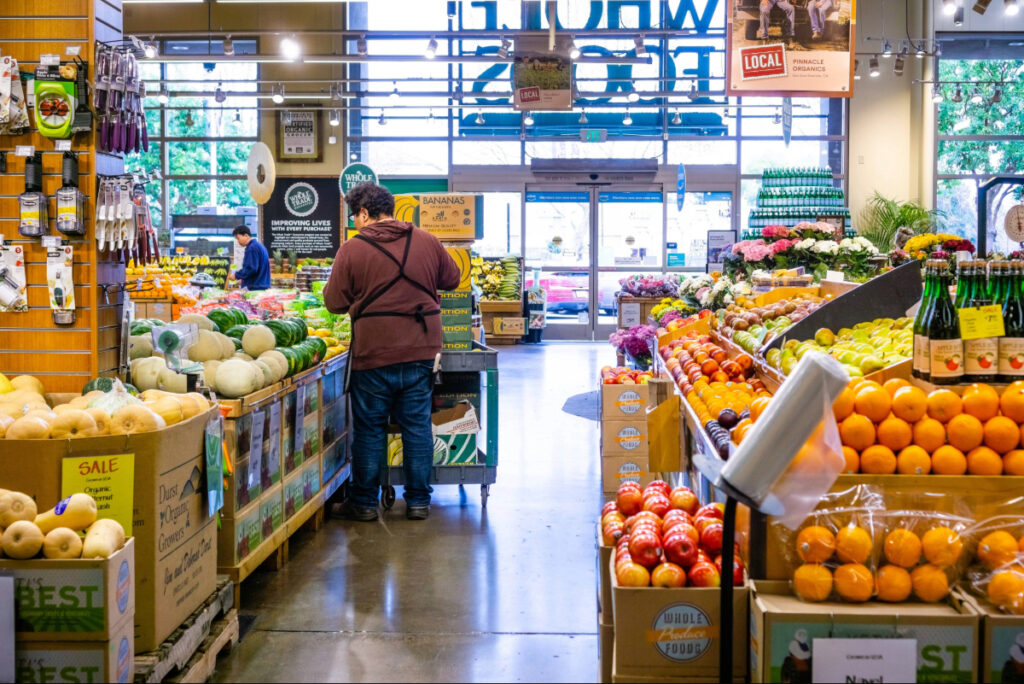



A new report by leading online loan marketplace, LendingTree, reveals that nearly half of Americans now find putting food on the table a major financial strain, with 49 percent saying affording groceries is a real challenge.


Based on an online survey of 2,000 US consumers ages 18 to 80, the questionnaire shows that over the past month, six out of 10 people have worried about paying for groceries.
Gen Zers aged 18 to 29 and low-income households earning under $30,000 are feeling it the most. Among the latter cohort, 22 percent report increasing difficulty affording groceries, compared to 19 percent of Gen Z, 18 percent of millennials, and 17 percent of parents with young children.
Only five percent of baby boomers (ages 62 to 80) say it is very difficult to pay for food.

Food shopping is now a source of stress
Food affordability in the US is a concern across all income levels. Even among households earning over $100,000, 57 percent report worrying about grocery costs in the past month.
However, the crisis is not only affecting how much food Americans put on their tables or the quality of it, but it’s also negatively impacting their mental health. Over 10 percent of respondents also say they feel anxious about food shopping nearly all the time.

Unsurprisingly, those struggling most to afford food—millennials, parents of young children, low-income households, and Gen Z—are also most likely to experience food-related anxiety.
Conversely, and as the generational cohort who’s reportedly feeling the squeeze the least, baby boomers report the lowest levels of food security-related anxiety, with 63 percent saying they have not worried about affording groceries in the past month.
How are Americans coping with the food affordability crunch?
Somewhat ironically, some Americans choose to address both the mental and financial impacts of the grocery affordability crisis by partaking in what has historically been considered a luxury by most people—eating out. Nearly 77 percent of respondents dined at a restaurant at least once in the past month, while 75 percent said they’d ordered takeout or delivery.

But dining out is still indisputably a privilege in America, which explains why the higher the income, the more respondents ordered out and ate at restaurants. People in households earning under $30,000 a year were four times less likely to say they ate at restaurants in the past month than those earning over $100,000.
Those reporting eating at a restaurant less than once a week accounted for 37 percent of respondents, while 23 percent didn’t eat out at all in the past month.
Despite reportedly being the generational cohort least impacted by the grocery affordability crisis, baby boomers are far less likely to order takeout or delivery than other age groups. Only 43 percent of the demographic reported not ordering out at all in the past month.
Still, most Americans are tightening their belts when it comes to restaurant spending.
Roughly two in five are eating out less, and 16 percent have stopped ordering delivery. Many are opting for cheaper restaurants or fast food, eating at home before heading out, or choosing takeout to save on tips.
Young parents are making sacrifices elsewhere just to afford the occasional meal out. 21 percent have trimmed their restaurant budgets, and 18 percent have stopped ordering food delivery altogether.
Related stories:
What's next in food? Whole Foods Market shares 8 trend predictions for 2026










Subscribe to our newsletter