








Argentina navigates uncertainty and headwinds in a challenging 2026 apple season
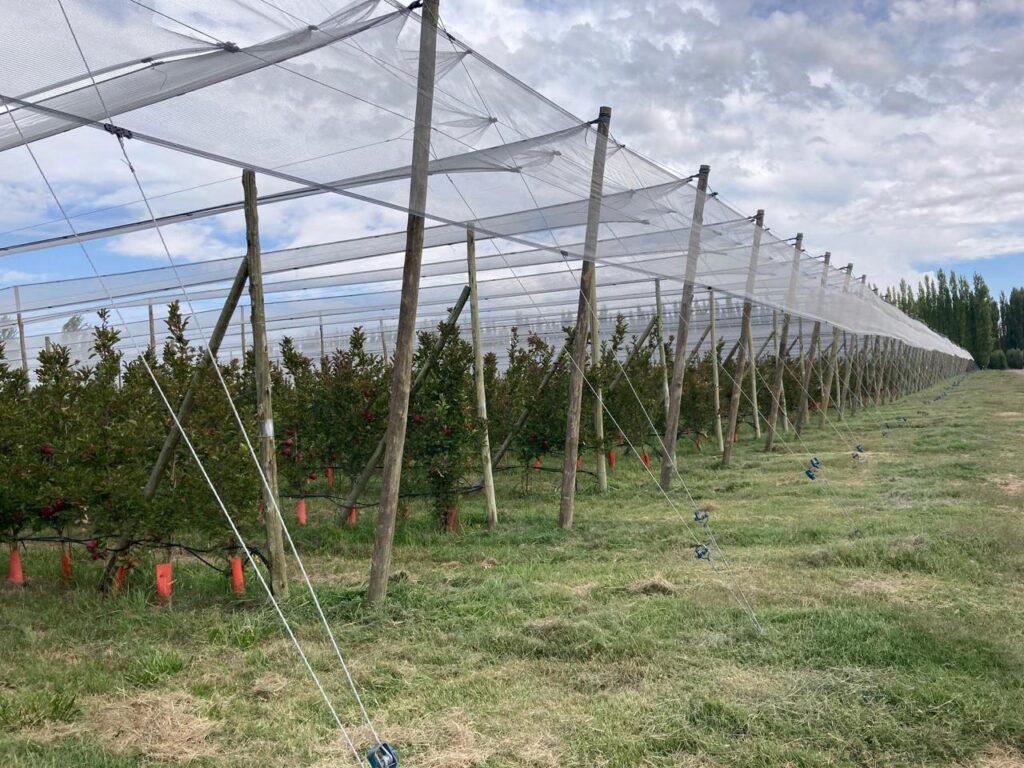



According to information provided by Argentina’s National Service for Agri-Food Health and Quality (Senasa), apple exports did not exceed 18,100 tons, reflecting a sharp drop compared to last year.


Nicolás Sánchez, President of the Argentine Chamber of Integrated Fruit Growers (CAFI, for its initials in Spanish), told FreshFruitPortal.com that this is the result of extreme weather conditions that affected production in the Alto Valle region.
The expert explained that the industry faced intense spring frosts, as well as an unprecedented series of summer hailstorms, affecting fruit in the main production areas of Río Negro and Neuquén. The unusual weather conditions raised alarms in the sector and prompted the declaration of a state of emergency in the province.
The CAFI President mentioned that the production drop "could be around 20 to 30 percent" in the country’s most relevant apple production areas.
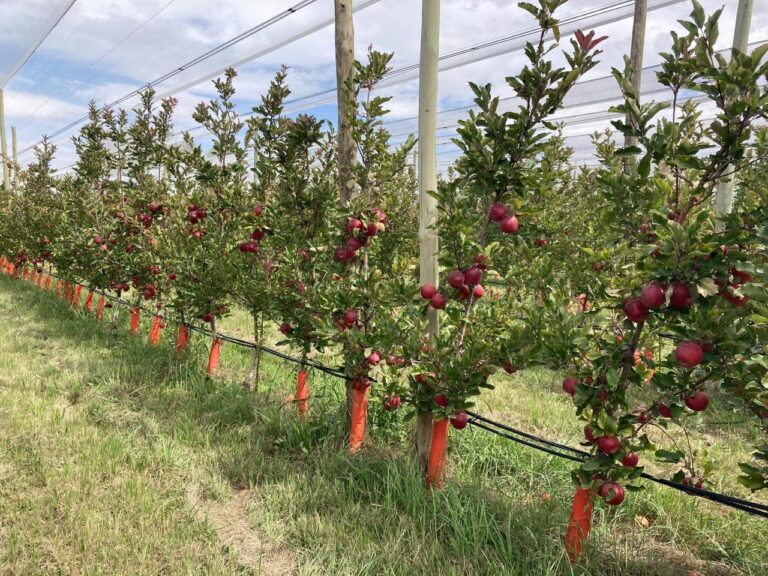
Image courtesy of Nicolás Sánchez | CAFI
“This summer was terrible; I had never seen anything like it,” he said. “They were very strong storms that complicated production quite a bit.”
Sanchez noted that the damage not only reduced the available volume but also severely impacted the fruit’s export quality, with losses up to 50 percent in certain areas, and product that can’t even be packed as second category.
Although the industry still does not have the total figures for the damage, the sector estimates that more than 6,500 hectares were impacted by severe hail events.
Lower volume, better prices
Given the decrease in projected volume, a significant portion of the production is destined for the domestic market, where prices have recovered significantly compared to last season.
In that vein, the leader of CAFI said that last year the fruit was practically given away.
“Today, the fruit is perhaps selling 40 percent or 50 percent more expensive, but because the value was extremely low,” the leader said.
The local market was also flooded with oversupply, which depressed prices for much of last season, “so it is not so linear to say that prices are rising now only because of the drop in production,” Sanchez explained.
Target markets
Latin America remains the industry’s main destination for Argentine apples.
Brazil, Paraguay, and Bolivia account for a large share of regional shipments, while some specific niches supply Northern Hemisphere markets, particularly in organic fruit.
However, Sanchez pointed out that the Brazilian market could be among the most sensitive to the lower Argentine supply this year, mainly due to an increasingly competitive international landscape.
“In the last 15 years, large investment funds drove strong production expansions in the United States and Europe, increasing the global supply of apples and raising competition for South American exporters,” he commented.
Imports are changing the Argentine apple landscape
Argentina has seen a surge in apple imports recently, changing the market for local producers.

Referential image | Archive
According to Senasa, in the first four months of 2026, imports of pomme fruit exceeded 1,710 tons, representing a 210 percent year-on-year increase and a jump of over 350 percent compared to the average of the last five campaigns between 2021 and 2025.
Far from interpreting it as a direct threat, Sánchez says that imported fruit, mainly from across the Andes, could help sustain local prices.
“Chile also has less fruit this year and, furthermore, the Chilean exchange rate appreciated; therefore, they are not going to export cheaply to Argentina. Prices will continue to be high,” he stated.
He noted that the sector is monitoring market behavior during the second half of the year, a key period for a storage fruit like the apple, whose shipments usually extend throughout much of the year.
*Main image courtesy of Nicolás Sánchez | CAFI
Related stories
Argentina Exports 2025: Pears and lemons are still in the lead
Groundbreaking cherry harvest in Argentina's Jujuy Valley creates new market opportunity










Subscribe to our newsletter