The one gene behind the millions-of-years-old mechanism ruling avocados’ sex-changing flowers
 Add Fresh Fruit Portal to Google
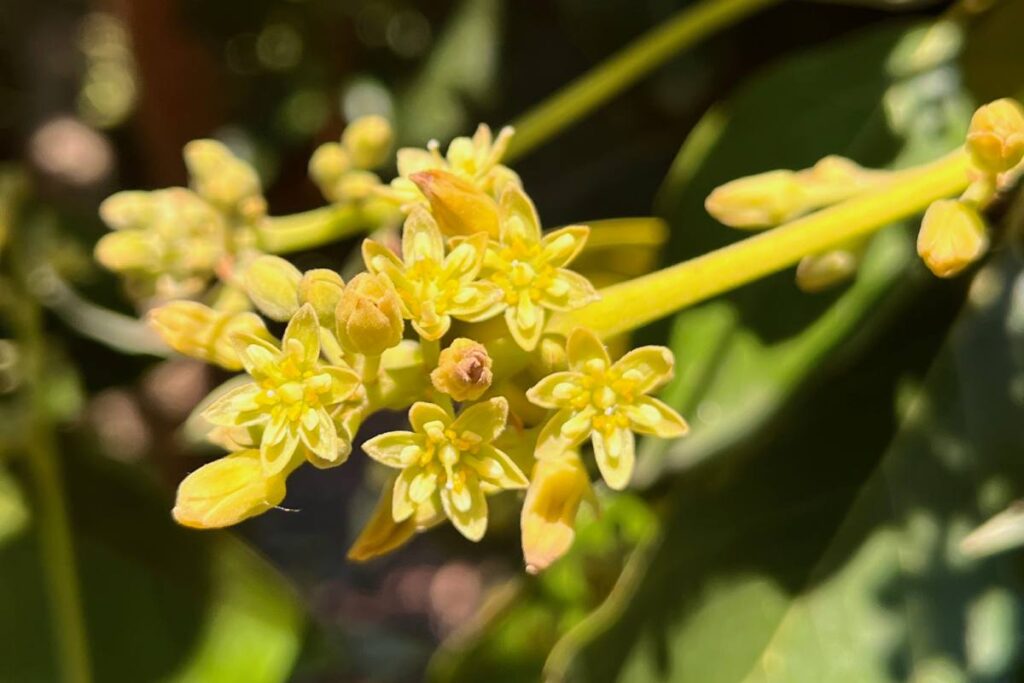
It might be a tidbit known only to avocado growers, but the trees bearing the green fruit have a fascinating flowering dynamic where buds change sex depending on the time of day. What’s more, is that there are two types of avocado trees: those that open female flowers in the morning and change to male ones in the evening (A-type), and those that do the opposite (B-type).
This mechanism has evolved over millions of years to encourage cross-pollination and prevent inbreeding, and although we've known about it for decades, we’ve only recently learned how it works.
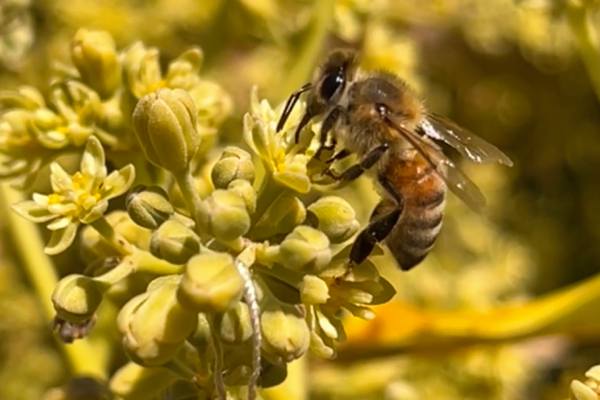
Image by Jeff Groh at UC Berkeley
In a 2026 study published in the journal Proceedings of the National Academy of Sciences, researchers from UC Berkeley, UC Riverside, and UC Irvine looked into the genome of over 100 trees to better understand how flowering works in avocado plants. The results pinpointed a single gene—a surprisingly simple on-and-off switch that determines whether flowers receive or expel pollen.
“That's part of what makes it so elegant,” Jeffrey Groh, a postdoctoral fellow at UC Berkeley and one of the authors of the study, told FreshFruitPortal.com. “The tree is either an A-type or a B-type, so we knew there was going to be something kind of simple, but we didn't realize that it could just be a single gene.”
The simplicity of the answer is remarkable, as gene expression is often determined by entire regions of the genome made up of hundreds of genes. This scenario is often further complicated when environmental factors such as nutrition and even stress levels are also involved.
The avocado flower dance
Even though all avocado flowers have both male and female organs, they can only function as one sex at any given time. Each plant has two sets of flowers and, depending on whether they’re A-type or B-type, one set will open as male or female in the morning and close in the evening as the second set of the opposite sex opens. Groh describes this switching as a “reciprocal dance.”
This mechanism, the expert explains, is genetically determined. This means that, no matter its age or location, the plant will always open and close its flowers in the same way. We’ve known this for centuries, which is why avocado growers have planted A-types next to B-types to ensure successful pollination and good yields.
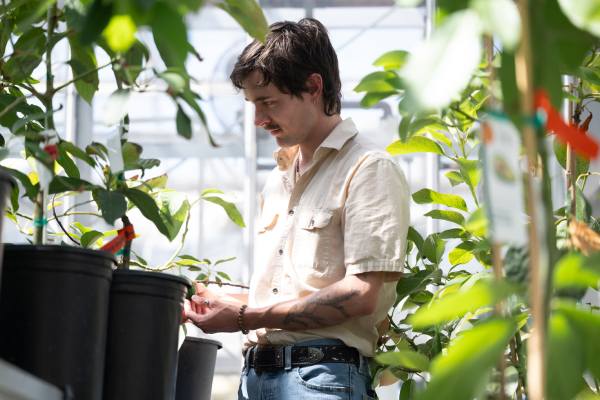
Image by Brandon Mejia at UC Berkeley
However, it wasn’t until 1927, with the publication of The Flower Behavior of Avocados by American botanist Arthur Burdette Stout, that science started to hypothesize about what might be behind the avocado flower dance.
“This is before we knew that DNA was the basis of inheritance, so he didn't even know what a gene is, but he's speculating that something about these two different types of avocados has to be related to their inherent constitution,” Groh explained.
Advances in knowledge and technology allowed researchers to look more closely at the avocado genome, making the question of how flowering works ripe for an answer. Groh said an earlier study identified a region within the plant’s DNA where the key might be hidden, giving his team a strong starting point.
After analyzing the genetic material of over 100 avocado plants, the researchers found what they were looking for: a single gene called SDMYB, with two copies in each plant—one from mom and one from dad.
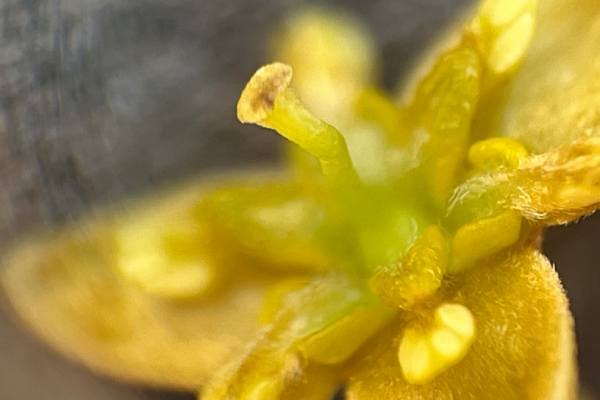
Image by Jeff Groh at UC Berkeley
“There's the copy that's dominant, which means that if you inherit that copy, the tree becomes the A-type. And then there's a copy that we call recessive, and if you only have that copy, you'll be a B-type,” Groh explained.
The potential of new and better avocado varieties, faster
Other than answering a question we’ve been asking for decades, these findings could accelerate the breeding process and the development of new varieties not only in avocados, but in at least 26 other related species that also feature this flowering mechanism.
“By understanding that there's a single gene that determines whether a plant is A- or B-type, rather than having to wait for three, five, or even 10 years before we would know, we could grind up a bit of the leaf, put it through a simple genetic assay, and determine at the seedling stage whether that plant is an A- or B-flowering type,” Groh explained.
The study also opens the door to further research into unanswered questions, such as the role of external factors like humidity and temperature in the expression of the SDMYB gene and the timing of flowering.
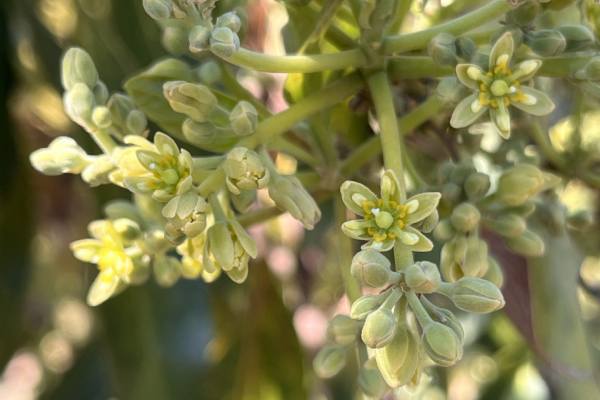
Image by Jeff Groh at UC Berkeley
“Creating a fuller picture of how the environment is interacting with these genetic differences is really gonna help flesh out how this trait evolved in the first place and how it could potentially be manipulated for benefits to agriculture,” the expert said.
However, beyond the potential practical uses, Groh, who’s long been fascinated with flower diversity and the evolution of their adaptations for reproduction, finds beauty in the understanding of such an intricate and paradoxically simple process.
“It's just beautiful in its own right and pretty fascinating that a plant has evolved to do this—To divide up the day into these two intervals and partition hour by hour the expression of sex in this really fine scale way,” he concluded. “I think it can also teach us a lot more generally about the principles of how plants adapt and how they deal with these challenges of being both male and female.”
*Portrait of Jeff Groh by Brandon Mejia, courtesy of UC Berkeley; all other images courtesy of Jeff Groh.
Related stories
Ag-tech innovator BioPollen expands liquid pollination system across the Americas
University of Florida freeze-defying avocados prove their worth by surviving recent cold snap