








Agronometrics in Charts: El Niño puts fall mango prices under pressure



 Add Fresh Fruit Portal to Google
Each week, the series ‘Agronometrics In Charts’ examines a different horticultural commodity, focusing on a specific origin or topic and visualizing the trade market factors driving change. Check out our entire archive.


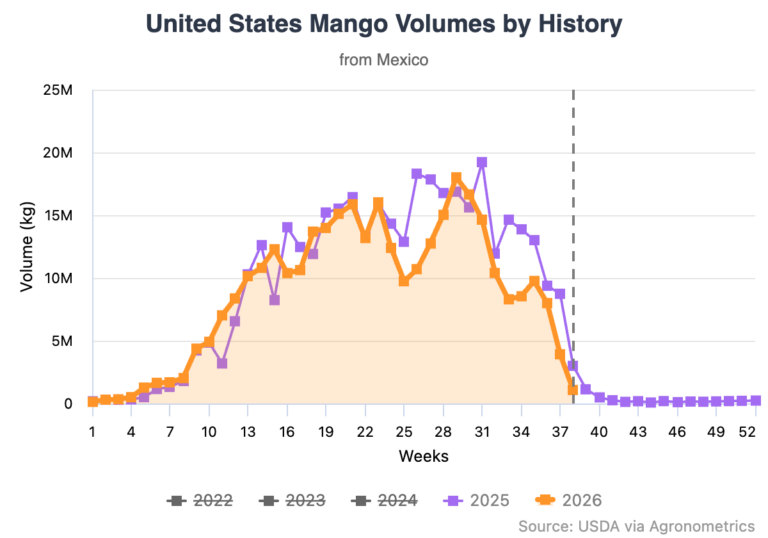
The United States mango market is heading into the fall season with tight supply and elevated prices, as Brazil continues to ship while concerns over weather-related losses in Ecuador and Peru point to reduced availability in the months ahead.
According to the National Mango Board’s September 16 Mango Crop Report, total mango shipments from Mexico, Brazil and Ecuador are projected to be about 21 percent higher year-on-year between weeks 38 and 42. However, the outlook varies considerably by origin. The 2026 Mexican crop is projected to be 13 percent lower than last year, while Brazil is expected to finish approximately 25 percent higher. Ecuador, meanwhile, is projected to be down approximately 52 percent year over year.
Source: USDA Market News via Agronometrics.
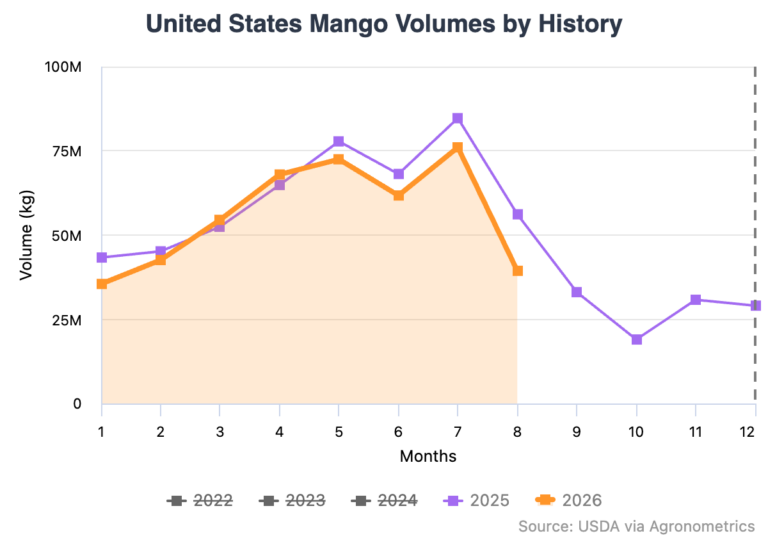
Brazil is currently the dominant supplier as the market transitions into fall. For the week ending September 12, Brazil shipped approximately 844,274 boxes, bringing its season-to-date shipments to 4.36 million boxes, compared with 3.50 million boxes during the same period last year. The Brazilian season began in July and is projected to run through the second week of December.
Despite the increase in Brazilian volume, market conditions remain tight. Luis F. Orrantia of Tropical Specialists told FreshPlaza the company is working with Brazil, but relatively limited overall availability is keeping prices high. Brazil is also seeing greater availability of smaller, 12-count fruit, as exporters look to move volume before Ecuador enters the market.
Source: USDA Market News via Agronometrics.
The timing is particularly important as Ecuador's season gets underway. The National Mango Board projected an Ecuador crop of approximately 6.6 million boxes on September 16, a substantial reduction from the previous season. The report shows shipments beginning in the third week of September and continuing into early January.
Orrantia attributed the expected decline in Ecuadorian supply to El Niño-related rains and said he anticipates at least a 50 percent reduction in Ecuadorian mango volume. The National Mango Board's latest projection is broadly consistent with that assessment, forecasting a 52 percent year-on-year decline.
The reduced Ecuadorian crop could have significant implications for programs and commitments during the final quarter of the year. With less fruit available from Ecuador, the market will remain heavily dependent on Brazil during the seasonal transition.
The pressure is also expected to extend into Peru. Orrantia said Peruvian mango volume could fall by at least 50 percent as the country enters its typical November-to-March shipping window, citing rains, El Niño, and other weather-related conditions. The potential reduction adds another layer of uncertainty to the winter supply outlook.
High mango prices, but questions over sustainability
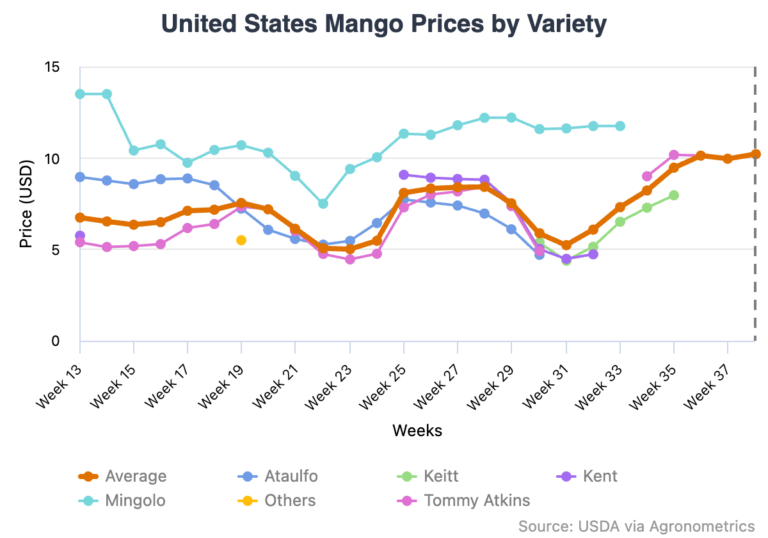
Current pricing reflects the tightening supply situation, with US mango prices rising sharply in recent weeks. USDA data shows the average mango price increasing from around $5 to $6 per box in late August to just above $10 by Week 38.
Source: USDA Market News via Agronometrics.
For growers, particularly in Peru, reduced supply has raised expectations for stronger returns. However, Orrantia cautioned that the market may struggle to sustain exceptionally high prices over an extended period.
The mango market remains highly sensitive to weekly supply changes. Even one or two weeks of higher-than-expected volume could put significant downward pressure on prices and returns.
That dynamic was evident during Peru's previous season, when volume came in somewhat below expectations, and growers entered the market anticipating exceptionally high prices and returns. According to Orrantia, the resulting season did not deliver the expected results, highlighting the risks of building expectations too heavily around constrained supply.
With Ecuador now entering the market and Peru approaching its season, the coming months will therefore depend not only on total crop availability but also on the timing and consistency of shipments. For buyers and growers alike, managing expectations will be particularly important as the industry navigates an unusually uncertain fall and winter supply period.
*Main photo is referential via Shutterstock | Graphs courtesy of Agronometrics
Related stories
Egyptian mango challenges industry giants amid European expansion






Subscribe to our newsletter