Mexican fruit fly quarantine area in San Diego County continues to expand
 Add Fresh Fruit Portal to Google
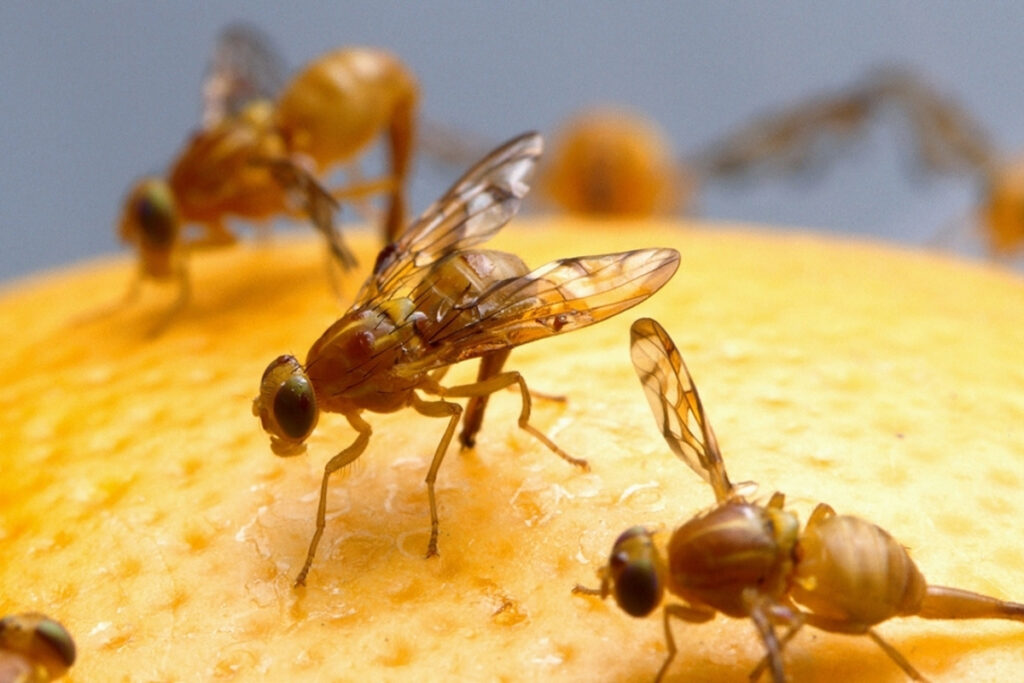
The Animal and Plant Health Inspection Service (USDA APHIS) and the California Department of Food and Agriculture (CDFA) are yet again expanding the Mexican fruit fly (Anastrepha ludens), also known as Mexfly, quarantine area in San Diego County.
The radius, known officially as the La Mesa quarantine, now expands to 173 square miles, including 338.5 acres of commercial farmland, directly affecting avocado, citrus, stone fruit, and tomato operations.
On its website, CDFA keeps a live map that residents can consult.
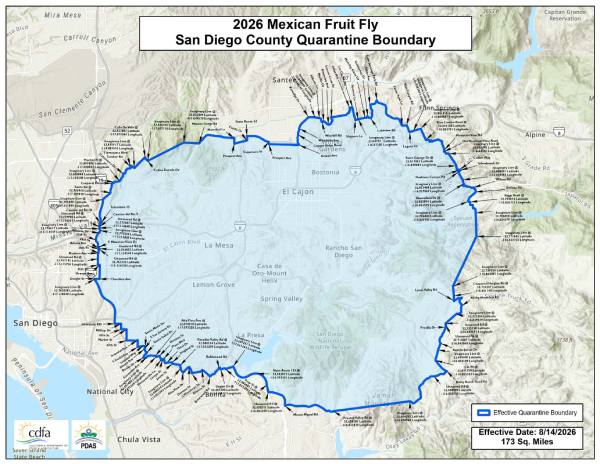
Image by California Department of Food and Agriculture.
An expanded quarantine radius
Both agencies announced the establishment of a protected area on June 16, when a wild mated female was trapped in an avocado tree on a residential property in the city of Spring Valley. The area was expanded again a couple of days later after a wild mated female was detected in a trap in a grapefruit tree in the city of El Cajon.
In August, APHIS and the CDFA merged the Spring Valley quarantine with the original radius in La Mesa, which started with a Mexfly detection of mated female and male Mexflies in an orange tree, as well as a wild male specimen in an avocado tree in mid-March.
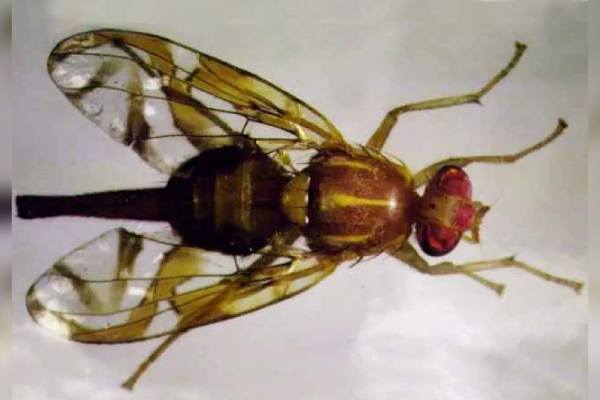
Image by California Department of Food and Agriculture.
As is standard protocol in these cases, the authorities are instructing residents in the quarantined area not to move or mail fruit from residential citrus trees and to remove all ripened citrus fruit as soon as possible—never leave it hanging on the tree or lying on the ground. Meanwhile, any fruit that won’t be eaten should be double-bagged and disposed of in a trash bin. Finally, fruit and vegetables from the quarantined area should not be composted.
*All photos courtesy of the USDA and CDFA.
Related story
APHIS expands Mexican Fruit Fly quarantine in California
Indonesia recognizes Chile as a fruit-fly-free country, opening new opportunities for exports