National Mango Board: How science is serving the industry
 Add Fresh Fruit Portal to Google
By Francisco Seva Rivadulla, international agri-food journalist
Applied research is becoming an increasingly important tool for addressing the international mango industry's productive and commercial challenges. Improving productivity, achieving higher-quality fruit, reducing post-harvest losses, and developing varieties better adapted to climate conditions are among the lines of work currently promoted by the National Mango Board (NMB).
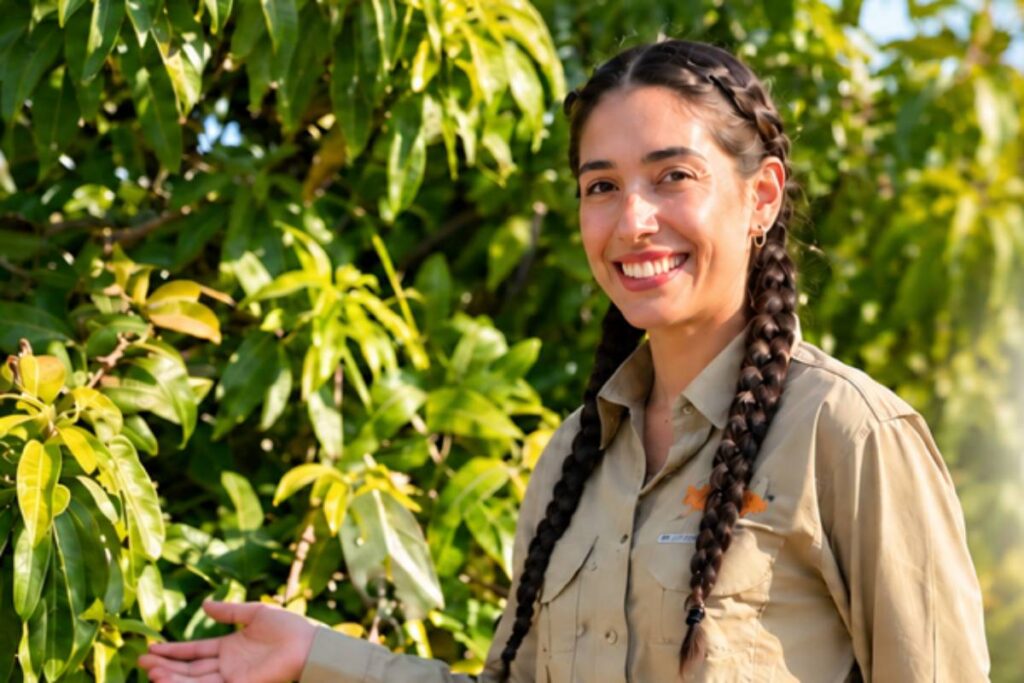
Nathalia Costine-Tello, Research Manager at the NMB, considers it essential for scientific knowledge to ultimately become a tool that growers, exporters, and other supply chain actors can use.
Her professional career combines research and knowledge transfer, two essential tasks at the NMB, where she currently manages projects tied to production and post-harvest.
Research to address real industry challenges
The NMB develops its research program around three major areas: nutrition and health, production and post-harvest, and safety and sustainability.
Within production and post-harvest, the goal is to work with researchers and specialized institutions to develop solutions that increase productivity, improve post-harvest handling, and reduce losses. For Costine-Tello, one essential aspect is ensuring projects respond to the real needs of the industry and the challenges producers face.
"Our goal is not only to generate knowledge, but for that knowledge to reach the industry and turn into practical recommendations that help increase technical and economic efficiency in production units, improve mango quality, and reduce post-harvest losses along the supply chain," she explained.
Collaboration with growers, universities, and research centers is therefore crucial. Producers help identify problems in various production systems, while scientific institutions provide the knowledge and tools needed to develop and validate potential solutions.

In this context, genetic research is gaining particular importance.
The NMB is currently working on projects to identify genetic markers related to fruit quality traits, such as fiber content, color, and size, as well as anthracnose resistance and flowering capacity under high-temperature conditions.
Costine-Tello explained that her and her team’s aim is to design tools that facilitate the development of new mango varieties with better quality, higher productivity, and better adaptation to growing conditions. This work can be particularly relevant for the future of the industry, especially given increasingly demanding production conditions.
At the same time, researchers are studying agronomic practices to increase fruit size, optimize irrigation, find weed-control alternatives, and identify new flowering inducers.
Validating technology across different producing countries
One of the most interesting aspects of the NMB's research strategy is the need to validate results in different growing regions.
Climatic and agronomic conditions vary considerably between countries, meaning a practice that yields good results in one producing area may not behave the same way in another.
For this reason, Costine-Tello emphasizes the importance of conducting validations in distinct production environments to develop tailored recommendations for each production system.

Additionally, the organization is exploring emerging technologies, including molecules designed to help trees better tolerate stress conditions and promote flowering, as well as new biotechnological tools like spray-induced gene silencing, a technology that uses molecules applied directly to the plant to temporarily regulate specific genes and evaluate their effect on flowering.
Guatemala: outstanding results against fruit fly
Among the projects with particular industry impact, Costine-Tello highlights one conducted in Guatemala with Roger Valenzuela, a plant health specialist, to combat the fruit fly.
Anastrepha obliqua is a major production and commercial issue because, in addition to causing losses, it can constrain exports to markets like the United States and require additional quarantine treatments.
The project developed a control program tailored to Guatemalan conditions, taking into account factors such as the pest's biological cycle, the production season, and regional weather conditions.
The results were significant.
"Infestation levels were reduced by 93 percent in the southwestern region and 89 percent in the northeastern region, allowing both regions to achieve low-prevalence phytosanitary status," the expert said.
Furthermore, the project will continue through an agreement between local industry body AGEXPORT and the Ministry of Agriculture of Guatemala to support the future implementation of the developed technologies.
The goal is for the continued application of these measures to help establish pest-free zones and for the technologies to be evaluated later in other producing countries, adapting them to the characteristics of each region.
Post-harvest: reducing losses and preserving quality
Research does not end in the field, as post-harvest constitutes another major pillar of action.
The projects in this vein have generated information on how factors such as mango maturity at harvest, storage temperature, and quarantine treatments affect the fruit's final quality and shelf life.
This knowledge supports more specific recommendations to minimize losses and maintain quality throughout the mango's journey through the supply chain.

For Nathalia Costine-Tello, the ultimate goal is to help growers and exporters make decisions backed by scientific data, contributing to more efficient operations and a more consistent mango supply for consumers.
MaVIS: Daily information to make better decisions
Along with scientific research, market information has become an important industry tool.
Costine-Tello also manages the Mango Volume and Inventory System (MaVIS), a platform that allows daily tracking of mango volumes arriving in the United States, existing inventory in importers' warehouses, and fruit movement within the country.
Daily access to these data gives participants a clearer view of market conditions and enables faster decision-making.
"Participants have given us feedback on how MaVIS helps them monitor inventory and fruit movements by size,” she explained. “This information helps them anticipate market shifts and plan better to meet customer needs."
According to Costine-Tello, MaVIS has also gained relevance as an information source during periods of high market uncertainty. The next step will be to increase participation from supply chain actors and continue developing tools and reports.
"The more participation we have, the more representative the information will be, and the greater the benefit for the entire industry," she emphasizes.
Science, transfer, and innovation for the future of mangoes
The NMB's research approach reflects an important evolution: it is not merely about generating knowledge, but also about translating it into decisions and tools that can be directly applied across the industry.
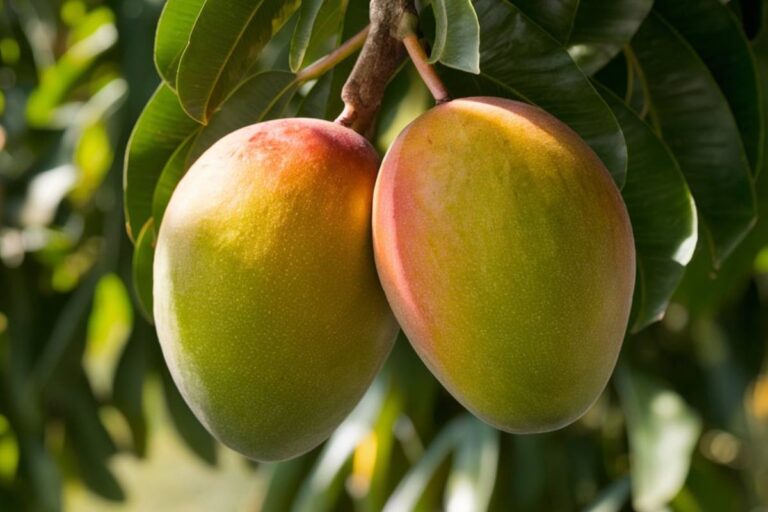
Genetics, adaptation to high temperatures, plant health, agronomic management, post-harvest, loss reduction, food safety, and market movement analysis are part of a strategy that connects science with business activity.
As Nathalia Costine-Tello points out, the goal is for growers and exporters to have access to tools that allow them to "make decisions based on scientific information, improving the efficiency of their operations and reducing losses."
A vision in which research, technology transfer, and information become strategic allies to build a more productive, efficient, sustainable international mango industry prepared for future challenges.
*Main image by Francisco Seva Rivadulla | All other images are referential.
Related stories
Spanish household mango consumption sees 33 percent rise
Mexican mango output faces sharp decline amid weather extremes