


Rains split early Chilean cherries, threatening crop size in the central producing zone
 Add Fresh Fruit Portal to Google
Heavy rain is not normal in Chile, a country hit hard with over 15 years of drought. However, rainfall at the start of spring is even rarer—and that's bad news for the local cherry industry.
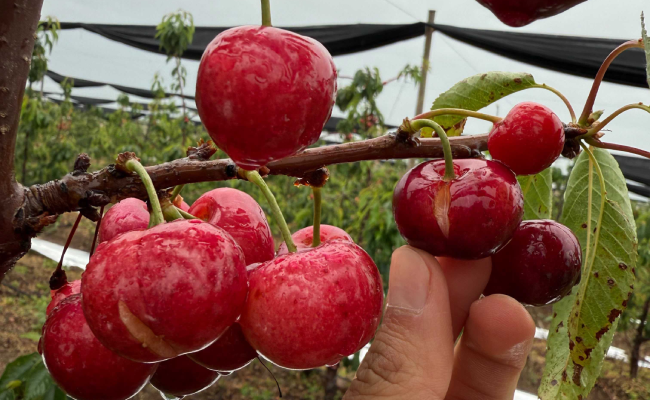
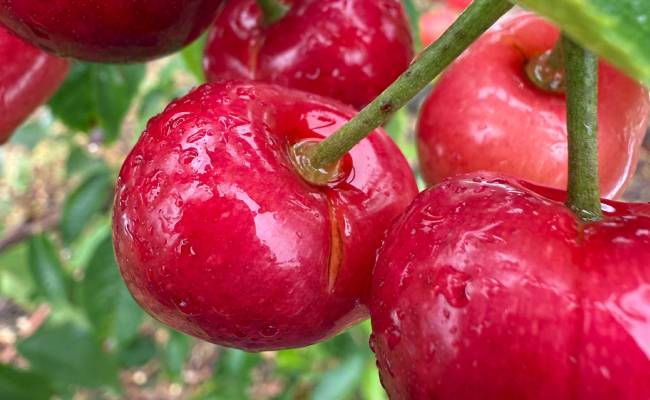
The Andean country has seen heavy precipitation of up to 110 millimeters across regions in the last few days, which has preliminarily caused splitting in early cherry varieties planted in the north due to the lack of protective covers.
Cherry expert and advisor Walter Masman told FreshFruitPortal.com that the impact is not uniform across producing regions, with orchards in the central zone likely experiencing more limited effects.
Fortunately, compromised fruit volume in the north is small compared to total production, Masman said: "In the main producing areas of the O'Higgins Region, where over 80 percent of cherry volume is concentrated, the production impact of the rains would be practically marginal so far."
Sanitary risk following the rains
Despite the limited impact in the main producing regions, the expert recommended monitoring the risk of fungal diseases over the coming days and assessing the need for new applications after the rain.
“This is particularly relevant due to the phenological unevenness observed this season in the trees, with floral remnants still present in some orchards,” he pointed out.
Regarding soil saturation, he said it matters more for varieties that will be harvested in the first days of November, as some fertilization programs could remain unfinished.
Rain is forecast for producing regions, which could bring close to 20 more millimeters of water.
“What is concerning is that repeated rains can prolong soil saturation conditions and increase physiological risks for the trees,” the expert said.
This situation could eventually cause fruit abortion and drop because of the poor winter chilling recorded.
Decimated cherry crops in the north
While experts continue to assess the true impact of the latest rains in Northern Chile, the industry is already lamenting a smaller-than-expected crop.
In conversation with FreshFruitPortal.com, Miguel Ángel Lorenzini, plant manager at Teno Pack, said production in Ovalle, 400 kilometers north of the Chilean capital of Santiago, could drop by up to 70 percent compared to initial production forecasts.
According to the expert, unpredictable weather in the area can explain the dramatic decline in crop size. Northern Chile was hit with an abnormally wet winter, followed by what, by all outlooks, seems to be a wetter-than-usual spring.
Moisture accumulation in a short period of time, Lorenzini said, is literally asphyxiating plant roots, a dire situation that adds up to fluctuating chill-hour accumulation and the detrimental effects of high temperatures registered right at the blooming and setting phases.
"On one hand, growers are happy with the amount of water fallen, which today secures, according to what can be verified, four or five seasons,” he said. “But when we start looking at the productive reality of each orchard, there are growers with losses exceeding 80 percent who may not find it worthwhile to harvest for export."
With precipitation still forecast throughout most cherry-producing regions in Chile, growers are bracing for more rainfall as the effects on the 2026/27 crop continue to be assessed.
*All images courtesy of Teno Fruit.
Written and reported by Macarena Bravo.
Related stories
The Chilean cherry challenge: Adapting to a more demanding Chinese consumer
Agronometrics in Charts: Supply surge forces Chilean cherry industry to look beyond China