



Biological technology promises to revolutionize strawberry postharvest in Chile
 Add Fresh Fruit Portal to Google
A study led by the Agricultural Research Institute of Chile (INIA) could mark a turning point in the production and commercialization of the country’s strawberries.
The project brings together specialists from three Chilean universities who developed a biotechnological prototype capable of doubling the fruit's shelf life, extending it from two or three days to about six days under room-temperature conditions.
FreshFruitPortal.com spoke with Sebastián Molinett, extension researcher at INIA La Cruz, who said that the work originated from basic science studies on natural gases derived from sulfur metabolism, present in the plants themselves.
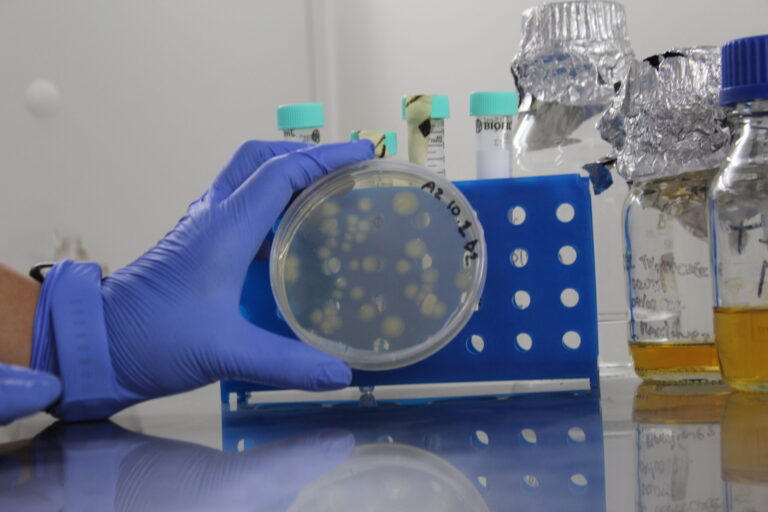
Image by INIA
"We observed that these compounds decrease during strawberry ripening and that this reduction is closely related to the rapid softening of the fruit,” he explained. “Based on this knowledge, we sought a sustainable way to replenish them to maintain firmness and prolong postharvest life."
An innovative biological solution for strawberries
The research is based on native Chilean yeasts, obtained from natural environments and improved through conventional cross-breeding.
Molinett explained the organisms naturally produce the gasotransmitter responsible for the preservative effect, and they never come into direct contact with strawberries. Instead, the microorganism releases the compound in a controlled manner inside the packaging, delaying the fruit’s natural softening process.
"The goal is to maintain greater firmness so that the strawberry better withstands transport, handling, and high temperatures, without affecting its organoleptic characteristics," the researcher said.
From the lab to the industry
The team is currently working on a pre-commercial prototype and is actively engaging the private sector to support the technology’s industrial scaling and future knowledge transfer.
The yeast will go into an absorbent pad inside the strawberry packaging, easily adapting to different packaging formats used by the industry.
"Our purpose is to arrive at a scalable and industrialized device, ready to be commercialized in a subsequent stage," the project director said.
According to Molinett, the industry has received the results with great interest, and various companies have already committed their support for the next stage of development.
"There is a great opportunity to open new markets. Countries like Brazil, Argentina, and even the United States value the quality, flavor, and aroma of Chilean strawberries. If we manage to extend their shelf life, we could transform that advantage into a concrete opportunity for the productive sector," he affirmed.
Innovation with potential
Beyond the impact on fruit growing, the technology is highly novel worldwide. According to Molinett, no other device currently uses yeast to prolong fruits’ postharvest life.
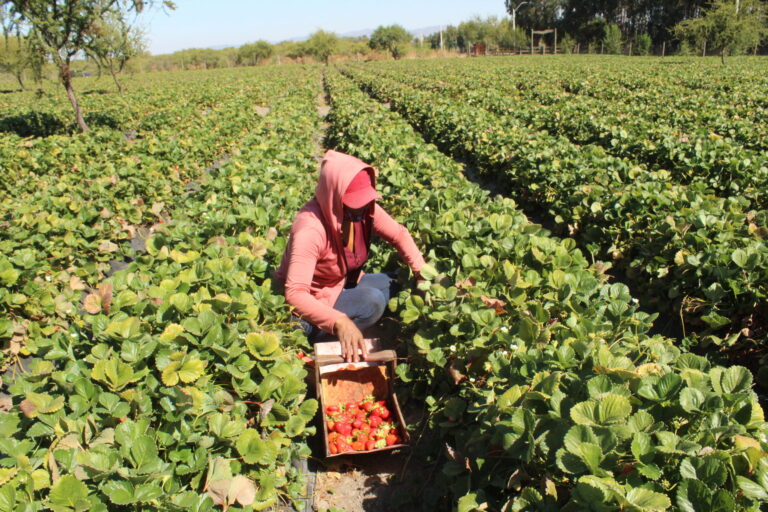
Image by INIA
The group is also evaluating extending the application of this technology to other berries, such as raspberries, blueberries, and blackberries, while advancing intellectual property protection and future licensing strategies in both Chile and international markets.
"Our commitment is to continue developing science with impact, transforming research into concrete solutions for agriculture and providing tools that strengthen the competitiveness of the sector," the academic concluded.
*All images courtesy of INIA.
Related stories
Preserving native pollinators can boost fruit yields, Chilean research says