Protein and fiber are having a huge moment at retail, Instacart says

 Add Fresh Fruit Portal to Google
The grocery shopping app Instacart is calling it the proteinization and fiberization of America’s shopping cart.
In a recent report, the online service states that user searches for “protein” on its platform rose nearly 13 percent year on year, while those for “fiber” jumped 26.4 percent in the same period. This, they say, “is one of the clearest signals of where customer interest is heading.”
According to the post, the main driver behind this trend is the expansion of GLP-1 medications, which have “pushed protein and fiber to the center of the national food conversation, as people on these drugs are widely advised to prioritize protecting muscle mass and supporting digestion.”
Protein- and fiber-maxxing through the grocery store
As shoppers dive deeper into the wellness trend, retailers have diversified their shelves to offer multiple nutrient-enriched alternatives that go beyond the “protein is meat” maxim. Out of the top 10 highest-growing categories in the last calendar year on Instacart, eight are protein- or fiber-rich foods.

Referential image via Shutterstock.
On the protein front, the big winner is Greek and Icelandic yogurt, with its share of items sold rising eight percent year on year. Close behind are whole eggs, up seven percent; milk, up four percent; and protein milk, up 15 percent.
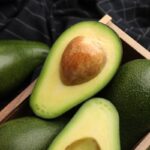
On the fiber front, sweet potatoes are leading the charge with a 28 percent share gain since 2025. In second place are Hass avocados with a six percent share gain, and yams with a 20 percent bump. Other produce aisle staples making the cut are red raspberries (three percent), Bartlett and D’Anjou pears (11 and 20 percent), walnuts (10 percent), dried prunes (10 percent), and pomegranates (10 percent).
Frozen veggies are also touching a fiber. Frozen edamame’s share of sold items grew 20 percent year on year, followed by broccoli (two percent), peas, and green beans (four percent each).
Wellness is not the same in every state
Even though wellness and good-for-you eating habits are having a moment worldwide, the trend doesn’t look the same everywhere. According to Instacart, shopping choices take different forms depending on your location, and no state is embracing the macro moment like Florida: The Sunshine State ranks first for most sales from high-fiber categories and second for sales in high-protein categories on Instacart.
Other protein-loving states are Iowa (12 percent), South Dakota (10 percent), and Nebraska (nine percent), revealing the Midwest’s penchant for the nutrient. Meanwhile, states filling up on fiber are Colorado (14 percent), Oregon (11 percent), and Minnesota (10 percent).
Cities show an even more granular trend. Lakeland, FL; Ankeny, IA; and Coralville, IA, are the top three protein-loving cities in America, buying 19 percent, 15 percent, and 14 percent more than the rest of the country. California cities, apparently, are not as on board with the trend—at least on Instacart. The Golden State’s cities of Manteca, Lancaster, and Stockton are buying the least protein-rich foods on the platform, with purchases around 20 percent below the rest of the country.
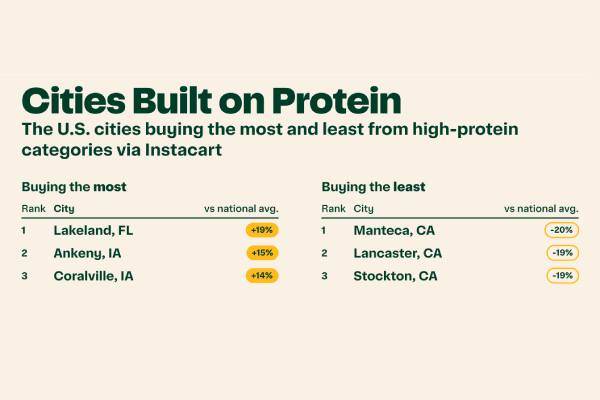
Image courtesy of Instacart.
On the other hand, fiber-fans seem to be taking residence in Austin, TX; Miami Beach, FL; and Roseville, MN, where shoppers buy 39 percent, 37 percent, and 31 percent more high-fiber foods than the rest of the country. Meanwhile, Portsmouth, VA, and Ohio’s Dayton and Toledo are the cities buying the least amount of high-fiber foods, with carts around 30 percent smaller than the US average.
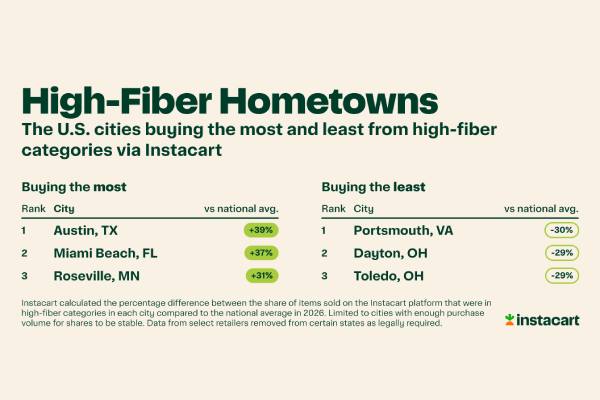
Image courtesy of Instacart.
*Main image via Shutterstock.
Related stories
Produce companies are finally jumping on the protein trend. This is how they’re doing it.