


Colombian citrus industry battles a loss of competitiveness amid multiple commercial headwinds
 Add Fresh Fruit Portal to Google
The Colombian citrus industry is facing a complex scenario, marked by a loss of export competitiveness, rising production costs, and uncertainty over potential tax changes.
Andrés Londoño, chairman of the board of directors of the Association of Fruit Producers of Colombia (CITRI), told FreshFruitPortal.com that current market conditions are putting increasing pressure on grower profitability and the sector's growth prospects.
The leader explained that over the past five years, citrus activity in the country has remained virtually stagnant, especially in orange and mandarin segments. Acreage for these crops has also decreased dramatically as land is repurposed for cattle farming and rural housing projects.
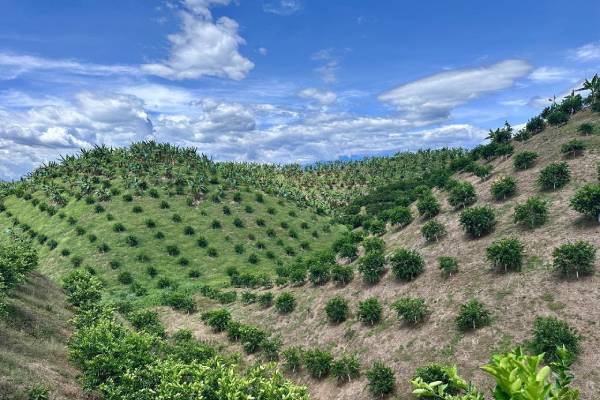
Image by Andres Londoño
Londoño noted that a weaker US dollar, which has depreciated by approximately 30 percent over the past year, has compounded the situation, reducing exporter revenue despite the category’s success.
The impact is especially significant in labor-intensive agricultural activities, including crops like avocados, berries, mangos, and other tropical fruits, where labor costs can represent up to 70 percent of investment.
To offset these extra costs, the industry is now increasingly banking on mechanized production processes, Londoño explains, as well as optimizing costs and seeking specialized markets that value fruit quality and allow for long-term commercial relationships.
Declining orange exports, domestic pressure, and climate woes
One of the most concerning indicators impacting Colombian citrus is the downward trend driving orange exports. According to Londoño, in 2021 the country exported approximately eight percent of its national production, whereas that share has now dropped to around one percent.
"We can say that the orange export market has effectively disappeared in the country," he said.
Historically, one of the main destinations for this fruit was the US, where it was primarily used for juice processing. However, the closure of Premier, one of the main importers of Colombian fruit in that market, ultimately weakened a trade channel that has failed to recover.
The executive noted that despite the contraction, the domestic market has absorbed much of the available production, helped by the reduction in cultivated area.
Unfortunately, international headwinds are not the only difficulties facing the Colombian citrus industry. Domestically, the industry faces a tax proposal promoted by the local government that would apply a 19 percent levy to various basic products, including citrus fruits, avocados, coffee, panela, and chocolate.
For Londoño, this measure could mark a setback in the formalization progress the agricultural sector has made in recent years, particularly in invoicing, labor contracting, and worker registration in the social security system.
Image by Andres Londoño
The executive warned that applying this tax could create an uneven playing field between formal businesses and small producers who are not required to issue invoices, re-incentivizing informality in Colombia's countryside.
The initiative will have to go through legislative debate and process before it could become law, leaving uncertainty about its approval and final scope.
Another factor keeping producers on alert is the weather.
Colombia experienced a period of high temperatures and low rainfall between June and September. Subsequent rains helped restore crops, supporting flowering and improving fruit filling, but there’s overall concern over the upcoming dry season, between December and April.
The primary risks are drought and wildfires, especially since, according to Londoño, 99 percent of Colombian agriculture lacks irrigation systems.
As preventive measures, farmers are boosting fertilization during rainy periods, maintaining ground cover to protect soil from solar radiation, and adjusting agricultural practices to reduce water stress in groves.
Tahiti limes: A shining light for the Colombian citrus industry
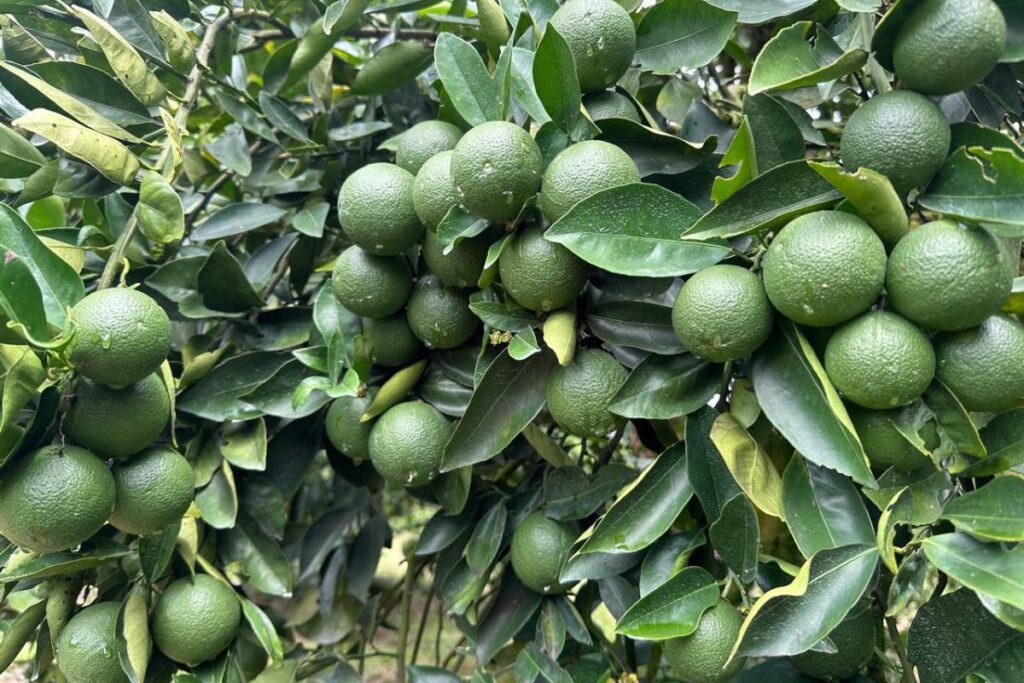
Tahiti lime has been the only subsector to show significant growth in the Colombian citrus category, driven primarily by export opportunities and its competitiveness in international markets.
Despite the challenges, the category remains the main growth driver for Colombian citrus farming. Today, the country has approximately 60,000 cultivated hectares of Tahiti lime and an estimated annual production close to 900,000 metric tons.
Londoño noted that the international market maintains a favorable perception of Colombian fruit, especially in the US, where exporters have received positive feedback on its quality and arrival condition.
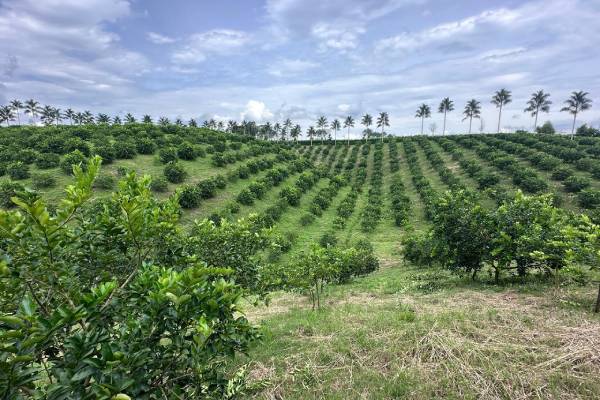
Image by Andres Londoño
In this context, the North American market represents a concrete opportunity to expand shipments, considering its capacity to absorb larger volumes of Colombian fruit.
Efficiency and quality: keys to the future
The CITRI president urged growers to focus on improving efficiency, managing costs, and prioritizing fruit quality.
He also highlighted the importance of strengthening commercial ties with international buyers through long-term agreements and supply programs that ensure a steady market presence throughout all 52 weeks of the year.
“There are opportunities to regain sector momentum, particularly through Tahiti lime and its expansion potential in the US,” he said. “The challenge will be to turn those commercial opportunities into sustainable growth, in a context where currency competitiveness, labor costs, tax uncertainty, and climate risks will continue shaping the future of Colombian citrus production.”
*All images courtesy of Andrés Londoño.
Related stories
Colombia is seeking foreign investment to boost local blueberry industry
Opinion | When denial costs millions: The true HLB risk to Latin American citrus