

Chile’s Institute of Agricultural Research (INIA) is testing whether table grapes can thrive with just half the water input that growers in the country’s central region usually rely on.
The area is home to most of Chilean table grape production, with over 90 percent of the output destined for exports.
To improve production efficiency and competitiveness, INIA and the Valparaíso chapter of the national Production Development Corporation (CORFO) are working with local growers to demonstrate that adopting irrigation management technology can increase water efficiency and reduce waste, without sacrificing quality.
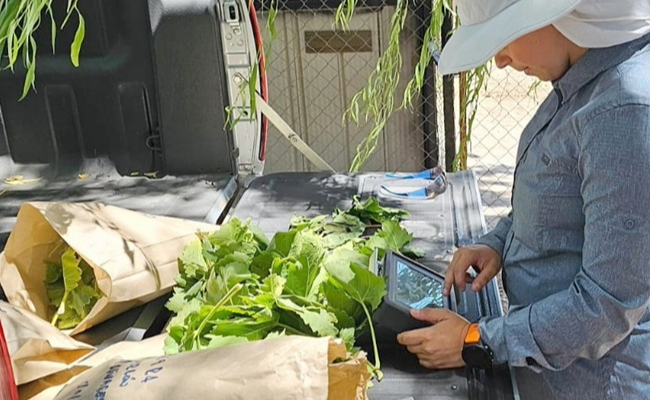
Guided by INIA researcher specialized in irrigation and drainage, Carlos Zúñiga and a technical team, 10 growers have adopted monitored irrigation practices by installing the program’s units on their farms.
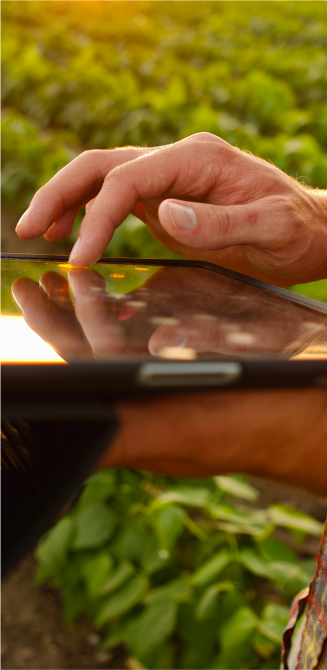
On these farms, irrigation systems were modified using soil moisture sensors and meteorological data to precisely replace the water consumed by crops. Other practices, including fertilization, pest control, and canopy management, remained unchanged.
The project aims to show that controlled irrigation can significantly reduce water use in table grape production without compromising fruit quality.
Preliminary results from the first season indicate significant progress. In one demonstration unit, INIA’s system used about 314,000 gallons of water per acre before harvest, compared to a grower who spent over 611,000 gallons in the same area using traditional irrigation.
“We managed to reduce the amount of water used in that field by almost half,” Zúñiga said in a statement announcing the results.
According to the researcher, extrapolating these savings to 2,470 acres would conserve enough water to supply approximately 40,000 people for one year.
When it comes to commercial fruit production, water conservation is important, but it cannot come at the expense of quality. This is especially true for the Chilean table grape industry, as 90 percent of its output is exported and has to retain high quality standards while in transit for up to 30 days.
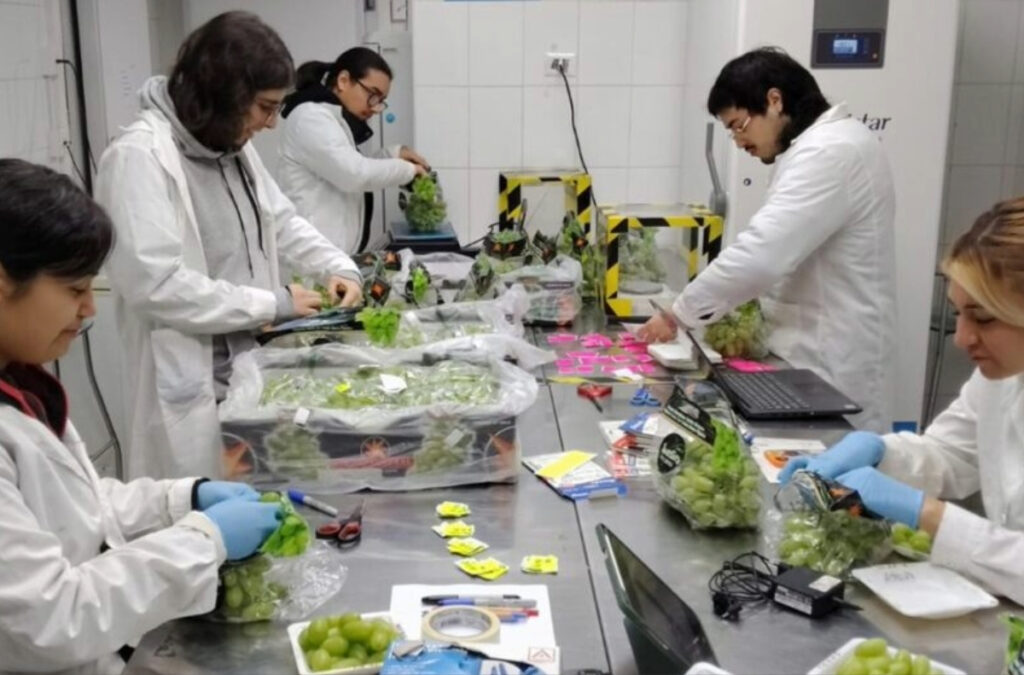
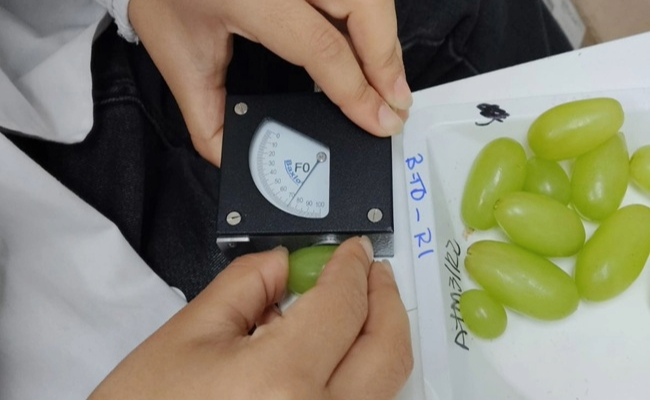
To ensure the program’s crops survive the long voyages, samples from both the efficient irrigation system and traditional management were sent to the University of Chile’s postharvest laboratory. Analysts there are assessing berry size, firmness, Brix levels, color, and rachis condition.
Results from these analyses are not yet available. However, they will determine whether fruit produced with less water remains competitive in international markets.
Currently, fewer than 10 percent of table grape producers in the country use sensors or weather stations to guide production decisions, according to the INIA’s estimates.
To encourage adoption, the project team is simplifying data interpretation by advising growers directly, organizing activities such as field days, and creating outreach materials. .
*All images courtesy of INIA.
Related stories: