








South Korea earns a spot as a premium market for Chilean cherries



Written and reported by Macarena Bravo | Lee esta noticia en Español


Diversification is a familiar mantra in the produce world, yet Chile’s cherry industry, the global leader, has only just begun to truly embrace this strategy.
China accounted for nearly 90 percent of the country’s shipments of the fruit, a strategy that had paid off for years—up until this season. In 2025, the Chilean cherry industry needed to revise its game plan after an increase in yields and a surge of imports pushed prices to historic lows.
In this landscape, market diversification is gaining prominence. In this initial exploration phase, South Korea has emerged as a relevant alternative to China due to its consumers’ focus on fruit quality, the country’s commercial stability, and the market’s ability to generate high returns.

South Korea, the new frontier for Chilean cherries
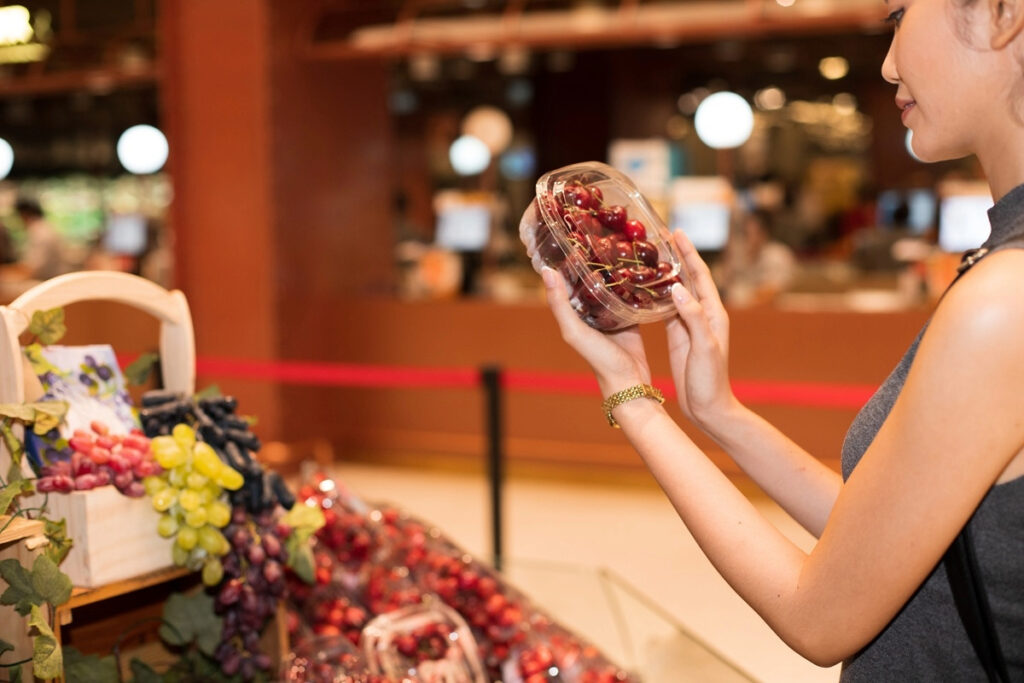
In 2025, South Korea imported 1.3 million 11-pound boxes of Chilean cherries, accounting for just over one percent of total exports. Despite the small share, the market has shown steady growth, with shipments arriving mainly by air early in the season and continuing through to the end of the campaign.
Julio Ruiz-Tagle, Asia & Americas Manager at Dutch fresh produce quality control and inspection company, D-Quality Survey, says the main value of the South Korean market lies not in volume, but in its ability to reward quality.
“It’s a smaller market, but much more demanding since it operates under a different logic, where excellence is the minimum requirement to compete,” he explains. “Korea is much more boutique, and there is no room for mid-quality fruit—if it’s not excellent, it immediately loses value.”

Unlike other Asian destinations, where more open and volatile wholesale channels dominate, South Korea has a highly organized commercial structure. Most of the fruit from importers goes directly to retail chains, reducing informality and adding stability to a system that, on the other hand, also limits visibility into on-the-ground market behavior.
Meeting new market priorities
The South Korean market stands out for its sophisticated, well-informed, and highly demanding consumers. In the country, imported cherries are perceived as a premium product, with attributes such as size, firmness, sweetness, and presentation not only valued but actually decisive in purchasing decisions.
Patricio Bobadilla, general manager of OPM Chile—a Korean-owned importer of South American fruit—emphasized that the Asian country’s market has a different consumption dynamic than China.
While in the Asian Giant gift-giving traditions strongly influence demand, especially during the Lunar New Year, Koreans don’t need a special occasion to purchase imported fresh fruit.
“It’s everyday, family consumption, not so much associated with gifting. That completely changes how the fruit is marketed,” Bobadilla explained.
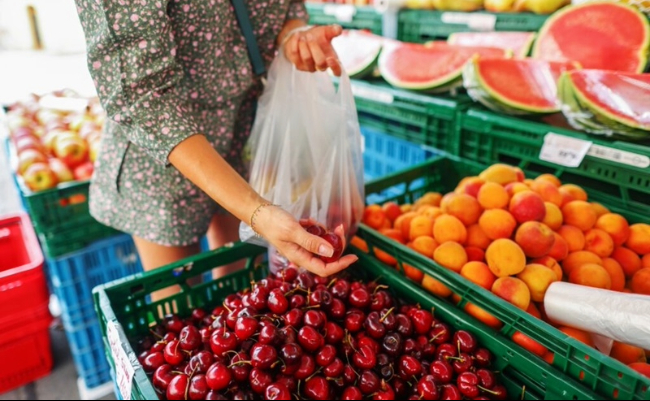
This pattern is linked to the country’s demographic structure. South Korea has one of the lowest birth rates in the world, resulting in smaller households, typically composed of two to three people. Retailers adapt to this reality, and around 90 percent of the fruit is packed in smaller containers weighing under two pounds.
Pricing is another key factor. Bobadilla notes that the Korean market offers an interesting balance between high-quality standards and strong price sensitivity. Within this context, Chilean cherries have positioned themselves competitively against other origins, such as Tasmania or New Zealand, which may offer superior quality but at a higher cost.
One factor behind this advantage is Chile's maritime logistics, which enable it to offer more affordable prices. However, this asset also represents one of the market’s main challenges.
Transit time to South Korea can reach 28 to 30 days from harvest, requiring highly precise coordination across the entire supply chain. From orchard to shelf, every stage must be perfectly synchronized to ensure the fruit maintains optimal condition.
Another challenge is the market’s sensitivity to volume. Unlike China, which can absorb large quantities, South Korea has limited capacity. Therefore, excessive shipments can quickly saturate demand, leading to price drops and affecting profitability.
Catering to a knowledgable consumer
During the last season, higher-than-expected volumes of Chilean fruit, combined with a later Lunar New Year, led to some shipments being redirected to South Korea early in the season. This initially put pressure on prices, though the market recovered later on.
In contrast, Chile’s cherries experienced a particularly challenging season in China, marked by high volumes, quality issues, and weak demand, resulting in underwhelming returns. South Korea performed relatively well, reinforcing its role as a complementary market.
Bobadilla also emphasized the evolution of the Korean consumer. He describes an audience that is highly informed and familiar with technical concepts such as Brix levels. Koreans, he adds, also prioritize health-related attributes like natural sweetness and the absence of additives.
It’s common to find detailed information about sugar content in supermarkets, the expert says, which enables more informed purchasing decisions.
“This level of sophistication raises the bar for exporters, who must ensure consistency in every shipment,” he adds.
Additionally, the Korean market stands out for its high level of technological development. E-commerce is increasingly important in the country's fresh fruit distribution, complementing the strong presence of physical retail, which accounts for around 60 percent of sales.
South Korea’s limitations as a leading cherry destination
South Korea also presents limitations for the Chilean cherry industry, chief among them, its size. The country is home to 50 million people, a declining population that is not negligible, but it restricts Chile’s capacity for cherry volume growth.
Economic and political factors have also introduced some uncertainty in consumption, in line with the global post-pandemic slowdown.
In this scenario, Bobadilla and Ruiz-Tagle both agree that the future of the Korean market as a leading destination will depend on a clear and differentiated strategy. The key will be rigorous segmentation at origin, prioritizing large sizes, high firmness, and optimal sweetness levels.
For producers in Chile, the experts stress the importance of building stable relationships with local importers and retail chains, moving toward consistent—albeit smaller-scale—export programs. Consistency in supply is essential to position the product and build consumer trust.
Another major challenge is adapting production strategies to meet the demands of distant markets. According to Santiago Caorsi, commercial representative at Chilean producer and exporter, Greenvic, this may even require revisiting harvest criteria, prioritizing fruit that, while maintaining sweetness, can better withstand long transit times.
“We need to think about fruit that can last longer. It’s not enough for it to be sweet—it has to arrive in good condition after 30 days,” he said.
Related stories:
Dark sweet cherries may slow aggressive breast cancer metastasis










Subscribe to our newsletter