







Brazil and Ecuador will research banana varieties resistant to serious diseases, such as TR4 and moko
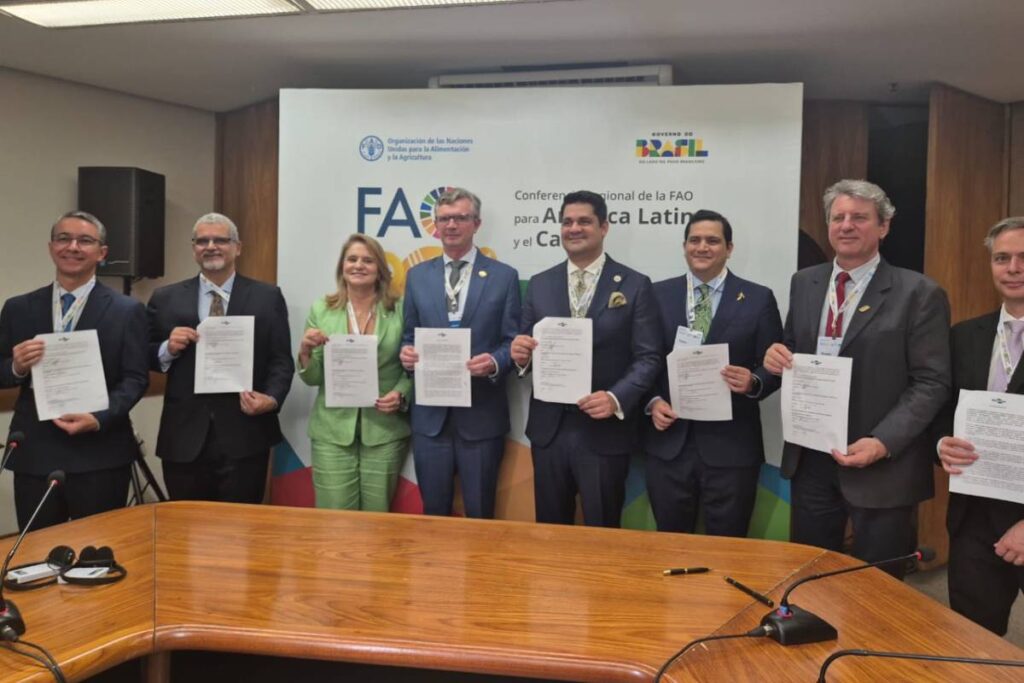



On March 5, representatives from the Brazilian Agricultural Research Corporation (Embrapa), the Ministry of Agriculture, Livestock, and Fisheries of Ecuador, and the Ecuadorian Banana Exporters Association (Aebe) gathered in Brasilia to sign a letter of intent to draft a technical cooperation agreement.


The work will focus on the preventive genetic improvement of Cavendish banana plants to resist race 4 Tropical (Foc TR4), the most severe form of Fusarium wilt.
“We hope that this problem will turn into a great opportunity for the Ecuadorian government and for Embrapa,” said Juan Carlos Vega Melo, Ecuador’s Minister of Agriculture, Livestock and Fisheries, who emphasized that there are more than 250,000 families in the producing workforce who will benefit from the innovation.

While not yet identified in Brazil, TR4 has been reported in neighboring countries such as Colombia (2019), Peru (2020), and Venezuela (2023), as well as other countries in the region, like Ecuador (2025). The proximity of the pest has placed the Brazilian banana industry in a state of constant alert, driving government prevention efforts.
Collaboration between neighbors
Ecuador is the leading global exporter of bananas, with nearly four million tons exported in 2023 alone, according to the Food and Agriculture Organization of the United Nations (FAO). Meanwhile, Brazil produced seven million tons of the fruit in 2024, destined solely for the domestic market, says the Brazilian Institute of Geography and Statistics.
Validating resistant genotypes under real-world disease-pressure conditions is fundamental for local Cavendish growers.
“Developing varieties resistant to Foc TR4 and planting them in countries where the pest occurs is a matter of national security for Brazil," explains Edson Perito Amorim, researcher and leader of the Embrapa Banana and Plantain Genetic Improvement Program. "This strategy reduces the expansion of the pest, as well as the risk of dissemination and introduction into our country."
The Cavendish group, most widely planted in Ecuador and exported to 75 countries, is also the most widely planted in Brazil's largest banana-producing region, the Ribeira Valley.
Partnerships with foreign institutions have been essential for advancing Brazilian research in the search for disease-resistant varieties.
It was thanks to the work with the Colombian Agricultural Research Corporation (AgroSavia) that Brazil was able to prove that two banana varieties developed by Embrapa—BRS Princesa (Apple type) and BRS Platina (Silver type)—are naturally resistant to Foc TR4. As a result, Brazil is currently the only country in the Americas prepared to combat it.
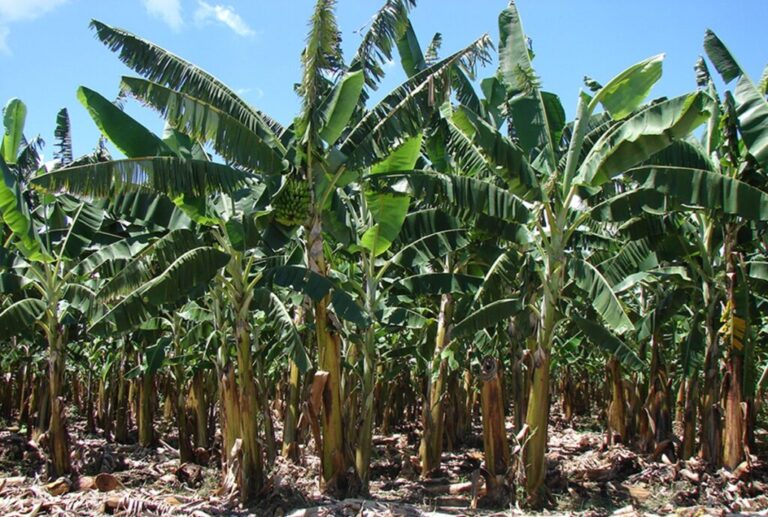
Embrapa's BRS Platina plantation | Photo by Léa Cunha.
“This is the first of several partnership opportunities with Ecuador. Working collaboratively with countries already dealing with the pest is essential to anticipate solutions, reduce risks, and ensure that producers have access to more resilient genetic materials,” highlighted Silvia Massruhá, president of Embrapa.
A wider research scope
Another disease included in the joint research scope is banana moko disease. Highly destructive, this fungus generates symptoms in all parts of the plant that can lead to total crop loss.
There are still no efficient control measures or banana cultivars resistant to moko, which is already present in Ecuador.
“The project discussed with Ecuador, which has already lost 3,000 hectares due to the disease, also aims to develop technologies that can assist Brazilian producers in the event of an increase in the spread of this disease, which is currently restricted to Northern Brazil, or a migration to other producing regions,” adds Amorim.
*Main image by Maria Clara Guaraldo, courtesy of Embrapa. All other images are referential.
Related stories
Fresh Del Monte sounds the alarm once again on global banana crisis escalation



Subscribe to our newsletter