



Written and reported by Macarena Bravo, from Orlando, Florida, USA.
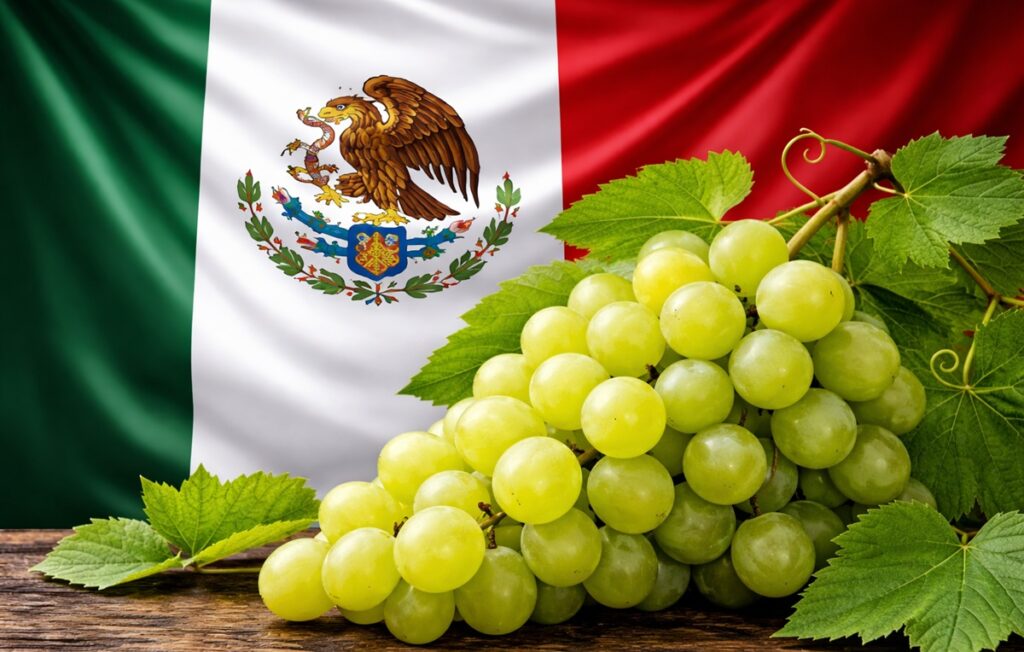
After a season marked by anomalous weather that led to early harvests and commercial difficulties, the Mexican table grape industry is seeking to recover its historical production levels.
At the Global Produce & Floral Show, held in Orlando, Florida, between October 14 and 16, Sergio Lugo, director of Mexico Table Grapes and the Sonora Table Grape Growers Association, sat down with FreshFruitPortal.com to analyze the challenges and lessons of the 2026 season.
The executive described the last two years as a particularly complex period for his sector due to low precipitation and high temperatures that impacted plant development.
“It was a tremendous weather anomaly,” Lugo noted, explaining that the vines could not properly enter dormancy, altering the crop's physiological cycles. “As a result, some varieties that traditionally reached yields between 2,500 and 3,000 boxes per hectare registered yields close to 2,000 boxes or even lower,” he explained.

Despite the difficulties, the table grape industry leader said fruit quality was maintained thanks to growers' agronomic management.
One of the main effects of abnormal weather was an earlier harvest schedule.
While the Mexican season historically began around week 19, the first field work started about 15 days earlier this year. The production peak also moved forward, shifting from week 21 to week 24. As a result, the campaign unfolded in just 12 weeks, compared to the 14 to 16 weeks it traditionally spans.
The schedule shift also affected the table grape industry's final volumes. Lugo detailed that Mexico produced around 16.5 million boxes, a figure below the potential of a normal season.
The impact was also felt at the variety level. Flame, which years ago reached up to eight million boxes, recorded about 3.7 million in the latest campaign, while Early Sweet dropped from typical volumes near four million boxes to approximately 2.8 million.
At the same time, growers continue to orient their supply toward green varieties, which currently represent nearly 60 percent of table grape production.
“This transformation responds to both productivity conditions and the evolution of varietal supply and commercial preferences,” explained Lugo.
The early harvest also affected the commercial sphere, as Chile and Peru extended their shipments to the United States, historically the primary market for Mexican table grapes.
This caused an overlap in supply during a period when Mexican production is traditionally limited. The situation especially affected growers marketing early varieties like Flame and Early Sweet, who faced stiff competition from South American grapes.
Analyzing destination markets, the representative for Mexico Table Grapes said that, given marketing difficulties in the United States, growers increased shipments to the domestic market.
“Distribution last season shifted from a historical ratio close to 90 percent destined for the United States and 10 percent for Mexico to a proportion of 80 percent and 20 percent, respectively,” he explained.
For Lugo, this shift reflects a strategic opportunity in a market where grape consumption has gained ground thanks to year-round availability. Furthermore, the leader sees significant potential to continue developing demand within Mexico, particularly in major urban centers like Mexico City, Guadalajara, and Monterrey.
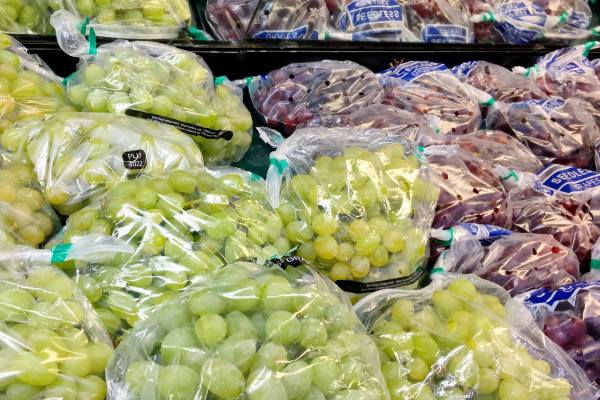
Image by Shutterstock
In this context, the table grape industry plans to work alongside Global Grape Group to strengthen promotional activities and expand the presence of Mexican grapes in the domestic market.
The goal set by Lugo is to reach minimum shipments of six million boxes during the domestic season.
Current weather conditions in Sonora offer encouraging signs for the upcoming season and contrast positively with the past two years of drought and extreme temperatures.
According to Lugo, this scenario could favor table grape production recovery and allow the industry to return to historical levels for a normal season, exceeding 22 million boxes.
However, the executive warned that weather conditions remain difficult to predict and that planning must account for potential early harvests.
Image by Shutterstock
Pruning will begin in some areas with early varieties during November, while most field operations will concentrate between December and January. In certain regions, work could extend into February.
Commercially, the table grape sector is also seeking to make progress on advance agreements with buyers and distributors. For Lugo, greater contractual planning will be key to reducing exposure to price volatility and better managing any supply and demand mismatches.
“We are very hopeful that the upcoming table grape season can be very successful,” he concluded.
*All images are referential via Shutterstock
Related stories
The Mexican table grape industry’s next big challenge
Mexican table grape season makes early debut, squeezing market prices