



Poland boosts its berry industry with over 270 thousand productive acres
 Add Fresh Fruit Portal to Google
With over 288 thousand acres of berry production, Poland is consolidating its position as one of Europe's main producers of the fruit, driven by a growing development of protected production systems, especially oriented to the fresh market.
In a report by Mariusz Podymniak, representative of Hortus Media and the website jagodnik.pl, traditional crops include currants, aronia, and gooseberries, whose production is mainly intended for the processing industry. In this segment, Poland maintains a relevant position internationally, particularly in blackcurrants, for which it is the world's leading producer.
According to the assessment, Poland also plays an important role in strawberry and raspberry production for processing, where quality and industrial characteristics have allowed it to maintain a consolidated presence in international markets.
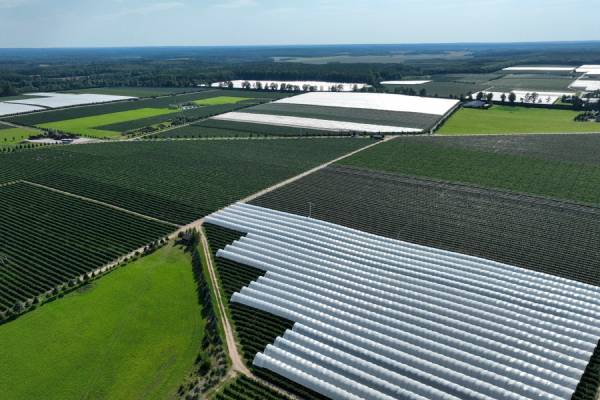
Image by Mariusz Podymniak
Protected crops drive Poland's fresh market
One of the main changes in the Polish berry industry in recent years is the expansion of protected cultivation systems, especially for strawberries, raspberries, blackberries, and blueberries, Podymniak said.
Today, nearly 8,000 acres of strawberries and raspberries are produced under cover, while blueberries account for another 1,200 acres.
These systems improve fruit quality, stabilize yields, and reduce weather risks. Additionally, they allow control over harvest periods and better responsiveness to fresh-market buyer demand.
The pace of expansion also reflects the sector's interest in modernizing its production systems, with over 700 acres of new growing tunnels added each year.
Along with blueberries, blackberries, wild strawberries, lingonberries, and kiwiberries, these crops are a part of a diversified offering that supplies different commercial segments.
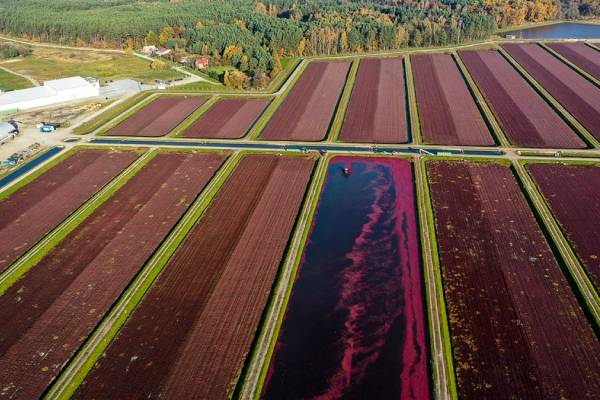
Image by Mariusz Podymniak
Distribution of productive area
According to sector figures, currants lead in cultivated area in Poland with over 123,000 acres, followed by strawberries and raspberries, with over 60,000 and 36,000 each. Blueberries take up nearly 33,000 acres, while aronia totals over 30,400 acres.
On a smaller scale are gooseberries, with over 3,000 acres; blackberries, with 1,000; lingonberries (cranberries), with 250; kiwiberries, with 160; and wild strawberries, with 45 acres. In total, these crops cover nearly 300,000 acres of Polish countryside.
This diversity allows the local industry to keep a competitive position in both the fresh fruit and processed product markets. However, the sector’s expansion will depend on continued investment, adding new technologies, and developing commercial opportunities.
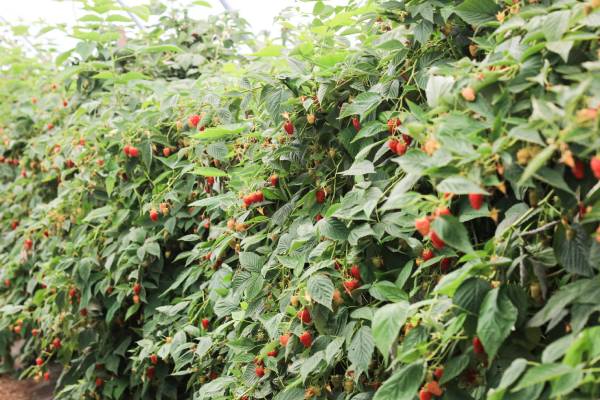
Image by Mariusz Podymniak
In this scenario, exports represent a strategic axis for the sector. Producers must continue expanding their international presence and adapting to quality requirements and changing consumer preferences.
*Images courtesy of Mariusz Podymniak.
Related stories
Poland's fresh blueberries are ready to break into the Taiwanese market