




Written and reported by Camila Gutiérrez | Lee esta noticia en Español
India’s table grape industry has established itself as one of Asia's leading sectors, with a growing focus on international markets, and leading fruit variety developer, BLOOM FRESH™, is fueling the industry’s success.
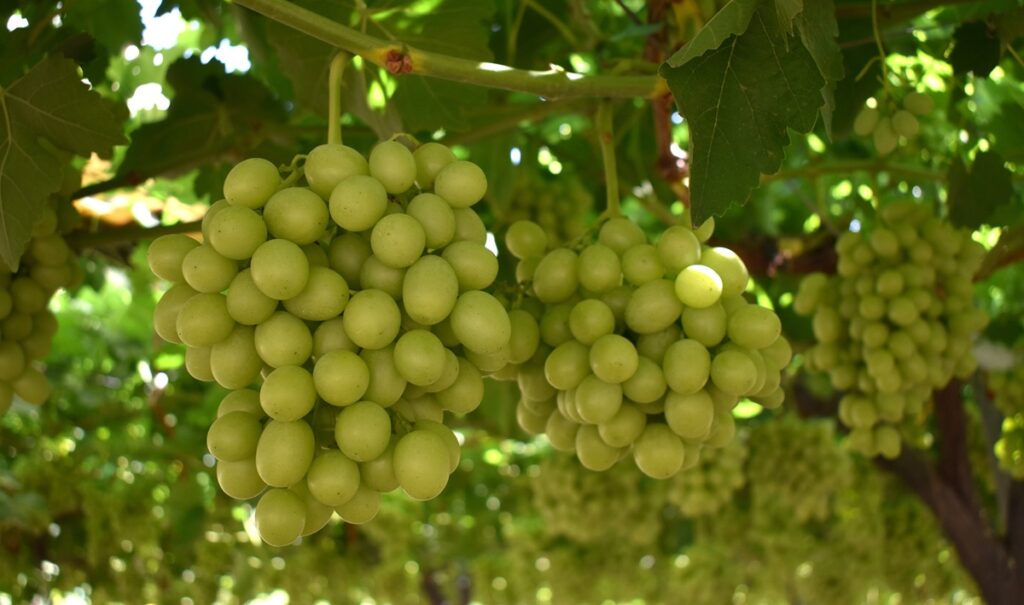
India ranks among the top global producers of table grapes, with much of its activity concentrated in the state of Maharashtra, its main production hub. Thanks to its tropical–subtropical climate, the country benefits from an early production window, with harvests mainly occurring between January and April, positioning it as a supplier when Northern Hemisphere table grape production is limited.
The country’s export sector has grown steadily, with Europe as the primary destination, alongside markets such as the United Kingdom, Russia, the Middle East, and Southeast Asia. Production is dominated by seedless grapes, with varieties such as Thompson Seedless, Sonaka, Sharad Seedless, Flame Seedless, and Crimson Seedless accounting for the largest planted area.
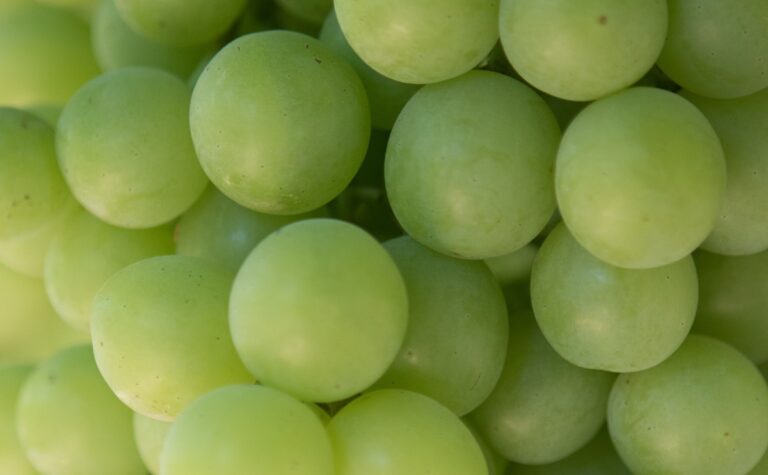
In recent years, however, the introduction of new licensed varieties has intensified, in line with the global shift toward higher-quality, higher-value genetics to improve competitiveness.
The industry is also characterized by a structure in which small growers work in coordination with exporters and pack houses, under high standards of traceability and post-harvest handling.
BLOOM FRESH™ is one of the leading companies investing in India’s table grape potential by launching its first commercial-scale production of premium grape varieties, including Sheegene 20, Sheegene 13, Sheegene 2, and Sheegene 21, marketed as Allison™, Timco™, Timpson™, and Ivory™.
Its goal is to accelerate the transition toward higher-value varieties that offer consistent quality and align with consumer preferences.
Karen Smit-Lotriet, Commercial Manager for BLOOM FRESH™ in India, told Freshfruitportal.com that India is among the first countries to which the company’s varieties have been introduced, and that there is already strong interest in them.
“India is the most populous country in the world, and consumers prefer sweet and flavorful products,” she explains, “The country is replacing traditional white varieties while also increasing the presence of colored varieties.”
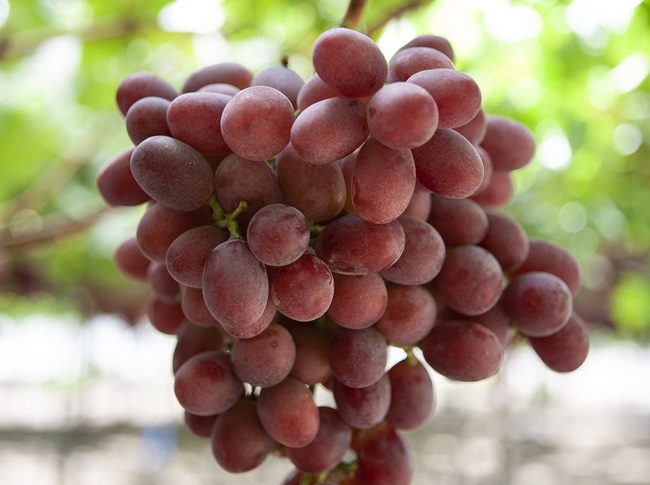
The company currently has its own team based in Nashik and maintains several cultivars under quarantine.
Regarding the destination of its first commercial production, Smit-Lotriet said the fruit will be directed to both domestic and international markets. “This season we are exporting our first volumes, with clients in the United Kingdom, Europe, Canada, and Southeast Asia,” she adds.
BLOOM FRESH™ introduced its first proprietary grapes in India in 2019, when the industry consisted only of traditional varieties. Since then, the new cultivars have shown good adaptation, with greater disease resistance, improved berry color and size, and higher yields.
Polibio Moreno, Technical Manager for BLOOM FRESH™ in India, says infrastructure and technology in the Indian table grape industry have improved significantly over the past decade.
“Today, it’s possible to find modern, well-equipped facilities and packing houses. Many farms also have large water reservoirs and automated systems to ensure proper irrigation,” he explains.
However, these technologies are primarily available to larger operations, whereas the average farm size in India is just 1 hectare.
“Agronomic practices have improved compared to ten years ago, when India decided to professionalize its industry. Even so, there is still work to be done,” he adds. “With BLOOM FRESH™ varieties, it will likely be necessary to rethink some practices that have been used with Thompson Seedless for the past 50 years.”
Despite progress, logistics has become one of the industry’s main challenges. Smit-Lotriet says that over the past two years, maritime transport has been affected because many vessels have had to sail around the Cape of Good Hope rather than use the Red Sea route.
“This has added between 10 and 15 additional days to transit times,” she said.
Despite the shipping hurdles, India retains important competitive advantages. According to Smit-Lotriet, its strategic location in Asia allows proximity to several regional markets, especially compared to other table grape-exporting origins.
“India’s harvest window is attractive for the United Kingdom and Europe, when there is a shortage of good white seedless grape options in the market,” she notes.
Moreno added that despite the tropical climate of the production regions—with more than 27 inches of rainfall and a marked monsoon season—the soils are heavy and very fertile.
“At first glance, it may seem like a challenging environment for grape cultivation, but these conditions allow growers to manipulate the timing of the harvest window in India,” he explained.
This makes it possible to harvest early- or mid-season varieties at the same time as late varieties, for example, Timpson alongside Allison or Sweet Globe.
With India’s table grape business continuing to grow, BLOOM FRESH™ is also exploring new opportunities in the country. The company has already introduced blueberries and will begin trials and plantings of this crop this year.
*Images courtesy of BLOOM FRESH™.
Related stories:
Shipping crisis halts Middle East routes for India's largest fruit export, bananas