Women driving change in the blueberry industry
 Add Fresh Fruit Portal to Google
The year 2026 has been officially designated by the United Nations as the International Year of the Woman Farmer, an initiative led by the Food and Agriculture Organization (FAO) to bring greater visibility to the role of women in agriculture and move them from the margins to the center of global policy discussions.
In the blueberry industry, this conversation is particularly relevant.
For more than two decades, Nuria Pizan, Board Member of Global Women Fresh, has explored the evolving role of women in the sector, helping shape how fresh produce is positioned and perceived globally.
Her perspective reflects a broader transformation within the blueberry industry, one where branding, innovation, and leadership are becoming central to long-term growth.
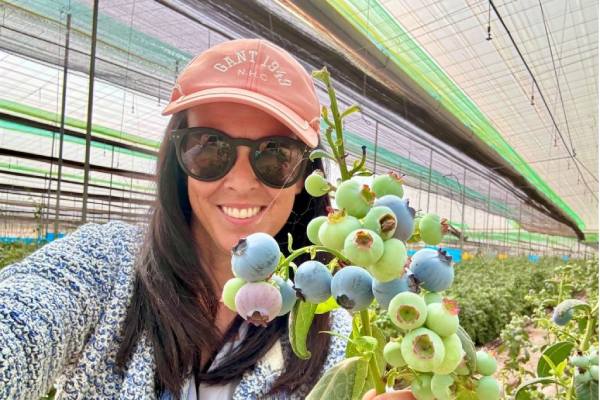
As the sector continues to evolve, the role of women will not only become more visible but increasingly essential in defining its future.
A legacy of innovation in the blueberry industry
The blueberry industry itself has roots shaped by female leadership. Elizabeth Coleman White, often referred to as its “founding mother,” set an early example of vision and ambition. For Pizan, her legacy remains highly relevant today.
“[She] was remarkably forward-thinking for her time. What stands out about her is not only that she was a woman, but that she thought big and stayed curious. That mindset is what drives progress for all of us,” she said.
Innovation, Pizan explained, has always been essential, but today it goes far beyond production. It means understanding consumer needs, recognizing and shaping trends, and building strong brands that elevate the category.
“This creates more value, strengthens margins, and ultimately benefits growers and everyone along the chain,” she added.
Beyond the “glass ceiling”
While the concept of a “glass ceiling” is widely discussed, Pizan describes it not as a single moment, but as a deeper structural issue. She said she didn’t experience the glass ceiling as a singular moment in the blueberry world, but she’s seen it within the broader agricultural industry.
She recalls the case of a highly experienced female quality director who, despite her expertise, was repeatedly placed under new leadership: “This wasn’t about ability: It was about perception and structure. It should never be about gender; it should be about competence.”
Breaking these patterns, she noted, requires speaking up and challenging them directly when they appear.
Rethinking value: More than a commodity
This gap between perception and reality extends beyond leadership and shapes how blueberries are perceived by consumers, who see a berry: not year-round precision, risk, people, and the decisions behind it. For Pizan, this disconnect has major implications for the category.
“It’s not a commodity. It is a highly managed and emotional product that deserves to be valued accordingly,” she said.
Brands play a key role in closing that gap. By building trust and consistency, they allow consumers to better understand the value behind the product and become more willing to pay a premium.
“Fresh fruit is still undervalued and underpriced. If we want people to eat more fruit, we must communicate its true value more clearly,” the expert added.
One of the most important opportunities for the industry lies in how blueberries are positioned for modern consumption.
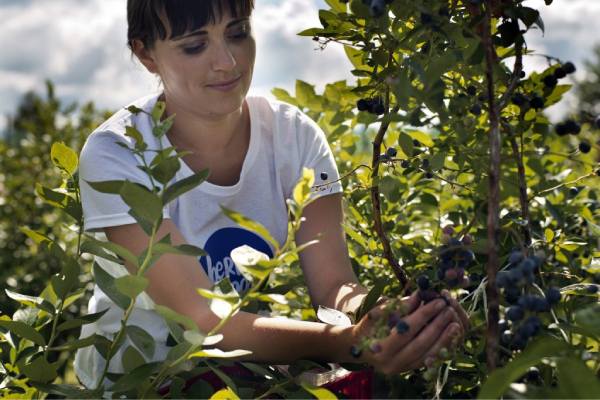
Pizan explained that younger generations increasingly see blueberries as a natural ‘on-the-go snack,’ prompting them to evaluate pricing very differently. This shift opens the door to rethinking the category entirely.
“There is real potential for new, healthy snack products, including formats that make smart use of lower-grade fruit, reducing waste while creating additional value,” she stated.
Packaging will be key to this evolution, from smaller formats to kid-friendly, convenient solutions.
Leadership for the next generation
As the industry evolves, so too does the type of leadership it demands. For young women entering the sector, Pizan highlighted a combination of mindset and action, of staying curious and learning as much as possible from the best people in the field. She also emphasizes the importance of stepping forward.
“Raise your hand when new and challenging projects come up. The more you take on, the more you learn.”
Her final message is direct and powerful: “Do not wait for permission.”
In a sector with growing opportunities, influence comes from visibility, expertise, and the willingness to take initiative.
This piece was originally published on the IBO website on April 27, 2026.
*All images courtesy of the International Blueberry Organization.
Related stories