



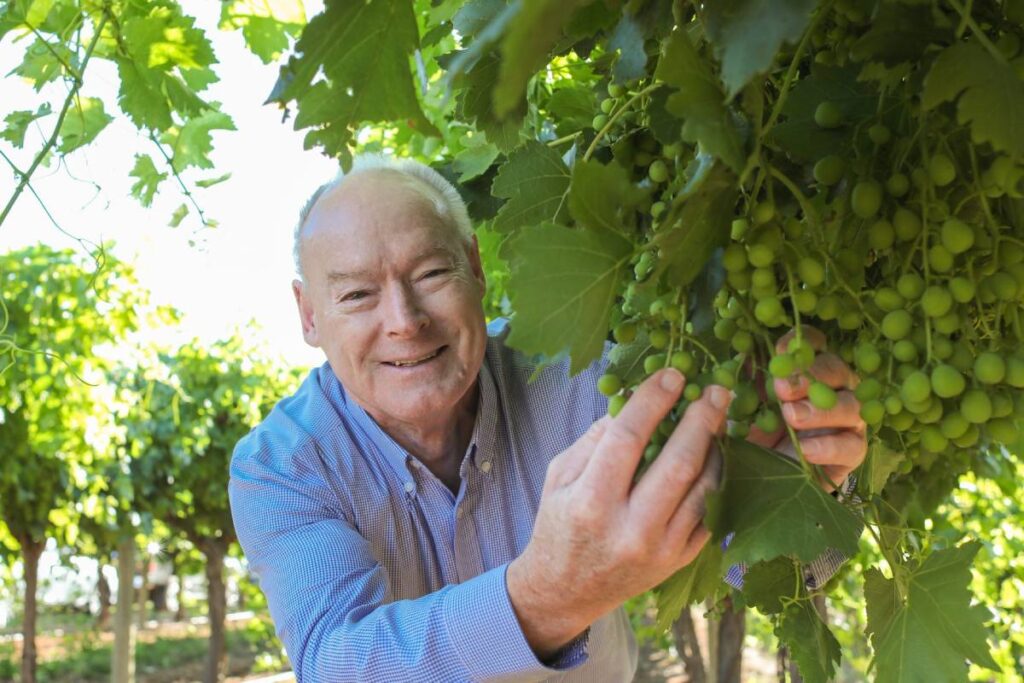
This article was originally published on the Apple and Pear Australia Limited website on May 27, 2026.
Australian table grapes recently celebrated over $600 million in exports. The industry currently enjoys higher prices domestically, all thanks to cracking the ‘China code’.
However, Jeff Scott, CEO of the Australian Table Grape Association (ATGA), reveals that this success nearly came to a halt in the first season of trade when growers made a mistake that shut the door on the China market for a short and—distressing—time.
By 2005, the Australian table grape industry realized it had reached the limits of the domestic market and needed to export. They launched a campaign to explore Asian markets, targeting China in particular and building relationships with key buyers through face-to-face visits.
In 2011, after nearly six years of tireless efforts to gain market access, Australian table grapes finally entered the China market. This was a highly anticipated opportunity that promised significant profits for growers. But the following season brought an alarming setback.
“After we had finally gained access to the China market, several shipments were knocked back by Chinese inspectors,” Scott explained.

The inspectors found serious quality issues, resulting in a rejection rate of one in three containers due to contaminants such as ants, dirt, and leaf matter. The non-compliance rate was simply too high. China suspended Australian table grapes at the end of the first season. This was a harrowing moment as the reality of losing access to such a valuable market sank in.
The blow underscored a critical lesson for the industry: compliance was paramount.
Faced with the reality of losing access, the ATGA took immediate action, rallying growers to address the concerns about quality and compliance.
“We had to treat our export grapes differently from domestic ones,” Jeff said.
A key change for the Australian table grape industry was the introduction of packing in controlled conditions (sheds). Although this adjustment added to the cost per box, it was essential for meeting the stringent standards set by Chinese authorities.
Scott vividly recalls a turning point during a meeting with 200 to 300 growers: “I remember there was a group of young growers who simply weren’t listening. I lost my cool. I told them that if they didn’t want to understand compliance and how Australian trade operates and negotiates, they had better stay domestic, or get out of the industry entirely. The whole room went quiet, then the penny finally dropped.”
The changes instituted after the suspension paid off, leading to remarkable recovery and growth. Chinese authorities agreed to restart the relationship. Exports surged from about $30 million to a record $623 million.
“It took a lot of effort, understanding and education,” he said.
Pricing follows quality. Australian table grape growers can access much better prices for top-quality fruit in Asia than they can in the domestic market, but prices drop significantly when quality is poor. Certain varieties also fetch higher prices.
“If you deliver poor quality, buyers will hit you hard on pricing,” Scott said. “If you promise them quality X and then give them Y, you’re going to feel the pinch.”
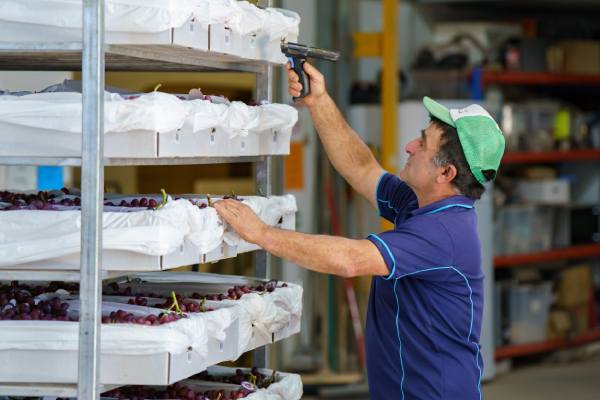
Clear communication and setting expectations are both essential. The industry runs pre-season briefings about seasonal conditions, and shares updates on how production practices are improving quality.
Compliance with Chinese maximum residue limits (MRLs) became a focal point of the industry’s turnaround. The ATGA developed an app for growers that provides real-time information on MRLs and withholding periods for both domestic and export markets.
Australian supermarkets incentivized to pay more
As exports to China flourished, the domestic market began to shift as well.
“Supermarkets realized they needed to pay more because we were exporting 65 percent of our best-looking product,” Scott said.
“Australia doesn’t grow separate grapes for export and domestic; we grow grapes,” he noted, emphasizing the commitment to quality across the board. While exports feature the most visually appealing grapes, the domestic market still receives the same, great-tasting product.
Is the export market only for the bigger players? Scott explained that smaller growers looking to enter export markets can greatly benefit from partnering with experienced exporters.
“They might feel a bit overawed by the process, but they don’t necessarily need to export directly; they can engage with exporters who can handle the logistics for them. This demystifies the export process and allows growers to focus on what they do best: producing quality fruit. Exporters will take a percentage, of course, but it means smaller growers can access lucrative markets and enhance their competitiveness without bearing the full burden themselves,” the executive said.
Scott’s main tips for small growers are to develop an understanding of the export markets and to build relationships with Chinese buyers.
“It might take four to six visits before you’re in a position to make a deal, but the buyers will come, even if you’re a small operation. Get together with four or five other growers and bring the buyers out to see your farms,” he said.
An important aspect of the Australian table grape growers’ success has been developing strong personal relationships with international buyers. Culturally, don’t underestimate the importance of face-to-face interactions. Making the journey to China is well worth the effort, as is inviting Chinese buyers to Australian farms to build a network of trust that will eventually lead to long-term commercial relationships.
The ATGA has prioritized networking–arranging visits for Asian buyers to experience Australian farms firsthand.
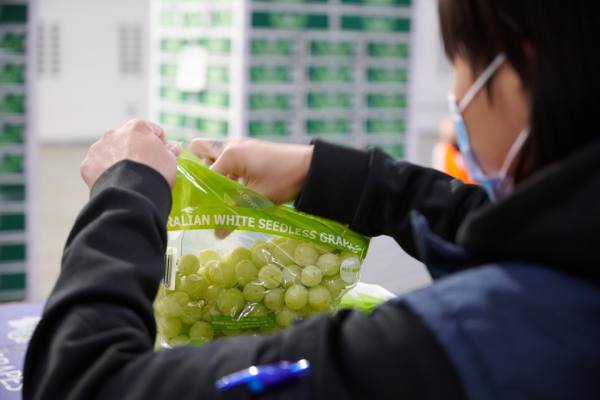
“You’ll see Asian buyers everywhere in our growing regions. They’ll be on farms, in sheds and having dinner in town with the growers,” Scott said.
The Australian table grape industry faces growing competition from countries such as Peru, Chile and South Africa. While Australia exports about 150,000 tonnes to Asia, Chile exports around 700,000 tonnes, primarily to the United States and Europe.
“We need to stay alert,” Scott cautioned. “Asian countries want our grapes for their quality and compliance, but our competitors are also improving and closing the gap, especially as new varieties emerge.”
To remain competitive, Australian table grape growers must focus on quality, reputation and communication.
“Competing solely on price isn’t an option,” Scott said.
Diversifying beyond China to other Asian nations is another smart move. Aussie grapes go mainly to China (35–40 percent), followed by Indonesia (20 percent), then Korea, Japan, Vietnam, Thailand and the Philippines (all around six to seven percent).
From being on the brink of losing access to the China market to achieving over $600 million in exports, the Australian table grape story is one of resilience and adaptability.
The lessons learned from their challenges are invaluable for apple growers exploring export opportunities. By prioritizing quality and effective relationship-building, the apple industry can avoid expensive missteps and position itself for success in China and beyond.
*All images courtesy of the Australian Table Grape Association.
On August 12, 2026, Monticello Conference Center, in Santiago, Chile, will host a new edition of the Global Grape Convention.
Organized by Yentzen Group, Frutas de Chile, Provid, Global Grape Group, and Mexico Table Grapes, the event will bring together leading international experts in an unmissable day of strategic content, key trends, and high-level analysis to anticipate market challenges.
The convention is a unique platform to connect with buyers, distributors, exporters, and retail leaders, generating real business opportunities and strengthening networks in a highly specialized environment.
For more info, contact events@yentzengroup.com
Tickets available at globalgrapeconvention.com
Related stories
Shifting vines: How China’s appetite is reshaping the grape market