Agronometrics in Charts: Multiple supply shocks are shaping US produce markets

 Add Fresh Fruit Portal to Google
Each week, the series ‘Agronometrics In Charts’ examines a different horticultural commodity, focusing on a specific origin or topic and visualizing the trade market factors driving change. Check out our entire archive.
American consumers may soon face another round of food inflation, but for the fresh produce sector, the story goes far beyond grocery store shelves.
A combination of extreme weather, tightening water supplies, trade disruptions, and rising input costs is creating new challenges for fruit and vegetable production across North America. While economists warn that overall food prices could continue to climb through 2027, many of the underlying pressures are already evident in produce markets.
Recent weather events have highlighted the vulnerability of specialty crops to increasingly volatile growing conditions. According to Bloomberg, tomato prices surged 33 percent over the last two months after winter storms caused widespread damage during Florida's peak production season.
The situation reflects a broader trend facing fresh produce growers. Across the United States, weather extremes have become increasingly common. Farmers have faced unusually warm winter temperatures, late-season frosts, drought conditions, hailstorms, and wildfires, often within the same production cycle.
California, which produces nearly half of the nation's vegetables and approximately three-quarters of its fruits and nuts by value, is emerging as a critical area to watch. Concerns over reduced Sierra Nevada snowpack have raised questions about irrigation availability during the growing season. Water availability remains one of the most important factors influencing both production volumes and crop quality across the state's diverse fruit and vegetable sectors.
Drought conditions are also affecting major field-crop regions throughout the Midwest and the Great Plains. While much of the attention has focused on wheat and corn production, persistent dryness can have broader consequences for agricultural markets by increasing feed costs, reducing farm profitability, and placing additional pressure on input markets.
Supply chain constraints also spike produce prices
Input costs themselves remain a growing concern. Fertilizer prices have risen sharply following disruptions in global supply chains linked to geopolitical tensions in the Middle East. Higher fertilizer costs increase production expenses for growers and can influence planting decisions, application rates, and ultimately crop yields.
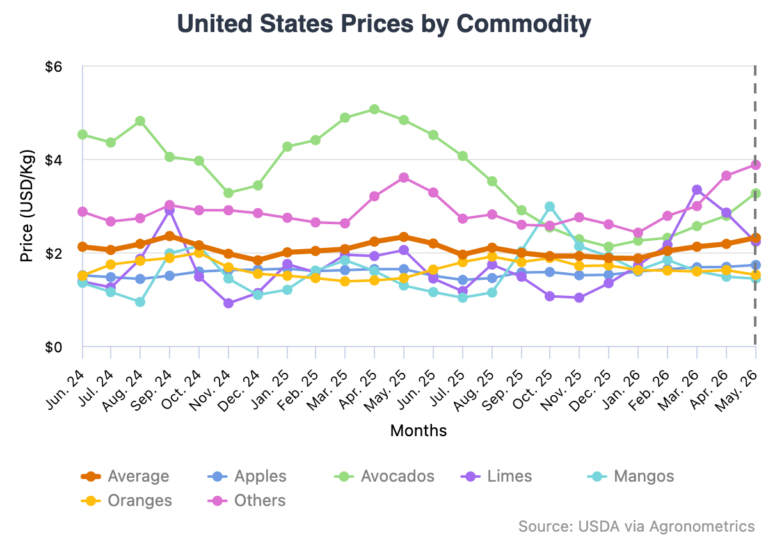
Source: USDA Market News via Agronometrics.
Transportation and packaging costs are also moving higher as fuel prices increase. For fresh produce, which must move quickly through complex supply chains, rising logistics costs can directly impact final retail prices.
For produce markets, the coming months will likely depend on the interaction between weather conditions and supply availability. Forecasts pointing toward the development of an El Niño pattern later this year add another layer of uncertainty. While El Niño can bring beneficial rainfall to some regions, it can also contribute to drought and production challenges in key growing areas worldwide.
The result is a market environment where supply disruptions can quickly translate into price volatility. As weather events become more frequent and input costs remain elevated, fresh produce markets may continue to experience periods of tighter supply and higher prices.
For consumers, this could mean higher produce prices at retail. For growers, shippers, and buyers, it reinforces the importance of monitoring weather developments, water availability, and trade policies that increasingly shape agricultural supply chains.
As the industry looks ahead, the key question is no longer whether production risks exist, but how markets will respond when multiple pressures emerge simultaneously.
*All images are referential.
Related stories
Upcoming El Niño raises disease concerns for Florida strawberry sector
Possible "Super El Niño" raises concerns across fresh produce markets