IQF fruit market to hit $8.3B by 2034

 Add Fresh Fruit Portal to Google
Chilling out on traditional air-freight dependencies, advanced freezing technologies are rapidly altering how global produce moves from field to fork.
The global individually quick frozen (IQF) fruit market will surge from $4.8 billion in 2025 to $8.3 billion by 2034, registering a compound annual growth rate of 6.3 percent, according to a recent report from market research firm DataIntelo.

This growth stems from expanding global adoption of quick-freezing methods that keep the fruit mostly intact while mitigating severe post-harvest losses. Standard harvesting operations lose up to 30 percent of berries, tropical fruits, and citrus segments after harvest.
However, IQF freezes fruit pieces within minutes at temperatures ranging from -22 degrees Fahrenheit to -40 degrees Fahrenheit.
“This prevents cell damage caused by ice crystal formation, preserving the fruit's original appearance and taste,” the report says.
IQF prompts global supply chain shift
The technical advantages of IQF’s deep-temperature processing are restructuring international trade routes for growers in Asia-Pacific, Latin America, and Africa, DataIntelo says.
Because the process preserves fresh-like eating characteristics, producers can ship frozen items via ocean transport instead of relying on expensive air freight. Import buyers in North America and Europe can subsequently secure year-round inventories of seasonal items without incurring high air-freight premiums.
The Asia-Pacific region currently holds the largest regional market share at 38.5 percent, representing $1.46 billion in 2025. DataIntelo attributes this regional dominance to increasing agricultural mechanization and substantial processing facility investments across China, India, and Vietnam.
Europe accounts for 28.3 percent of IQF’s global market value, driven by high frozen food consumption and strict regional food safety standards.
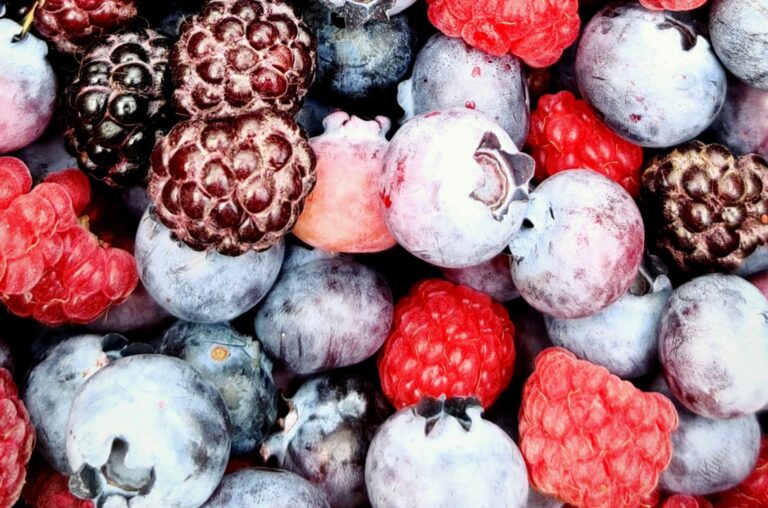
By fruit category, berries command the largest market share at 34.2 percent and are projected to grow at an 8.1 percent compound annual growth rate through 2034. Industrial buyers in the bakery, confectionery, dairy, and smoothie sectors heavily utilize frozen berries for portion control and consistent quality.
Tropical fruits—including mango, pineapple, and papaya—hold 28.7 percent of the market with a projected 7.8 percent growth rate, while citrus fruits represent 18.9 percent with a 6.9 percent growth rate.
The food and beverage processing industry accounts for more than 45 percent of total demand. Retail distribution makes up 28 percent of the market, driven by expanding online frozen grocery channels and at-home consumer demand for healthy snacks. Foodservice operators, including hotels, restaurants, and caterers, generate 18 percent of overall demand.
*Images are referential via Unsplash.
Related stories
Brazil set to unlock the Chinese market for frozen pulps and fruits