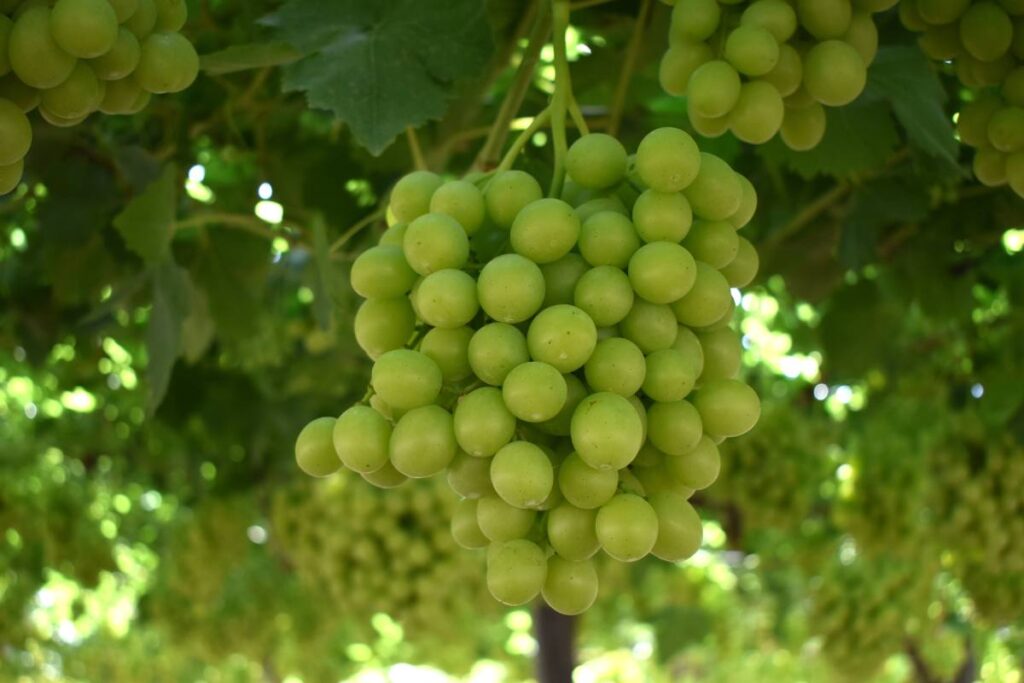



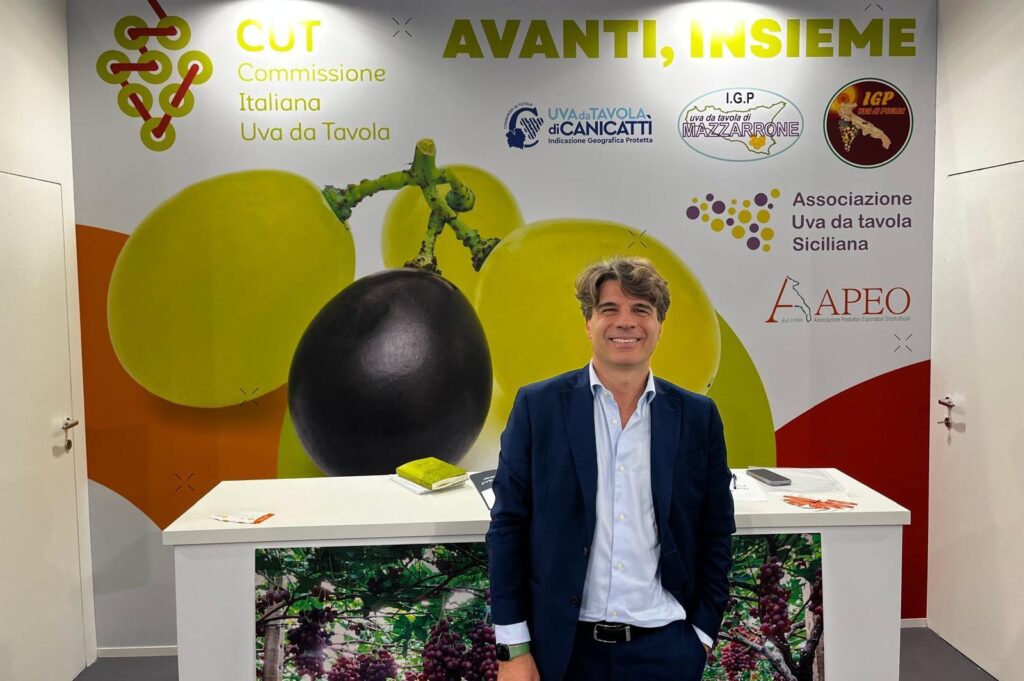
The Italian table grape sector looks increasingly different. Seedless varieties now account for 80 percent of production, a decades-long shift that Massimiliano Del Core, president of grower and exporter O.P. Meridia, says must now be matched by greater know-how, industry cooperation, and export diversification.
Speaking with FreshFruitPortal.com during the LUV Table Grape Fair, held October 20-22 in Bari, Del Core said the transition from traditional seeded varieties to seedless grapes remains a central focus for Italian growers, particularly in southern Puglia and Sicily. The regions account respectively for 70 percent and 25 percent of Italy’s grape production, according to the United States Department of Agriculture’s 2025 Fresh Deciduous Fruit Italy report.
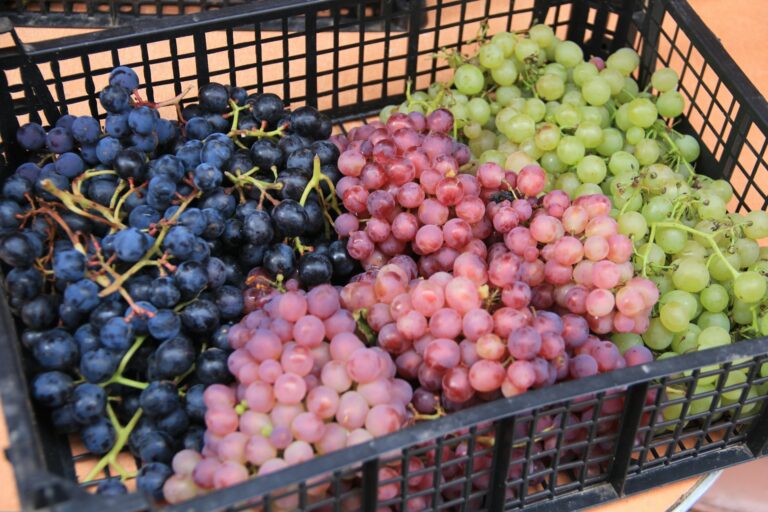
Photo by Oraswet via Unsplash.
While the sector’s longer-term ambition is to move toward 100 percent seedless production, Del Core, who also chairs the Italian Table Grape Commission (CUT), said the immediate priority is on improving grower knowledge.
"We need to consolidate our expertise in growing the new varieties we've tested on our land over the past 20 years; consolidate our understanding to clearly identify the direction of innovation we must pursue," he said.
While innovation and new variety testing remain vital, the executive stressed that growers must assess foreign cultivars under their specific climate.
"We need to test the quality of these new varieties because they originate from places like California, Spain, and Israel. We have to see how they perform in southern Italy, taking into account our local climate and growing conditions," he explained.
Currently the largest European table grape producer, Italy exports approximately 50 percent of its production, with the remaining half sold domestically. While European markets remain important, Del Core sees opportunities for growth beyond the continent as competition from other supplying countries intensifies.
"We need to explore new markets because Europe is now saturated with other major producing nations, such as Peru and Egypt in the winter, South Africa and India in the spring, and Spain, Greece, and Italy during the summer," the executive said.
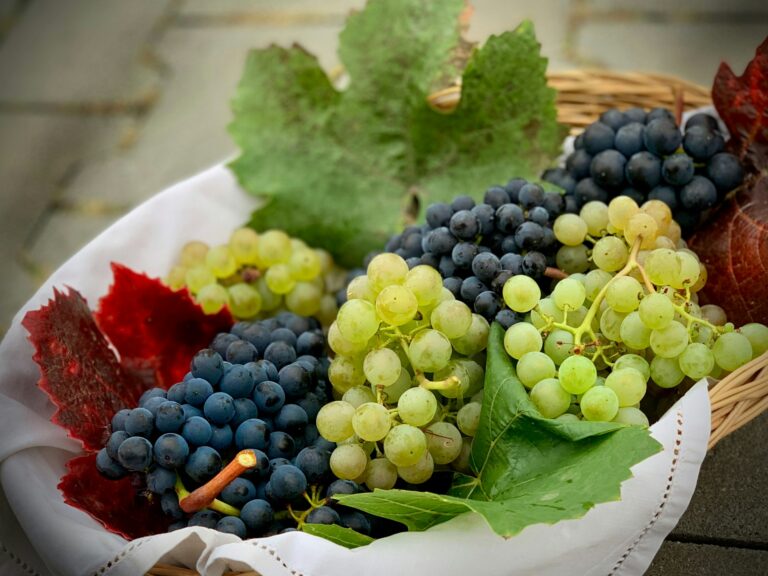
Photo by Gunter Hoffmann via Unsplash.
The United Kingdom and Switzerland remain established markets, while the United Arab Emirates, the US, and Canada represent important opportunities, he said.
Del Core also highlighted Thailand as a market Italy was working to open, with discussions underway. Vietnam is another potential destination on Italy’s export agenda.
While international market development remains essential, Del Core stressed that greater cooperation across the supply chain will be essential to consolidate Italy’s position as a premium producer amid rampant competition.
"This is the most important factor for staying competitive in the market today: to be unified as a sector and establish common standards," he stressed. "Unified market conditions, consistent quality, and greater collective energy will allow us to invest in promotion and stand together against highly competitive countries."
This is particularly challenging given the structure of the country’s production. According to Del Core, the average farm covers approximately 12 acres, making individual investment in innovation and market development difficult.
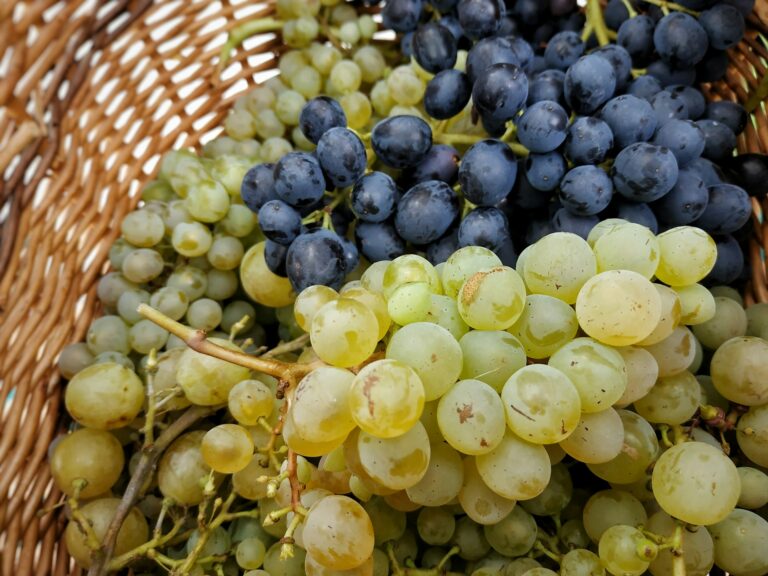
Photo by Aron Kovacs via Unsplash.
However, despite increasing competition from Spain and Greece, Del Core believes the Italian table grape sector can stay ahead through its production capacity, management expertise, and investment in packing technology.
"I think we can remain competitive, because we have a great capacity to react. Company management has a strong ability to adapt and respond," he noted.
For Del Core, consolidating technical knowledge and bringing the supply chain together will be key to ensuring the country's seedless transition into a stronger player in global markets.
“We have the packhouse technology needed to provide the market with the higher service and quality it demands," he concluded.
Reported by Ed Vernon in Bari, Italy.
*Main image by Ed Vernon | Other images are referential via Unsplash.
Related articles