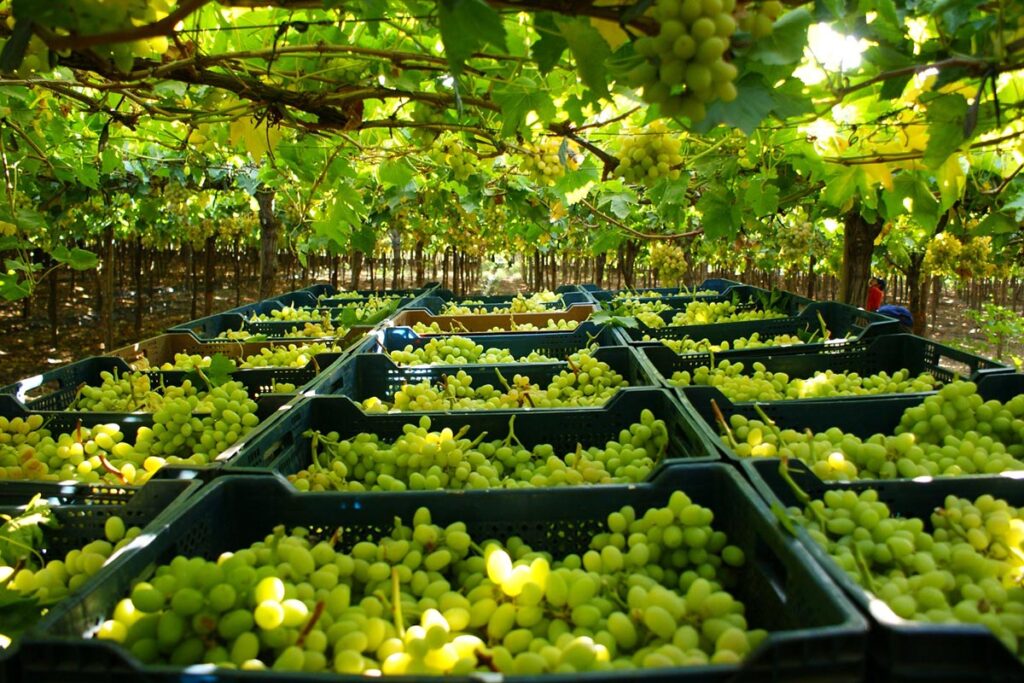






The September 2025 DC Federal Court ruling suspending the Systems Approach for Chilean table grape imports into the US was ratified after the Department of Justice (DOJ) withdrew its appeal.
The news broke on Friday, March 27, after local industry body Frutas de Chile reported on the decision in a post published on its website. The US Department of Agriculture, through the DOJ, appealed US District Judge Amir H. Ali’s decision suspending the import protocol for the Latin American fruit back in November. The ruling forced Chilean exporters to fumigate table grapes with methyl bromide, increasing costs and jeopardizing the fruit’s quality upon arrival.

The legal battle started in October 2024, when California table grape producers represented by the California Table Grape Commission, the National Grape Research Alliance, and the California Table Grape Export Association, filed a lawsuit against the USDA. In the filing, the Golden State table grape industry claimed that unfumigated Chilean fruit posed a health risk to local crops.
The reason behind the DOJ’s decision remains unclear, but it effectively affirms the initial DC court ruling in this case, leaving Chilean exporters with little to no recourse to resume shipments under the Systems Approach.
In a public statement, Frutas de Chile President Iván Marambio lamented the DOJ's decision, saying it has a tremendous impact on the country’s exporters.
The executive described the measure as "a serious setback for the industry," emphasizing that this protocol was the result of over 20 years of joint bilateral technical work supported by scientific evidence and ruled by strict phytosanitary standards.
"The consequences are concrete. Chile lost the season under this scheme after the protocol's suspension—that is, a full year of work and implementation was lost," he said.
Rafael Rodríguez, President of the Chilean table grape grower association Uvanova, said the situation is a disappointment to the industry, emphasizing that the country has consistently held equivalent exporting protocols for other fruit categories for decades.
"There were important efforts and investments made to obtain this exporting alternative," he said.
The executive added that the lack of explanation from the DOJ and the USDA leads him to infer that local commercial interests and an eventual weakness of the Chilean argument might have prevailed in the DOJ's decision.
"In practice, this means a step back for Chile, whose table grape industry needs to return to fumigation, with the costs and the jeopardy to fruit quality that it entails," he said. "It also leaves the future of the Systems Approach in suspense and dependent on a new, more solid regulatory, technical, and legal process."
As hard as the hit has been for the Latin American country’s table grape industry, Frutas de Chile remains hopeful. The organization said the USDA is currently assessing the possibility ot starting a new technical process that could open the door to future implementation of the Systems Approach for fruit from specific Chilean regions, including Atacama, Coquimbo, and Valparaíso.

However, the industry body stressed that this remains a possibility at this stage, and given the preliminary nature of this information, it is a developing story.
Marambio emphasized that the US is the main market for the Chilean table grape industry, accounting for close to $600 million in sales per season.
This, the executive said, is why it’s critical for the sector to initiate a new technical process to re-establish the Systems Approach. Failure to do so, says Marambio, risks continuing to lose seasons in a key market.
"As an industry, we reiterate our willingness to collaborate with the authorities of Chile and the United States to advance a solution that provides certainty and continuity to exports, safeguarding the high phytosanitary standards that have characterized this process," the trade leader said.
Frutas de Chile said they will continue to explore all available avenues with a long-term perspective to protect the competitiveness and sustainability of the local table grape sector.
*Main image credit: Mehaniq / Shutterstock.com
Related stories
USDA fights Systems Approach suspension for Chilean table grape imports