Innovative freeze-protection could transform Florida’s passion fruit growing approach
 Add Fresh Fruit Portal to Google
Earlier this year, the otherwise Sunshine State was hit by historic frosts that heavily impacted berries, tomatoes, and other crops. The event is estimated to have caused $3 million in agricultural damage across the state, according to the Florida Department of Agriculture and Consumer Services.
However, a new tunnel-and-misting freeze-protection system developed by researchers at the University of Florida’s Institute of Food and Agricultural Sciences (UF/IFAS) could bring much-needed hope to local passion fruit growers.
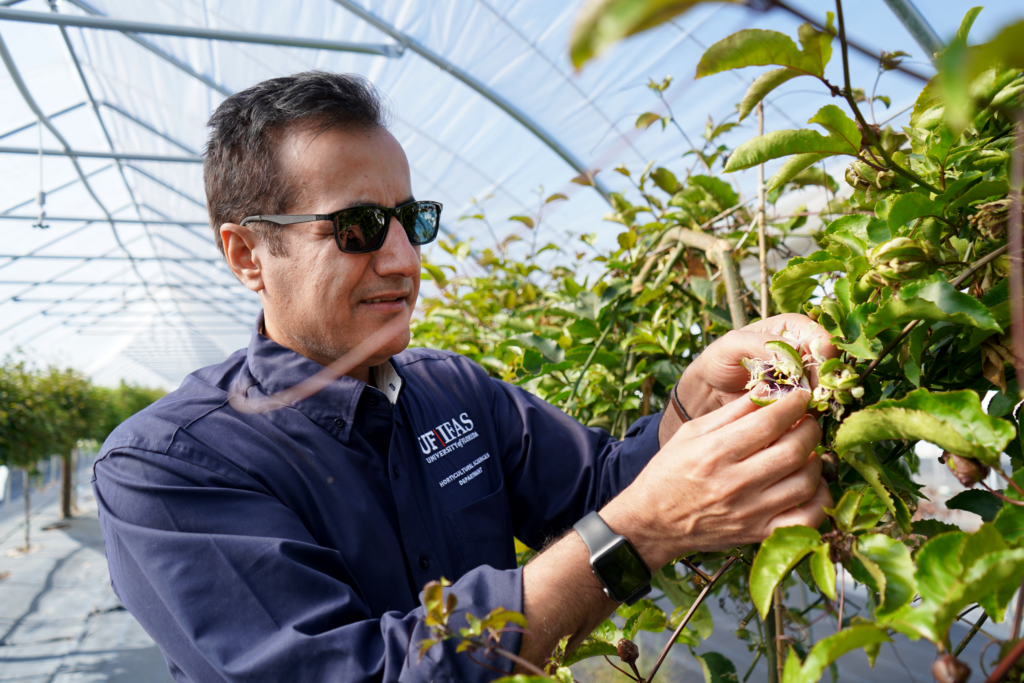
Ali Sarkhosh, associate professor of horticultural sciences and leader of the UF Fruit Crops Lab, said the system maintained temperatures above freezing inside research tunnels while nearby open-field vines suffered severe cold damage. The approach was successfully tested during the winter freeze events.
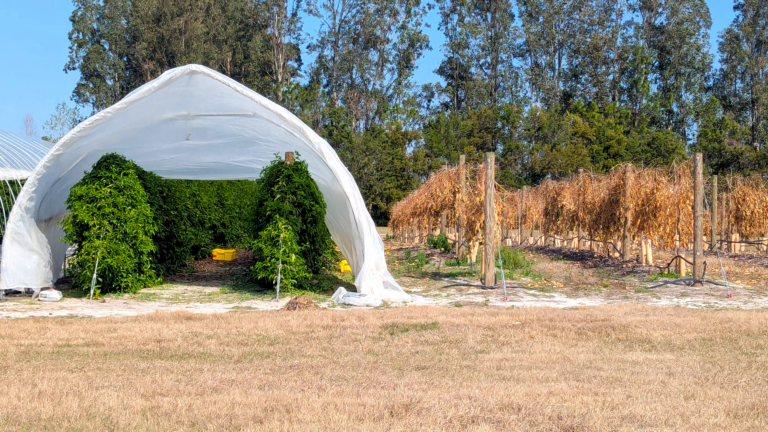
“In the last eight years that I have been working at UF, I have never seen the temperature go down like this, but the tunnel worked very well,” Sarkhosh told FreshFruitPortal.com. “The tunnel and the mist system kept the temperature above 32 degrees Fahrenheit, and the plants have been perfect in terms of growth and performance.”
The work is part of a United States Department of Agriculture (USDA) Sustainable Agriculture Research and Education-funded project aimed at expanding passion fruit production beyond South Florida into Central and North Central Florida.
Traditionally, these areas can support only limited commercial passion fruit production because of the crop’s famous cold sensitivity. Vines can suffer severe damage or complete loss when temperatures fall below freezing.
Freeze-protection with a tunnel twist
Sarkhosh said the tunnel system uses misting equipment to create a warmer microclimate during freeze events. Moisture released inside the structure generates latent heat as condensation forms, helping prevent temperatures from dropping.
The tunnel structures remain open most of the year and close only when freezes are forecast, allowing researchers to manage heat accumulation and improve production windows.
“The tunnel provides the flexibility to manipulate environmental conditions, such as accumulating more heat units—a measure of warmth over time that influences plant growth and fruit ripening,” Sarkhosh explained. “By accumulating more heat units within the tunnel, we can encourage earlier fruit development in spring or extend the harvest period into late fall, thereby increasing market opportunities.”
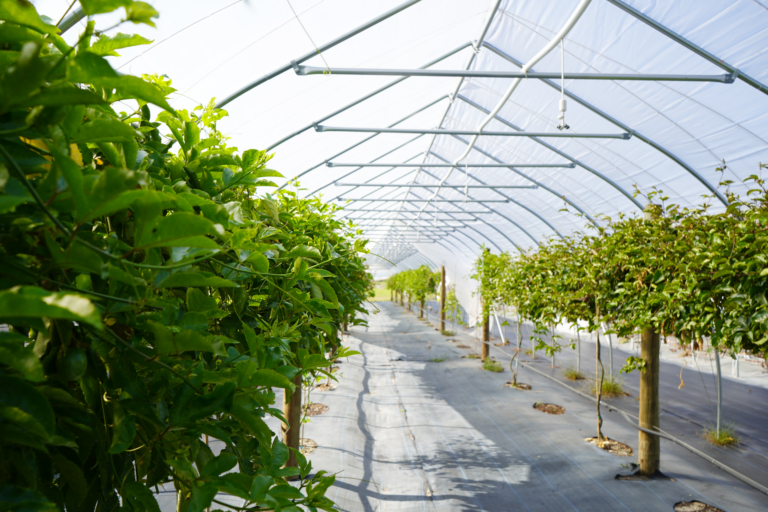
Vines planted in June 2024 continued growing normally under tunnel protection after the freeze, while unprotected vines showed browning and significant cold injury.
“That’s the good thing about the tunnel system: We can prune [the vines], we can manipulate the growth, and have fruit anytime you want,” Sarkhosh explained.
A passion project pending cost study
While the early freeze-protection results appear promising, Sarkhosh said they are not yet recommending the system for commercial adoption.
“We haven't conducted an economic study to determine the cost-effectiveness of this freeze-protection system for commercial growers,” Sarkhosh said.
He added that costs will likely vary by region depending on freeze frequency, climate conditions, and event severity.
The research team plans to study those economic factors while also focusing on breeding efforts.
“Developing cultivars with superior fruit quality and yield, as well as resistance to diseases, are among the most important research priorities for our future research,” the academic said.
The freeze events provided an opportunity to test the production system under commercial-style stress conditions, he continued, as Florida growers continue searching for diversification opportunities following severe weather losses.
*All photos by UF/IFAS.
Related stories
University of Florida research aims to cut $130M cost of strawberry runners
Florida citrus challenges freeze woes with new (and improved) forecast