


With global yields reaching new records in the 2025/26 cycle, new players are entering the grape trade game and reshaping the production landscape.
A September update by Rabobank puts the category’s exports at 4.95 million metric tons, a two percent year-on-year increase. Imports rose by another two percent, reaching 4.68 million metric tons.
Per capita availability has also remained healthy during the past decade, reaching approximately 9.4 pounds in the United States.
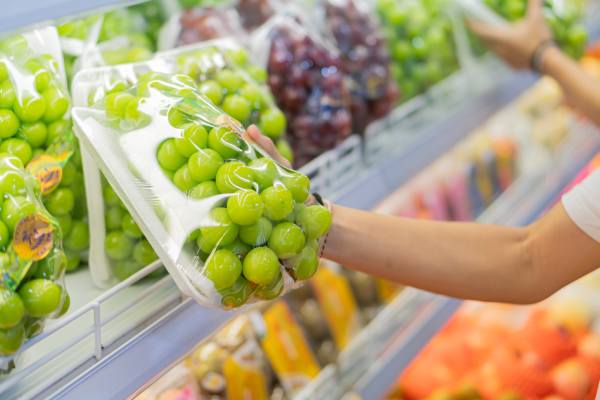
However, the steady supply increasingly comes from fresher sources rather than well-established producing countries, Rabobank notes.
“Production has declined in several traditional producing regions, while newer origins such as Peru, South Africa, and India have expanded international trade and offset lower domestic output,” the report says.
The growth of Southern Hemisphere suppliers, along with the expanding Asian production, is increasing competition among established and emerging exporting regions, according to the Rabobank update.
“While gains remain modest compared with faster-growing fruit categories, even small increases in availability across markets with large populations support continued expansion and reinforce the increasingly global nature of the table grape business,” the document stresses.
Against this backdrop, China is expected to strengthen its position as the world’s top table grape producer, a might that, the assessment states, is often overlooked due to its limited presence in western markets.
According to US Department of Agriculture data, the Asian giant’s output accounts for roughly 50 percent of total global table grape production, yielding an estimated 15 million metric tons. In 2025/26, the country exported roughly 94 million boxes to destination markets.
“Thanks to its large production base across multiple regions, China can export fresh grapes year-round,” the document notes.
Meanwhile, in South America, exports have leveled off at around 1.3 million metric tons as heavy March rainfall impacted volumes in Chile, a phenomenon also expected to hit Peru. The outlook, however, remains positive for both Andean countries.
“Improved water availability could support production recovery in Chile in 2026/27, although the effects of El Niño remain a source of uncertainty,” Rabobank notes. “By the end of the decade, Peru will expand production, supported by a projected 12 percent increase in planted area.”
Also in the Southern Hemisphere, South African table grapes are poised for a strong year, with a record 43.3 million boxes shipped in 2025/26. Challenging logistics, restricted market access, US tariffs, and rising input costs couldn’t dampen the results, Rabobank says, which were spearheaded by varietal renewal.
“For the first time in 12 seasons, green seedless varieties became the leading export category, accounting for 43 percent of total shipments,” the report notes.
US table grape demand remains strong, but Rabobank warns that overlapping or compressed supply windows tend to result in price volatility.
“The key demand-side challenge is not whether US consumers will absorb grapes, but whether suppliers can deliver the right volume, quality, and origin mix to the right retail windows,” the assessment highlights.
On that note, Mexican table grapes experienced an odd season this year, Rabobank says. The neighboring country usually holds steady as the third-largest table grape supplier to the US.
“Sonora started with expectations of roughly 19 million boxes, but exports ultimately reached 1.65 million after weather reduced yields and compressed the shipping window,” the report says.
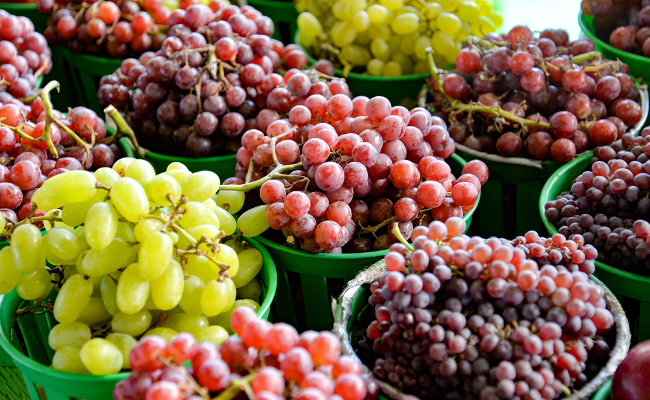
Lower production was only part of the problem, Rabobank notes, as this season’s timing was slightly off.
“Supplies arrived two to three weeks early, pushing heavy May volume into a market still transitioning from Chilean grapes and Jalisco supply,” the bank states. This led to weaker pricing.
As for domestic production, California’s early start pushed shipments to 26.6 boxes by mid-August, well above levels in recent years. Current industry estimates put the 2026 crop near 96 million boxes.
“The key implication is that an early start could also translate into an earlier finish, especially if volumes have been pulled forward and if El Niño conditions increase risk of disruptive weather in October and November,” the report concludes.
*Images are referential via Shutterstock.
Related stories
The data behind the Australian table grape trade structural shift
What survives when China stops buying: A grape trade price story