India puts 19 strawberry varieties to the test in hydroponic trial
 Add Fresh Fruit Portal to Google
For Berry Fresh Agrotech LLP, the next berry breakthrough may very well start without soil. The Indian company is testing 19 strawberry varieties from six international sources in a hydroponic system as it looks to secure year-round supply.
The trials are taking place in Mahabaleshwar, Maharashtra, western India, at an elevation of about 4,600 feet, where conditions can change in terms of temperature, sunlight, and frost risk. The region accounts for about 85 percent of the country's strawberry production.
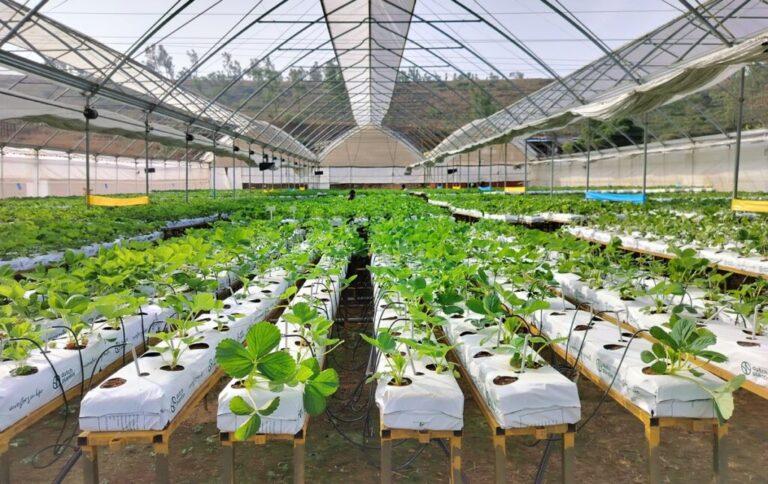
Image by Berry Fresh Agrotech
The results have prompted the company to examine whether genetics, rather than production conditions alone, could help improve summer strawberry performance, as traditional growing methods face water scarcity, heat stress, and disease pressure during summer.
Ketan Sodha, founder, partner, and CEO of Berry Fresh Agrotech, told FreshFruitPortal.com that India currently has no national strawberry breeding program, so growers rely on imported planting material.
“The goal is to test genetics from Florida, Spain, Italy, Uruguay, Japan, and the Netherlands under Indian conditions—specifically in a soilless hydroponic system—to identify the top-performing varieties,” the expert explained.
Genetics take center stage
Different origins offer distinct genetic characteristics, which Sodha said are being tested independently.
Florida genetics are being evaluated for heat tolerance and flavor, while Spanish and Italian varieties offer commercial production traits and post-harvest performance. Uruguay samples provide genetics adapted to Southern Hemisphere conditions, and researchers are also evaluating Japanese material for flavor and premium-quality characteristics.
“Parthenope from Italy and Felicity and Elyana from Florida have stood out,” Sodha said.
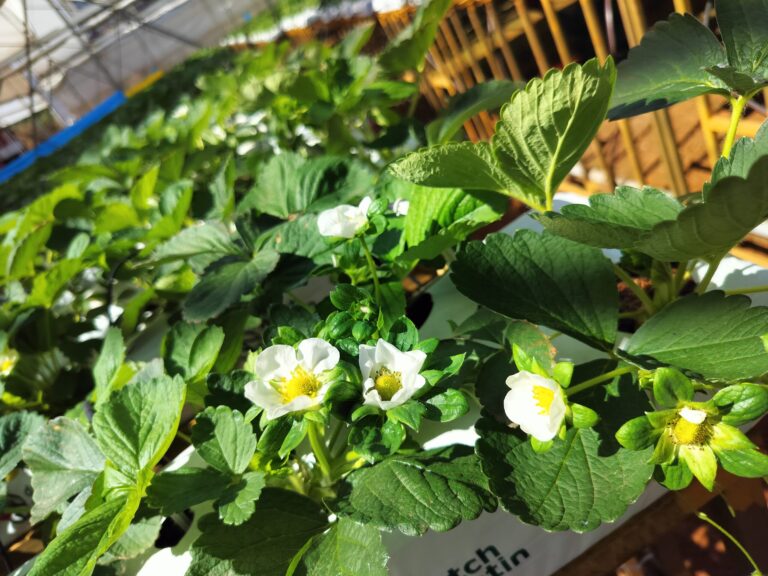
Image by Berry Fresh Agrotech
The trial has produced fruit with what Sodha described as exceptional flavor, uniform bright-red color, and excellent firmness. Average yield reached 408 grams per plant, although he said the figure remains low because the company is still developing its production and management practices.
“We learned that soilless hydroponic production operates very differently from traditional open-field cultivation and demands extremely precise crop management. We are currently collecting and processing the trial data,” the expert noted.
Hydroponics extend the production window
Berry Fresh Agrotech uses coco coir substrate, automated fertigation, and captured rainwater in its soilless system. According to the company, this setup allows production during the monsoon and summer periods, when conventional soil-based strawberry production faces greater constraints.
The operation involves a 400,000-gallon rainwater harvesting pond and high-pressure misting systems. Peak temperatures at the site are kept stable at 90 degrees Fahrenheit, although humidity management remains a major challenge.
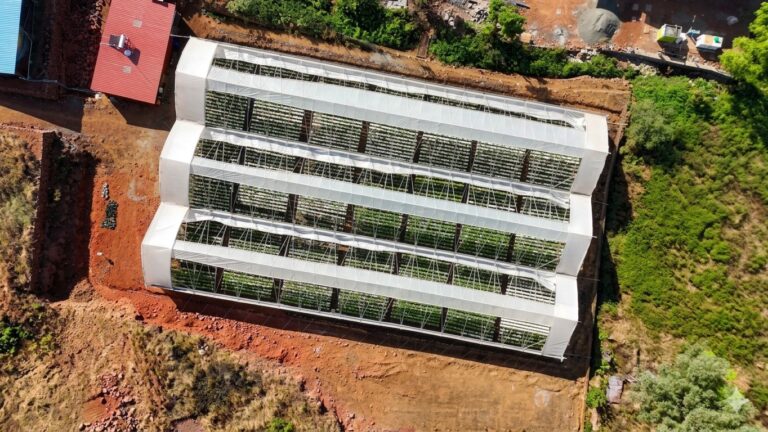
Image by Berry Fresh Agrotech
The firm plans to expand its production model to five locations across India, covering up to 150 acres. The company is also in discussions with potential partners and investors from Europe and North America.
“Currently, strawberry demand far exceeds supply. According to information shared by industry leaders, only 1.5 percent of India’s population has ever tasted strawberries, in a country with 1.45 billion people,” Sodha stressed,
Berry Fresh is discussing developing a 12.33-acre site, with more than eight acres under polyhouse protection. The project would include more than 200,000 plants and target annual production of approximately 317,000 pounds.
*All images courtesy of Berry Fresh Agrotech LLP.
Related stories
No soil, no problem: How hydroponics pose a growing alternative in the face of climate change
Indoor farming market to grow over 100 percent by 2032: Hydroponics lead growth