


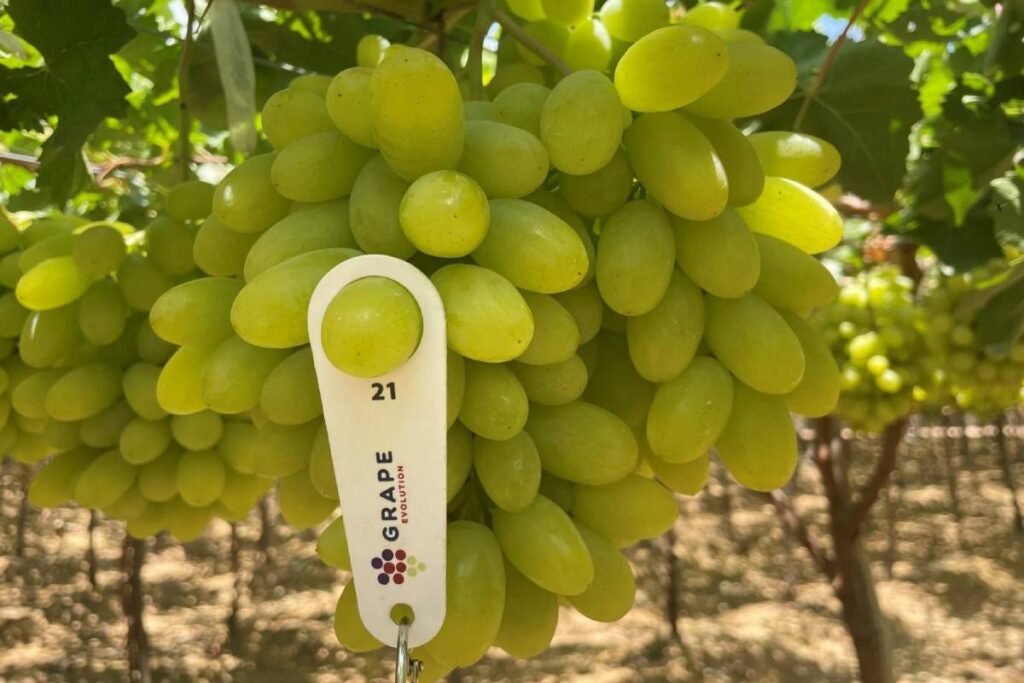
Table grape breeder Grape Evolution is truly revolutionizing the category’s commercial window. The key? Developing fruit that ripens ahead of even the earliest cultivars, including Prime and Starlight, two varieties already famous for opening the season in both hemispheres.
But time is not the only factor in the equation, as sustainability is also central to the success of the firm’s new genetics.
At LUV Feria in Bari, Italy, founder and director Dimitrios Spanos sat down with FreshFruitPortal.com to discuss the company’s bet on shorter growing cycles, how they could help tropical growers, and how Grape Evolution is working to reduce water use and spray applications amid raising production costs and economic headwinds for growers across the globe.
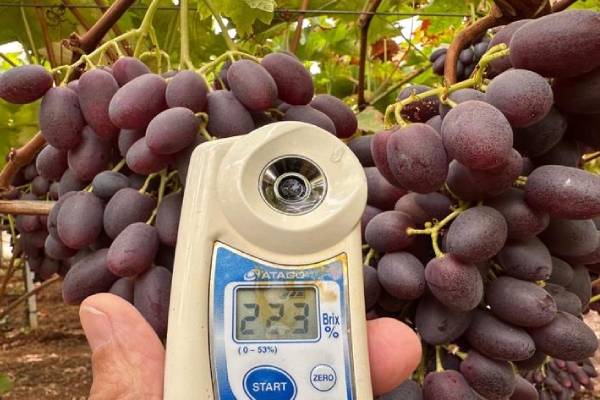
Grape Evolution is the commercial arm of the Volcani research program. That’s one of two major research hubs in the grape world at UC Davis in California.
Volcani has more than 300 senior scientists working in all aspects of agriculture. Grape Evolution was established in 2016 to commercialize new varieties, but we actually started in 2010 under a British company where I was working.
Volcani is known for its early genetics. We’ve got the Prime and Starlight varieties, which are grown mainly in semi-arid areas and are usually the first two to open the season in either hemisphere.
There is a lot of technology behind this, which allows us to develop and grow varieties or cultivation methods that require less water. This can play a major role in resolving the food crisis globally.
The biggest growth area for us is early genetics. We have already developed varieties that ripen before Prime and Starlight, which a few years ago was technically and scientifically difficult to imagine.
In the coming years, we can present more varieties with extremely short growing cycles.
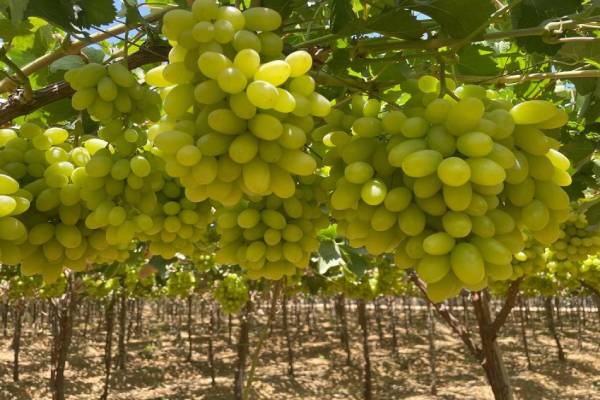
In tropical climates, you have rainy periods and dry periods, and the dry periods are usually short.
Growers need to prune twice and apply two dormancy sprays. Often the fruit is almost ready when the rains start, so they need varieties with a shorter cycle. We also see around 50 percent lower water use with the short-cycle varieties.
The Pearl range includes early, midseason, and late varieties.
We’re presenting two late varieties, one white and one red, that use around 50 percent less water than other varieties. Both thin naturally and size naturally, which translates to about four to five fewer spray applications. We’re working with public research institutes to document water use and assess reductions in carbon dioxide emissions.
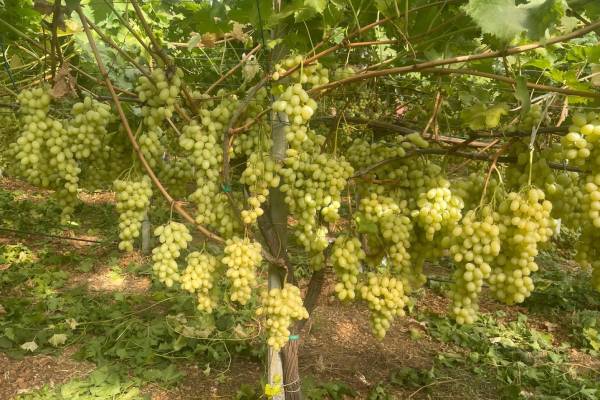
Our main production regions are Egypt, Tunisia, Italy, Greece, and the Orange River region in South Africa. We’re now starting to expand in Peru and Argentina.
Written by Tom Azzopardi | Reported by Ed Vernon
*All images courtesy of Grape Evolution.
Related stories
How global insights are shaping Chile's table grape industry