


Cold plasma: a promising path toward food safety in produce
 Add Fresh Fruit Portal to Google
While chlorine and peracetic acid have long been the go-to for produce sanitation, cold plasma is emerging as a game-changing alternative for wiping out foodborne pathogens.
Taking this cutting-edge tech from the lab to high-speed commercial packing lines, however, will take some serious engineering, according to Brendan A. Niemira, chief science and technology officer at the Institute of Food Technologists (IFT).
Laboratory trials led by Niemira have proven highly effective at destroying common pathogens such as E. coli and Listeria in salad greens, as well as Salmonella and viruses in oranges and blueberries.
But what exactly is plasma, and how can it help thwart food safety crises like the Cyclosporiasis outbreak earlier this summer?
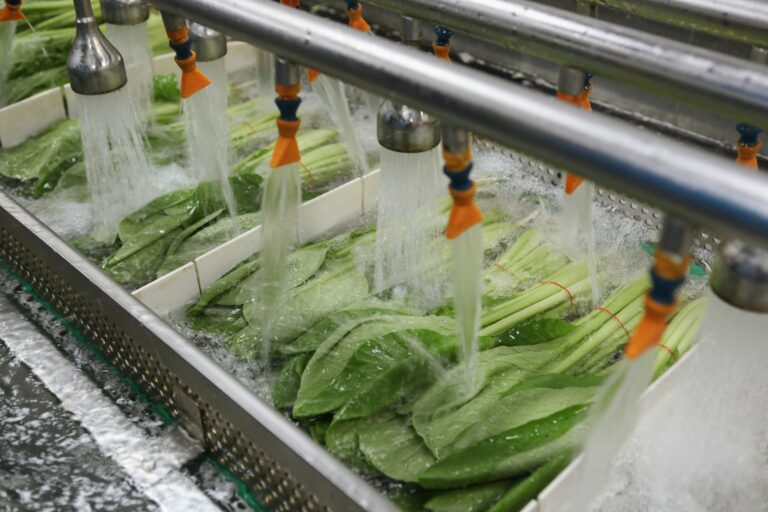
Photo by Wei via Unsplash
Often called a fourth state of matter, plasma forms when enough energy is applied to gases such as oxygen or nitrogen to electrically charge some of its atoms and molecules, in a process called ionization. The energized gas then kills or inactivates bacteria and other microorganisms present on food surfaces.
“When applied to produce wash water, cold plasma can be just as effective as conventional chlorine treatments. Log reductions of 3, 4, 5 or greater have been shown against suspended pathogens,” Niemira explained to FreshFruitPortal.com.
Treatment effectiveness depends on application conditions, the expert stressed. Much like chlorine efficacy increases with higher sanitizer concentrations and longer contact times, cold plasma performs better with higher treatment intensity and longer duration.
Efficacy vs. product integrity: The delicate balance cold plasma addresses
For produce businesses facing the financial and legal consequences of food safety recalls, the technology’s potential extends beyond its pathogen-killing efficacy.
Here, the word cold is key. Unlike conventional thermal plasma, cold plasma can treat heat-sensitive foods without damaging them. The findings, Niemira said, are compelling.
"Research under many different kinds of conditions with many different kinds of produce shows that cold plasma can achieve multi-log reductions of contaminating pathogenic bacteria," Niemira assured.
He cautioned that those results do not establish a universal treatment protocol. Processors must optimize the technology for each commodity, operating environment, and desired level of pathogen control. The researcher also stressed that scaling cold plasma to commercial use is still an area of active study.
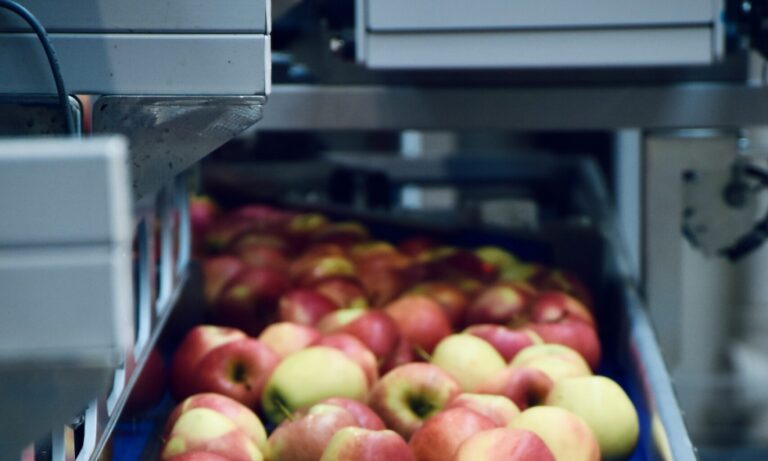
Photo by Arno Senonervia Unsplash.
“Part of that scale-up is designing power supplies, electronic control systems, and plasma discharge equipment that will produce a sufficient volume and density of plasma so that it can be incorporated into commercial-scale operations,” he explained. “Line speeds, commodity shape and configuration, the limitations of operational space and equipment footprint, and other considerations have to be addressed”
The technology would also have to meet the same operational requirements as other equipment in modern food processing facilities, including safety, reliability, cleanability, and performance monitoring.
While manufacturers already produce industrial-scale cold plasma equipment for other industries, Niemira said additional engineering work and calibration remain necessary before the technology can be fully integrated into food processing lines.
"A too-gentle treatment that falls short may not achieve the intended food safety or functionality goals, while a too-intense treatment that overshoots may cause sensory damage," he noted.
While the potential is certainly there, the operating window varies by commodity, treatment conditions, target sanitation level, and brand-specific quality requirements, Niemira concluded.
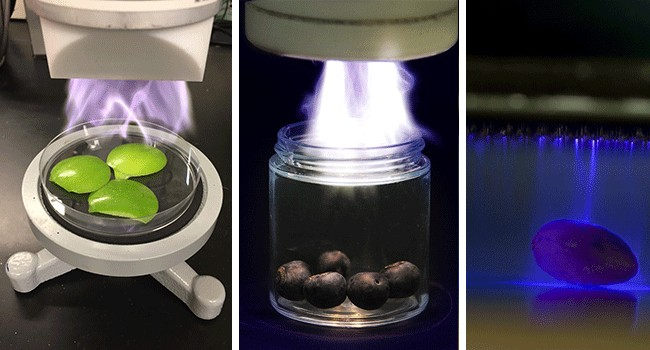
*Top photo depicts cold plasma being applied to Golden Delicious apples, blueberries, and almonds. Courtesy of Brendan A. Niemira.
Related stories
US produce sector looks to digital tools to enhance food safety