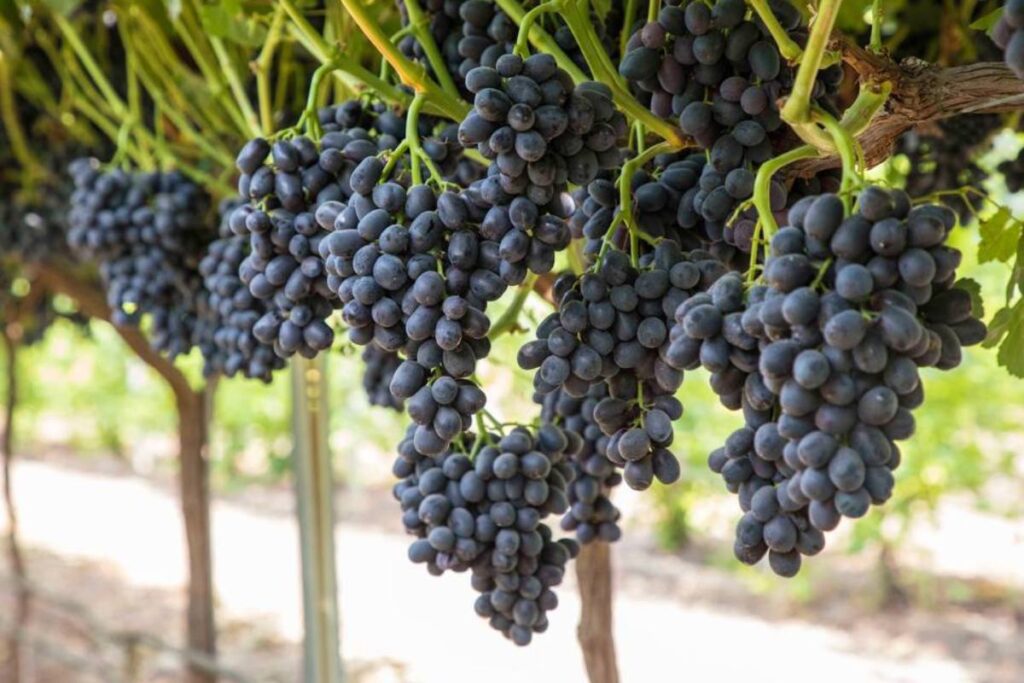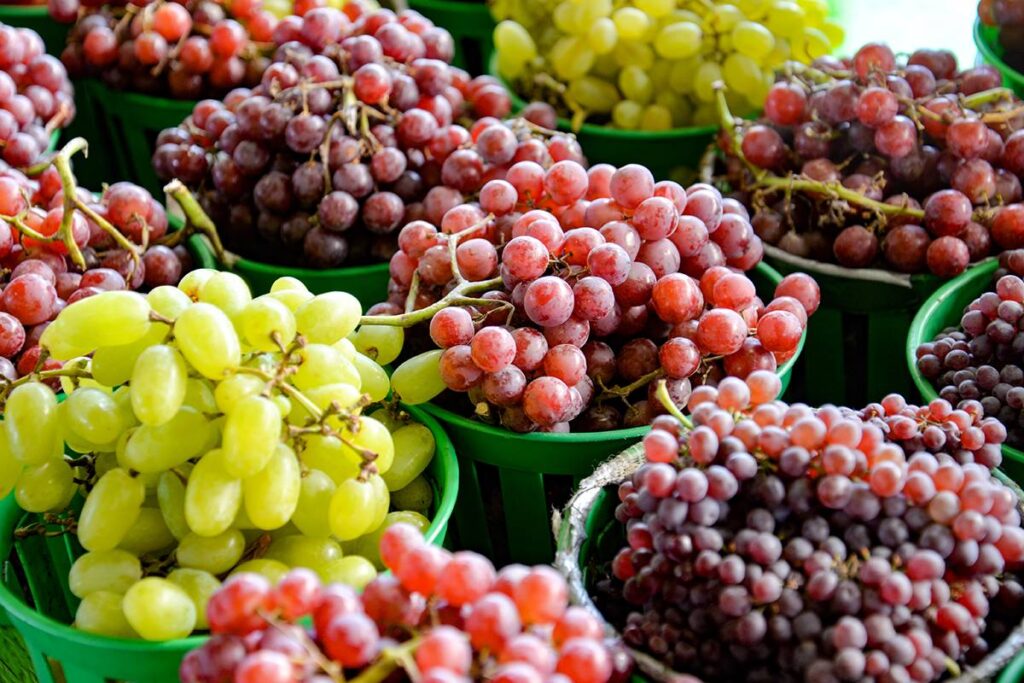



The Central Administration of Plant Quarantine of Egypt (CAPQ) reinforced its control system to prevent the export of table grapes from unauthorized plantations, an initiative that has been in place for three years and seeks to protect plant variety rights.
Ahead of the start of the 2026 export season, CAPQ director Mohammed Mansi and technical director Elsayed Abbas met in Cairo with Duncan Macintyre, president of The Breeders’ Alliance, to review the program's operations and analyze new measures to strengthen its implementation.
The organization represents more than 80 percent of the plant variety rights-protected table grape cultivars produced in Egypt today.
CAPQ is responsible for issuing export codes for table grape producers and packers. To obtain this authorization, exporters must prove that they have the plant variety rights to cultivate protected varieties.
The program includes inspections when there is suspicion of illegal plantations. In these cases, CAPQ personnel take samples that are analyzed in their DNA laboratory in Cairo and compared with a genetic database that includes the main commercial table grape varieties.
If it is detected that the fruit comes from an unauthorized plantation or packing house, the organization revokes the export code, preventing the product from accessing international markets.
Furthermore, starting in the 2026 season, authorities will tighten controls, automatically revoking export codes whenever companies deny inspectors access to perform the corresponding tests.
The president of the Egyptian Association for the Improvement of Horticultural Exports, Mohsen El Beltagy, supported the initiative and highlighted that both the incorporation of new varieties and the coding system have contributed to the growth of the country's table grape industry.

In the same vein, the president of the Egyptian Agricultural Export Council and member of Parliament, Abdel-Hamid Demerdash, pointed out that the program has generated confidence among breeders to introduce new plant variety rights-protected cultivars with better productive and commercial characteristics.
According to Demerdash, this has led to improvements in both yields and fruit quality, increasing exports of high-value grapes to international markets.
Duncan Macintyre valued the commitment of the Egyptian authorities to the protection of plant intellectual property and highlighted the importance of the country for genetic improvement programs.
"We are seeing a strong increase in the planting of new varieties, and we also value the work done to open new markets, which has boosted demand," he indicated.
The representative of The Breeders’ Alliance explained that the next challenge will be to address the illegal propagation of plants by some nurseries.
"We are working together with CAPQ to develop mechanisms that force nurseries to demonstrate that they have the necessary rights to propagate our plant material. If we manage to cut off the supply of illegal plants, we can considerably reduce the production of illegal fruit," he stated.
Macintyre added that Egypt's experience could serve as a model for other producing countries, including Peru, where the organization considers it viable to implement a similar system to protect breeders' rights and strengthen the competitiveness of the fruit industry.
*All images courtesy of The Breeders’ Alliance.
Related stories
Industry celebrates New Zealand’s latest amendment to the Plant Variety Rights Act
Sun World celebrates court ruling confirming plant variety protection for Midnight Beauty in Egypt
T&G wins another PVR legal battle in China resulting in destruction of illegal trees