FAOSTAT dataset seeks to defend women's key role in global agrifood systems
 Add Fresh Fruit Portal to Google
The Food and Agriculture Organization of the United Nations (FAO) has released FAOSTAT, its most comprehensive dataset to date on women in agrifood systems. The tool provides governments, researchers, development partners, and practitioners with powerful insights to better understand inequalities, monitor progress, and design more effective policies and investments that address the needs of women and men.
The FAOSTAT Gender in Agrifood Systems Domain was launched on Wednesday, June 17, in the context of the Commit to Grow Equality initiative and the International Year of the Woman Farmer 2026. The latter was proclaimed by the United Nations General Assembly to recognize the essential contributions of women across agrifood systems
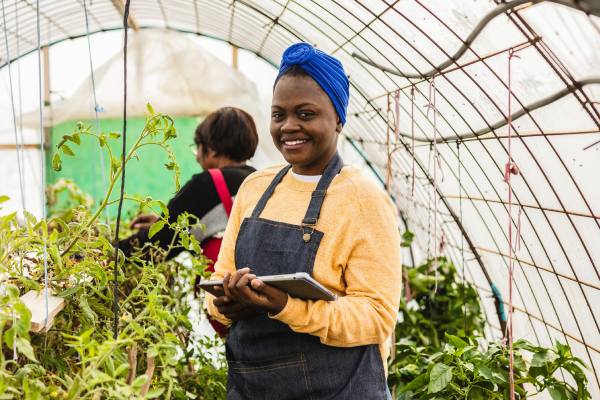
According to FAOSTAT, women play vital roles at every stage of agrifood systems, but they continue to face greater barriers in accessing land, resources, services, technologies, finance, and decision-making opportunities.
“Addressing these challenges effectively requires robust, comprehensive data spanning the multiple and often interlinked dimensions of discrepancies between women and men,” read the document.
"The FAOSTAT Gender in Agrifood Systems Domain gives us a powerful new foundation to make women's contributions visible, to track inequalities with precision, and to design policies that unlock the full potential of women across agrifood systems," said FAO Chief Economist Maximo Torero.

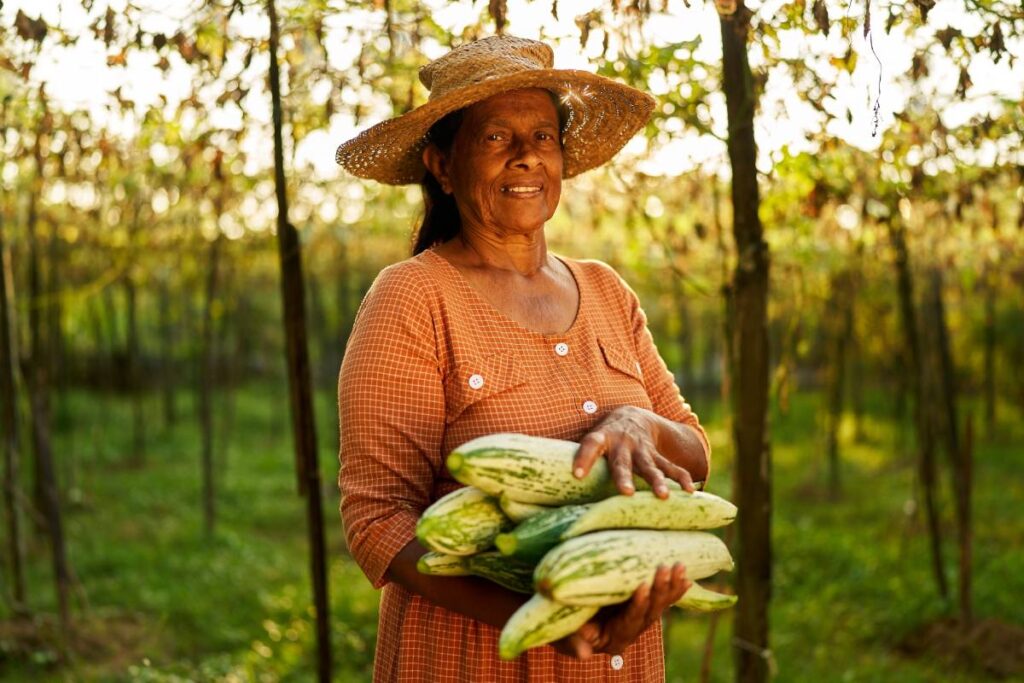
©FAO/Max Valencia
The new FAOSTAT Gender Domain directly addresses this challenge by bringing together harmonized, internationally comparable, sex-disaggregated data, enabling gaps between women and men to be tracked over time and allowing policymakers to target interventions where they are most needed.
"In short, this is not just a statistical platform: it is a tool for accountability and action," Torero added.
Women are at a disadvantage in the field, says FAOSTAT
The FAOSTAT is organized into five domains, with indicators spanning between 2000 and 2024.
Together, they provide a systemic view of differences between women and men, where outcomes in one area both shape and are shaped by constraints in others. For example, limited access to assets can reduce productivity and earnings, while social norms can restrict access to education and labor market participation.
Key findings across the five domains of FAOSTAT:
- Economic participation and incomes: Women account for 42 percent of the global agrifood systems workforce (1.37 billion people), a share that has largely remained unchanged since 2000. Despite their strong presence, women are more likely to work in informal or self-employed roles and to earn less than men.
- Assets and services: Women face persistent gaps in access to land, credit, water, and technology. In 85 percent of countries with available data, women have lower ownership or secure tenure rights to agricultural land than men. Women also have lower smartphone ownership rates, highlighting digital divides.
- Education: Gaps between women and men in basic education have narrowed and, in some cases, reversed. However, disparities persist at higher levels and in rural areas. Gains in education have not translated into equal labor market outcomes, showing that education alone is not enough.
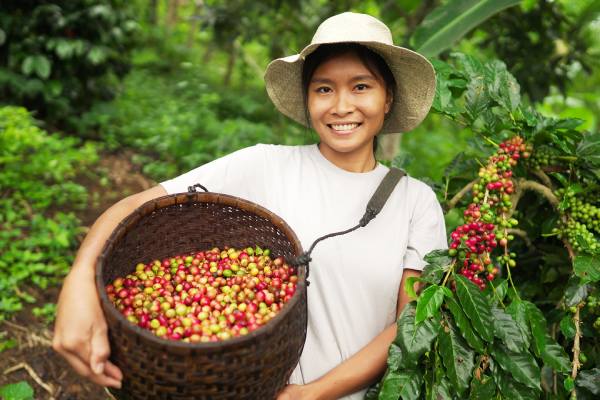
- Agency and social institutions: Discriminatory laws, social norms, and expectations continue to constrain women’s opportunities. According to OECD SIGI data, these constraints are lower in Europe and the Americas and higher in Africa and Asia. Across all countries measured, women spend more time on unpaid domestic work than men: between two and 20 percentage points more.
- Food security and nutrition: Women consistently face higher rates of moderate and severe food insecurity globally, with 63.4 million more women than men aged 15 or older experiencing food insecurity in 2024. The gap between women and men in this domain widened during the COVID-19 pandemic, especially in Latin America and the Caribbean.
*All images are referential.
Related stories
Women driving change in the blueberry industry
Women in the agricultural industry today: Perspectives from around the world