


Florida citrus sector assessing flooding damage; extensive cleanup underway
 Add Fresh Fruit Portal to Google
Florida citrus growers are racing against the clock. Severe rainfall and flash flooding across central and southern producing areas have placed renewed pressure on the state's signature crop, prompting state-of-emergency declarations in affected counties.
Industry sources confirmed to FreshFruitPortal.com that extensive work is underway to remove standing water from flooded groves to prevent tree root suffocation.
Growers in Indian River, Martin, and St. Lucie counties reported rainfall totals of 12 to 15 inches within approximately 48 hours, with one grower estimating as much as 17 inches in a single block, according to Florida Citrus Mutual CEO and Executive Vice President Matt Joyner.
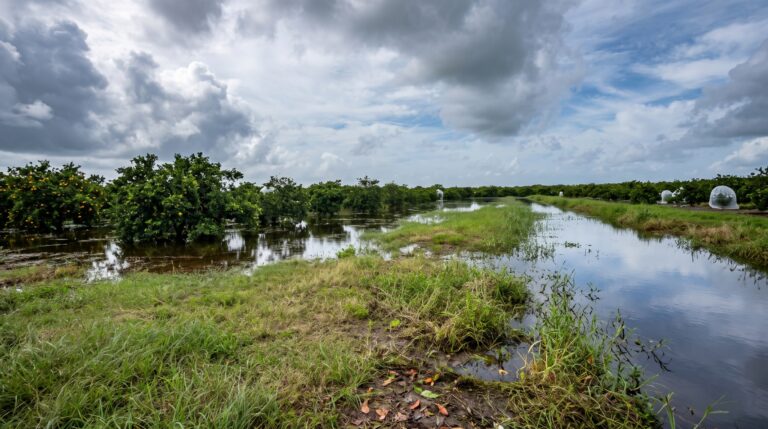
Photo courtesy of Kevin Koppelman | Image quality enhanced with AI
The impact, of course, varies. Citrus operations in Highlands and Hardee counties have managed excess water more effectively, while already saturated soils and limited drainage options have complicated recovery efforts along the East Coast.
“This is going to be a challenge on multiple fronts, and I'll quote one grower: sometimes they feel like they're just pumping water in circles,” Joyner said, describing the drainage challenges.
Kevin Koppelman, Florida Citrus Mutual president and manager at Heller Bros. Packing Company, also pointed to the difficulty of the cleanup efforts.
“The challenge really is there's just so much water, and in many areas there's just no obvious place to move it,” he explained.
Both industry representatives emphasized that it remains too early to establish reliable estimates of fruit losses and long-term damage.
Flooding brings tree health, fruit drop, and logistical concerns
Prolonged exposure to standing water can stress citrus trees and increase the risk of root damage and fungal pressure.
“We'll probably lose some trees, particularly a lot of the resets, the smaller trees that have been planted over the last few years; and there are real concerns about tree mortality as water sits on them,” Joyner said.
The industry leader said the ideal window for removing standing water is approximately 72 hours, although exceeding that period does not automatically mean trees will be lost. The longer the water remains, however, the bleaker the outlook.
Growers will also monitor fungal diseases and deploy preventive sprays once field conditions allow, Joyner said.
Koppelman anticipates some isolated fruit drop in the hardest-hit areas, along with potential fungal issues. He said growers in interior counties generally managed to remove water more efficiently than those along the East Coast.
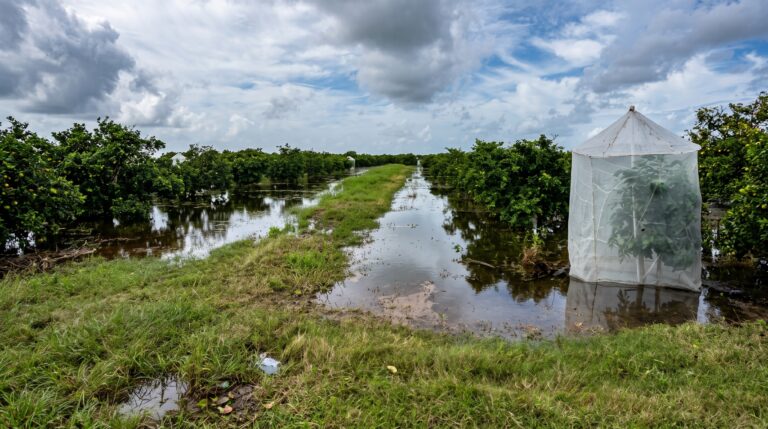
Photo courtesy of Kevin Koppelman | | Image quality enhanced with AI
Grapefruit, navels, and lemons in the fresh citrus segment are among the crops of greatest immediate concern because they were approaching or ready for harvest when the flooding occurred. Florida's East Coast production is particularly important for grapefruit supply, while oranges will also require close monitoring.
While the mutual does not currently anticipate significant quality problems, the immediate drainage challenges present a logistics issue: excess water is preventing crews and equipment from accessing the groves.
“You're going to need a week or so, at least once the water's off, to dry out before you can really get equipment and people in there to resume harvesting,” Joyner said.
The delay could increase fruit losses if trees begin dropping fruit before growers can reach the affected blocks. Cooler temperatures in the forecast could help trees retain some of their fruit, although Joyner said the situation remains uncertain.
Koppelman similarly expects operations to resume progressively as groves dry out. He estimated that, if no additional rainfall occurs, growers could be picking fruit and winding down cleanup efforts in about a week.
Help is on the way
The Florida Citrus Mutual is maintaining contact with state and federal officials as growers work through the immediate aftermath of the flooding.
Joyner said the organization has been sharing real-time information with Florida Agriculture Commissioner Wilton Simpson, who has been relaying the information to Governor Ron DeSantis.
“He's been very responsive and communicative to the industry," Joyner stressed.
The association is also working with the United States Department of Agriculture (USDA) to identify existing assistance programs that could support affected growers.
Among those under consideration are the Tree Assistance Program (TAP), which provides support for qualifying tree losses, and the Emergency Conservation Program (ECP).
Koppelman also confirmed ongoing communication with state officials and the USDA, and emphasized the importance of existing federal programs in helping growers recover.
The weather will not sour Florida’s output
For Florida citrus growers, the latest flooding adds to a series of challenges that have included hurricanes, freezes, and wind events, alongside the ongoing impact of citrus greening.
Koppelman described growers as particularly resilient, noting their continued commitment to maintaining operations amid repeated setbacks.
“They really do just kind of get knocked down and get back up,” he noted.
Despite the flooding, Florida Citrus Mutual's leadership maintains that the state is heading toward a promising citrus season.
Koppelmann said the crop had been showing positive signs before the rainfall and expects those improvements to continue once growers complete recovery operations.
“We were looking at a very good crop this year, and I still believe the crop is going to be very good,” he said.
Joyner also expressed confidence in the availability of Florida citrus for the fresh market, despite anticipated localized losses.
“We're very pleased with tree health, and quality continues to improve year over year. Even despite this weather event, we're still going to have a good harvest, and I don't anticipate quality is going to be impacted,” he said.
Koppelman reiterated the industry's commitment to maintaining supply and delivering the quality consumers expect.
“Florida citrus is—and I'll say this again and again—open for business, and we're looking forward to getting another good crop to consumers,” the executive concluded.
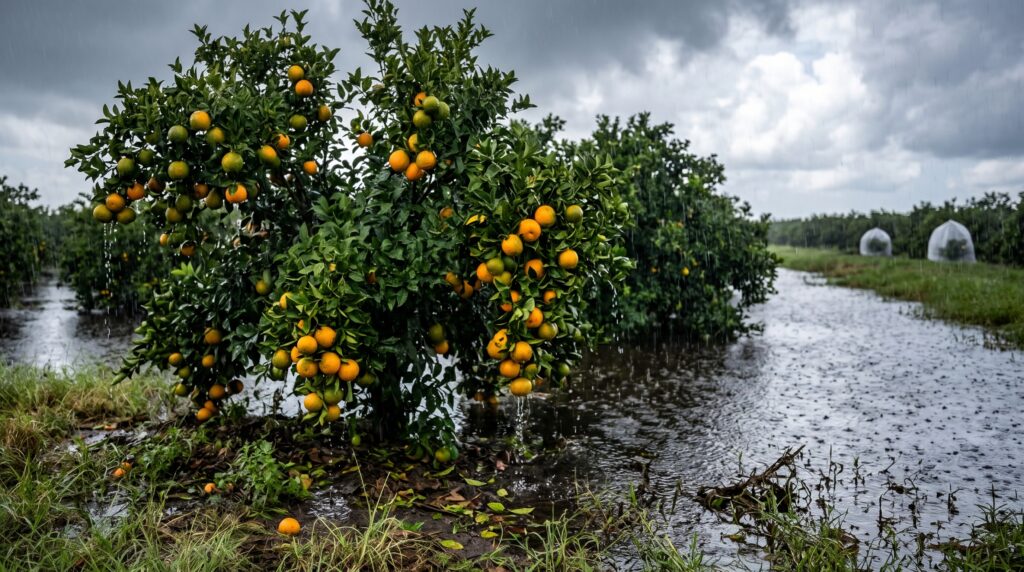
*Main photo generated with AI.
Related stories
A light of hope: Florida citrus demand remains steady despite historical production decline
South Africa estimates citrus exports down 5 percent due to flood damage