The Chilean hazelnut boom
 Add Fresh Fruit Portal to Google
Written and reported by Macarena Bravo | Lee esta noticia en Español
The driver behind Chile’s most recent hazelnut expansion has a name: Ferrero.
The Italian company behind sweet-tooth staples like Ferrero Rocher and Nutella is investing 80 million euros (around $94 million) to expand and strengthen its Chilean operation. The financial injection is set to consolidate the Latin American country’s position as one of the firm’s main hazelnut supply hubs.
Executed by Ferrero’s local subsidiary, AgriChile, the project entails the construction of a new processing plant in Cunco, a southern region the company says has the greatest growth potential for this crop in the country.
“La Araucanía is an area where hazelnut is booming,” AgriChile CEO Camillo Scocco told local news outlet Diario Financiero (DF). “Coupled with plantations in Los Ríos and Los Lagos [regions], the construction of a shelling plant is justified”.
He added that Ferrero’s investment comes at a time of great expansion for the hazelnut industry in Southern Chile, driven by high international prices, favorable climatic conditions, and growing demand for premium-quality fruit. According to Scocco, his firm exports $600 million in hazelnuts from Chilean ports every year.
“Chile is a young adult. It emerged from a splendid youth and has now entered a phase of full maturity, but still with great vigor and so much ahead of it,” he told DF.
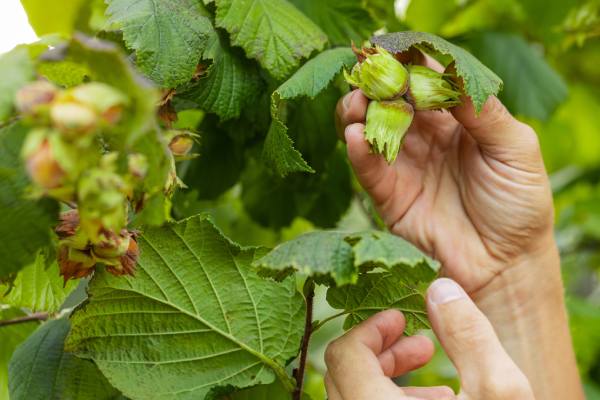
However, before hazelnut fever revolutionizes Chile’s agricultural landscape, local producers and specialists agree that the sector's expansion must come with the adoption of higher technical and quality standards.
Cristián Parra, manager at the local ag-investment firm Inversiones Agrícolas Jeleila, told FreshFruitPortal.com that Ferrero's investment is not surprising, given Chile's performance in the category in recent years.
“The only place that has worked well for them—where there has been quality, traceability, and transparency in the markets—has been Chile. They have also had good results in Oregon, but they have not found the elements they are looking for in other countries,” he said.
Ferrero’s bet on the country is good news for Chile and its position on the global stage as a strategic hazelnut supplier for the chocolate industry. However, Parra warns that the booming business could lead to a chaotic expansion.
“Just because Ferrero is betting on Chile doesn't mean we're going to go crazy planting orchards,” he emphasized. “We already saw what happened with other crops when there was oversupply.”
For its part, AgriChile is progressively raising its reception and quality standards, so the business has become increasingly selective.
“Ferrero pays you well, fulfills its commitments, but wants the best fruit,” Parra stressed. “That means traceability, certifications, environmental management, and quality. It is not going to be a business for everyone.”
A profitable, but highly technical crop
At the beginning, one of the industry’s mistakes was thinking that the European hazelnut was a simple crop with low requirements. They were wrong.
“Many of us thought it was planting and harvesting with little management, but we realized that it is an extremely complex fruit,” Parra explained.
The executive said that producing export-quality hazelnuts requires advanced knowledge of botany, plant physiology, nutrition, irrigation, climate management, pest and disease management, and industrial processes.
“You can produce many kilos, but if you dry the fruit in the wrong way or don't store it correctly, you lose everything,” he said. “The rejection there is immediate.”

Fortunately, Parra says the industry has surpassed this stage and is now moving toward maturity, marked by much stricter controls. The main requirements include certifications such as GlobalG.A.P, specialized drying systems, internal laboratories, and increasingly rigorous safety protocols.
“Today, fruit contaminated with biological material is no longer accepted. Buyers are also very strict about fungi and internal humidity problems,” he said.
Historical prices boost grower interest
Weather and sanitary problems in Türkiye, the world's leading producer, and in other European countries, such as Italy and Spain, have led to exceptionally high prices in recent years, further driving the Chilean hazelnut boom.
According to Parra, Tonda di Giffoni, one of the most valued hazelnut varieties in the agro-industry, can reach prices of around $6.61 per kilo, while Barcelona sits at around $5.07 per kilo. Both figures are well above the historical averages, which range between $2.98 and $3.81 per kilo.
The expert was adamant that growers should not believe these prices will last forever, especially because the crop is highly dependent on weather, and it already shows.
Frosts recorded between June and July last year caused production drops of between 30 percent and 50 percent in some fields in the south of the country.
La Araucanía accelerates its expansion
Alejandro De La Fuente, CEO of the producing company Fruticultura Río Pichunco, told FreshFruitPortal.com that the rapid expansion has put the industry to the test, making AgriChile's investment widely anticipated.
“The region is growing very strongly because it has climate, available land, and lower costs. Today, there are already about 10 thousand planted hectares, and the reception capacity is collapsing,” he stated.
According to De La Fuente, many producers have had to store large volumes of the fruit for weeks due to a lack of processing capacity. Producers can wait up to four weeks for a slot at a plant, prompting more investment in drying, warehouses, and specialized storage. In this context, Ferrero’s Cunco plant is expected to enable more agile logistics and support the sector’s strong growth.
“If Ferrero had not made this investment, we were headed for collapse,” he warned. “The industry is growing too fast.”
Agricultural reconversion and new challenges
The dynamic hazelnut industry is also driving agricultural land reconversion in other areas of the country, especially in sectors where traditional activities such as cereals, livestock, or sugar beet have lost profitability.
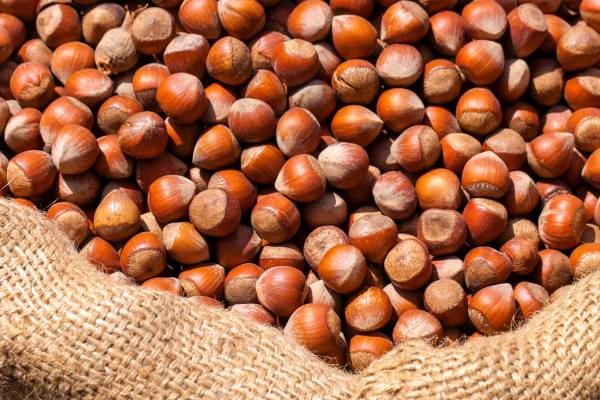
“Many producers are seeing hazelnut as an attractive long-term alternative,” explained De La Fuente.
Constanza Reyes, deputy manager at nursery AgroReyes, said that hazelnut is currently a robust alternative to other crops. Her company has seen quite a number of acres in development, managed in a very technical and innovative way.
According to the executive, there are currently over 160,500 acres planted, projected to reach nearly 200,000 acres by 2030. That, Reyes said, can be translated into 200,000 tons of fruit, making Chile the second-largest hazelnut producer in the world.
“Today, profitability is between 24 percent and 25 percent, which is very attractive, especially for foreign investment funds. That has led us to achieve the high planting rates that we reach year after year,” she added.
*All images are referential.
Related stories
Chilean cherry sector urges caution as growers weigh switch to hazelnuts
Chilean cherry industry adapts its strategy to serve an increasingly demanding Chinese consumer