

Each week, the series ‘Agronometrics In Charts’ examines a different horticultural commodity, focusing on a specific origin or topic and visualizing the trade market factors driving change. Check out our entire archive.
By Diego Bustos | Rupestris Consulting
The water situation in northern Chile’s primary early-season table grape producing regions, Atacama and Coquimbo, has changed significantly. As of August 17, the Chilean Water Directorate (DGA) reports that the Recoleta, Cogotí, Culimo, and Corrales reservoirs are at 100 percent capacity and spilling.
El Bato is at 89 percent, La Paloma at 36 percent, Puclaro at 27 percent, and La Laguna at 25 percent. In Atacama, Santa Juana is at 71 percent and Lautaro at 45 percent. This is complemented by an exceptional snowpack situation: the Elqui, Limarí, and Choapa watersheds are showing significant surpluses in snow accumulation and snow water equivalent compared with their historical averages.
For the Chilean grape sector, this is not simply good news for water availability. It could represent a significant change in the production and commercial potential of the coming seasons.
After several years of water restrictions, greater irrigation security allows us to think about vines with better physiological status, a greater capacity to sustain crop load, and potentially larger berries, greater uniformity, and fruit with better condition and quality attributes.
In table grapes, where berry size, firmness, condition, and postharvest life directly affect commercial value, this availability could become an important competitive advantage.
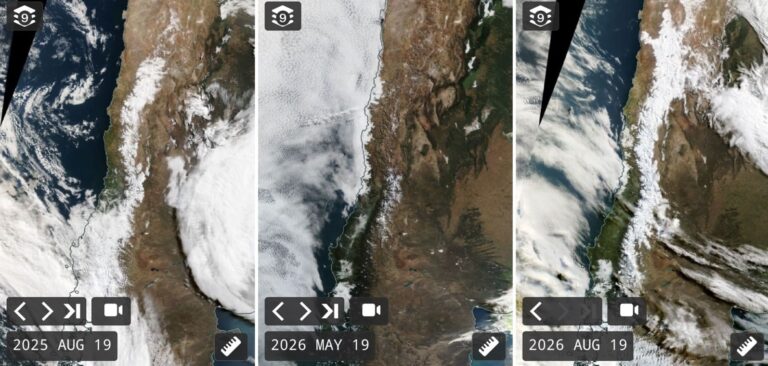
Snow in the Andes. Left: August 19th, 2025; Middle: May 19th, 2026; Right: August 19th, 2026. Source: NASA
Having water available does not mean growers should use it without a strategy.
The challenge will be to turn water availability into high-value fruit, and irrigation management will be critical to achieving this. The opportunity lies in keeping the vine active longer, properly supporting each phenological stage, and preventing water stress from ultimately limiting berry size or fruit condition.
Irrigation management will still need to be precise, using variables such as soil moisture, plant water status, and atmospheric demand to determine how much and when to irrigate.
And this is where the main challenge for the coming seasons emerges: water availability may increase production potential, but a wetter spring could also increase disease pressure.
The DGA reports that weather stations across the northern macrozone are showing precipitation surpluses compared with historical averages. Under this scenario, preventive management of fruit rots, particularly Botrytis in table grapes, will be critical. A season with greater water availability may allow for excellent berry size, but if we can't protect the fruit, that potential could ultimately be lost in terms of quality, condition, and postharvest performance.
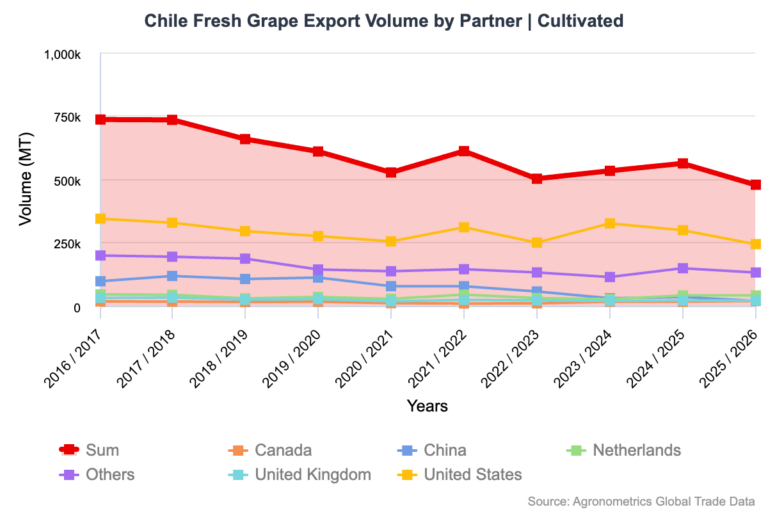 Source: USDA Market News via Agronometrics.
If this favorable water situation continues, Atacama and Coquimbo could enter the coming seasons with greater potential to produce larger, more uniform fruit with better condition. This is particularly true in valleys where water availability had been one of the main limiting factors, one of the reasons for the decreasing export volume shown in the first graph.
If managed properly, this would contribute to increasing the fruit supply from weeks 48 to 12.
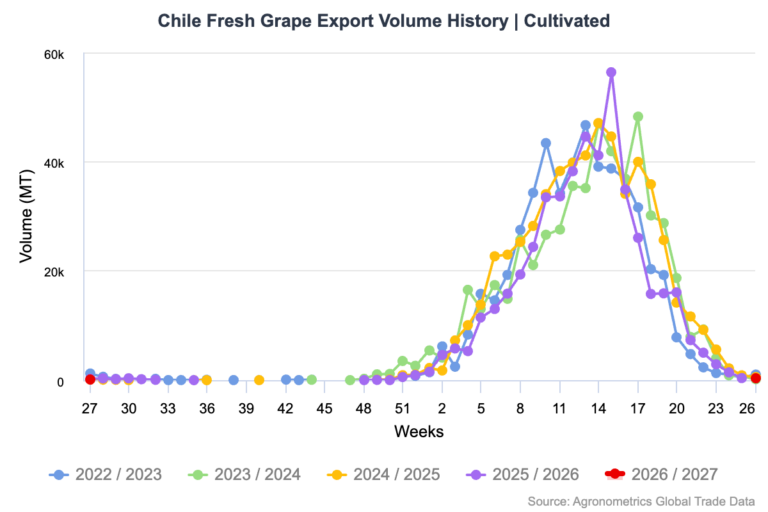 Source: USDA Market News via Agronometrics.
For the industry, this could be the right time to look at Chile’s Northern regions not only from the perspective of how much they can produce, but also what quality of fruit they can deliver to international markets.
Water availability, proper physiological management, balanced nutrition, and a preventive disease-management strategy can create the conditions needed to recover part of the region’s production and commercial potential.
The coming seasons could be very interesting for Chilean table grapes. Now the challenge is to turn this water opportunity into the berry size, quality, and condition that the market is willing to pay for.
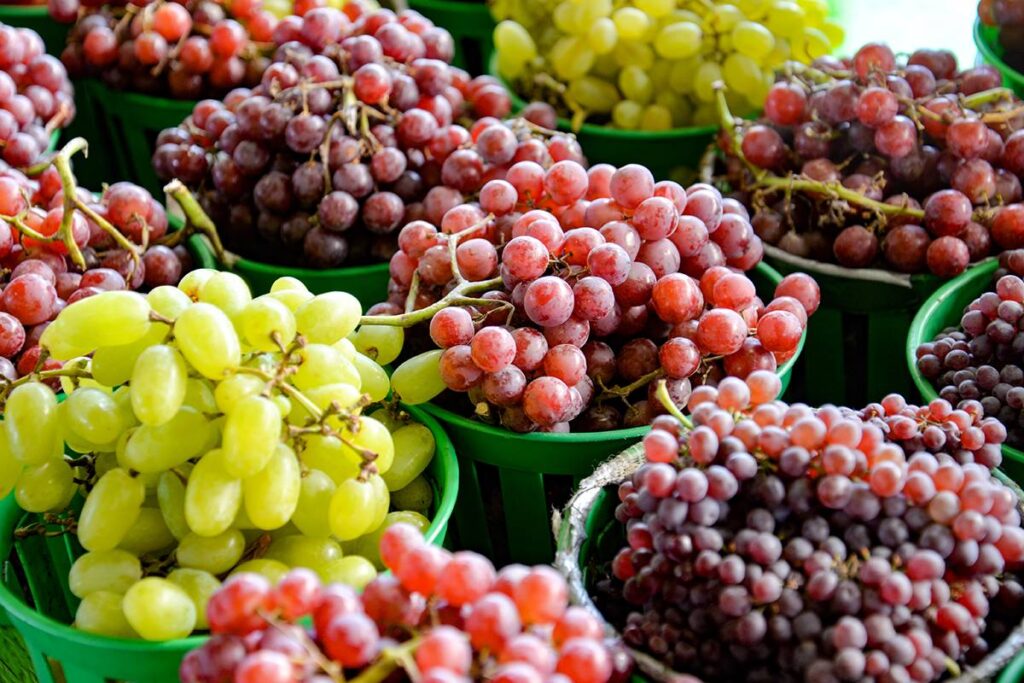
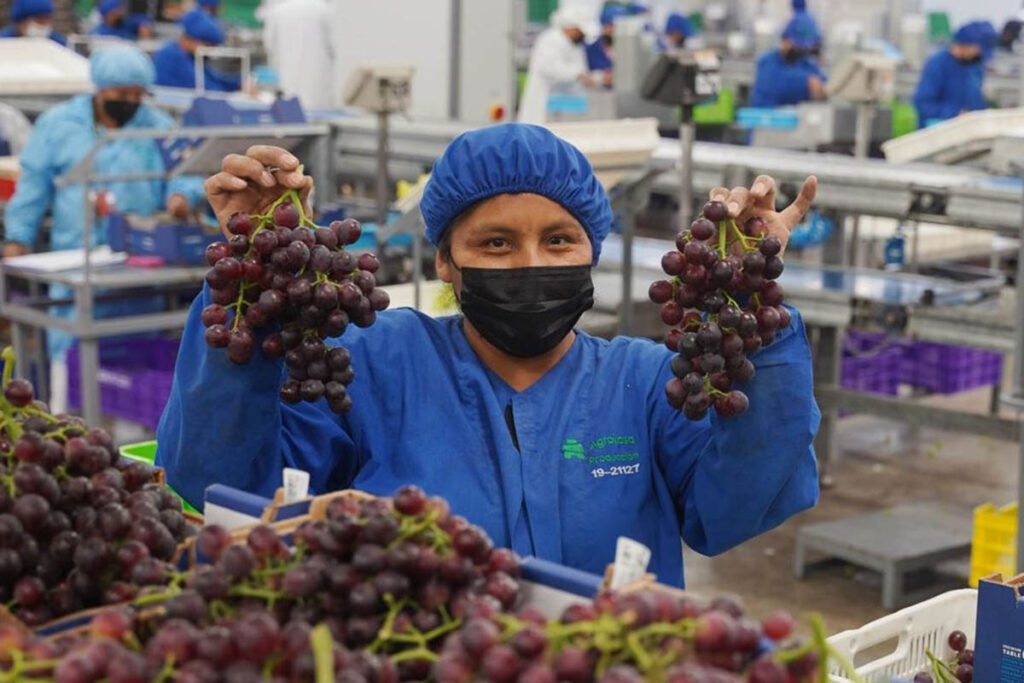
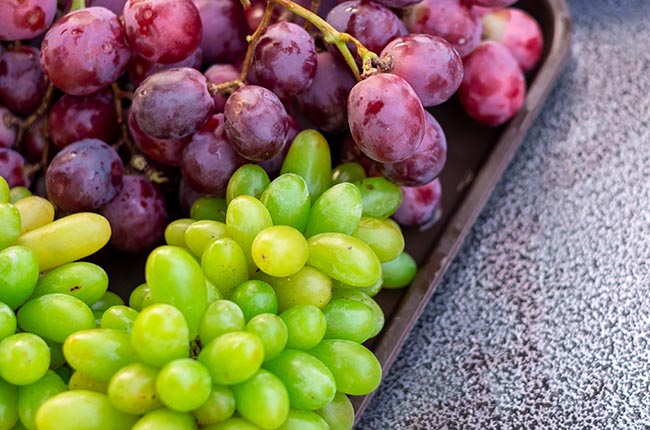
*Main image is referential | Graphs courtesy of Agronometrics.
Related stories
Maersk’s new logistics protocol to streamline entry of Chilean grapes into the US
RIOblanco relies on flavor edge as Chilean grape volumes ease
Chilean grape industry eyes strategic shift to secure competitiveness