


How plant carbohydrates can improve human health
 Add Fresh Fruit Portal to Google
Researchers from horticulture, medicine, and nutrition across the University of Florida met to discuss how dietary fiber and carbohydrate diversity could help prevent and treat chronic disease.
Hosted by the UF/IFAS Designer Glycans Lab, the workshop, Personalized Carbohydrates for Human Nutrition, raised questions about how plant-based carbohydrates could help address chronic diseases, the leading cause of illness, disability, and death in the United States. These conditions also account for approximately 90 percent of the country’s $4.9 trillion in annual health care expenditures, “a massive economic burden,” according to the National Academy of Medicine.
Americans consume plenty of carbohydrates, sugars, fibers, and starches that sustain energy in the body, but not necessarily the kinds that best support their health.
While refined starches and sugars are common in many diets, people still widely underconsume dietary fiber. Led by Catalin Voiniciuc, an Associate Professor in the Horticultural Sciences Department, the workshop aims to bring those within multidisciplinary fields together to identify research gaps and opportunities to address this issue.
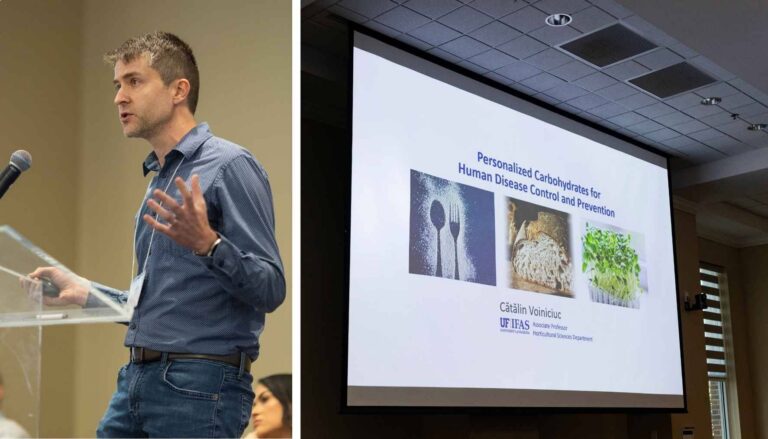
Image by UF/IFAS
Why carbohydrate research matters
Carbohydrates are often grouped into a single nutritional category, but they include compounds with vastly different functions. Understanding the structural diversity of plant carbohydrates could lead to the development of healthier foods and personalized dietary recommendations from doctors and other health practitioners.
Data presented during the workshop showed how specific dietary fibers can shape gut microbiome composition, support beneficial microbial activity, and help maintain the intestinal mucus barrier that protects the digestive tract.
Researchers are still working to fully understand how different carbohydrate structures directly influence health. Even varieties of the same crop can contain distinct fiber compositions and affect how the body processes them.
Participants identified a need to link these differences to measurable health outcomes, improve nutrition during early-life development, and address the needs of underserved populations. Early interventions through diet could help prevent or manage metabolic conditions like obesity and diabetes.
Connecting with the Food is Medicine movement
The workshop coincides with growing national attention to nutrition as a strategy to prevent and manage chronic disease. The federal Make America Healthy Again mandate has renewed nationwide discussion of diet-related conditions.

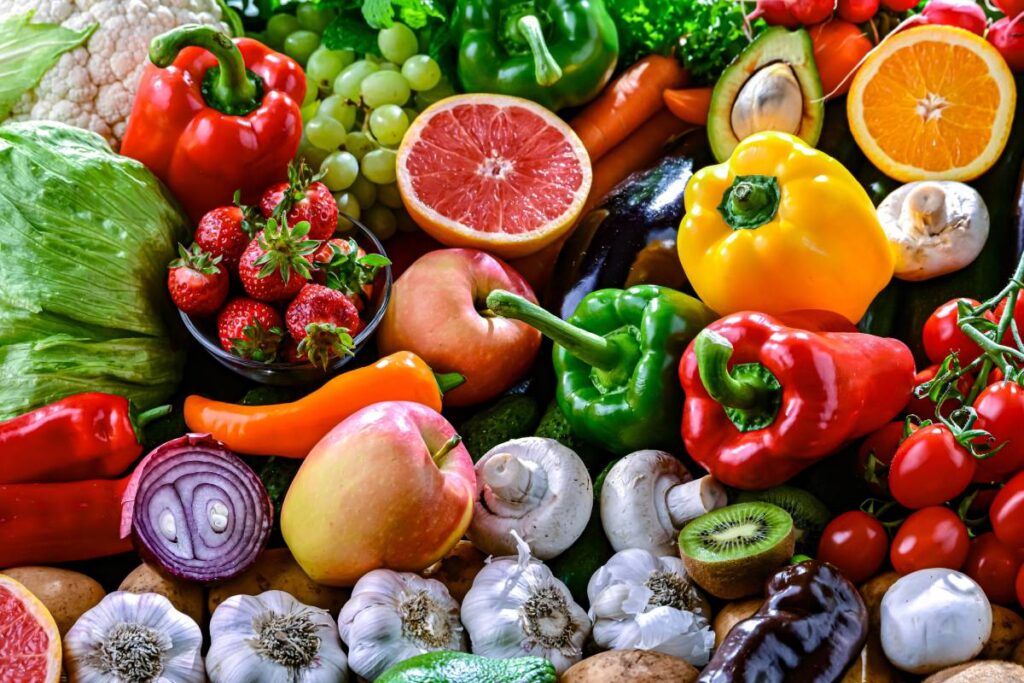
Image via Shutterstock
That approach is reflected in the PLANTMED project funded through the UF/IFAS Food is Medicine initiative. Wendy Dahl, a Professor in the Food Science and Human Nutrition Department, and Wenjun Xie, an Assistant Professor in the Department of Medicinal Chemistry, are working alongside Voiniciuc.
For horticultural scientists, this creates opportunities to contribute beyond traditional crop improvement by investigating how plant composition influences nutritional quality. Translating those discoveries into dietary recommendations requires collaboration among the participants represented at the workshop, those working across the health industry and directly with vulnerable groups in the community.
Leveraging more than a decade of research experience on plant cell wall polysaccharides, Voiniciuc’s lab is exploring how synthetic biology can develop carbohydrates with specific nutritional properties. The structure of dietary fiber influences how gut bacteria break it down.
Engineering organisms like yeast to produce different plant-type carbohydrates helps the lab investigate which structures promote beneficial responses that support areas such as intestinal health, inflammatory regulation, and metabolism.
The lab is also studying fibers found in seeds and microgreens to identify plant varieties with nutritional characteristics that are desirable. Their work could help create new ingredients and improve existing crops to better meet dietary needs.
Florida’s role in public health
Florida is specifically positioned, due to its agricultural production and population demographics, to serve as an example for an aging population nationwide.
The Sunshine State is a leading producer of fruits and vegetables and has a strong established agricultural industry supported by UF/IFAS research. It ranks among the top five states with a population of residents age 65 and older, approximately 23 percent of the state’s population, according to the United Health Foundation and the US Census Bureau.
Because of this combination of agricultural resources and demographics, the Florida case can help experts determine where improved food and nutrition interventions might best address challenges and serve as a guide to inform approaches elsewhere in the country.

Image via Shutterstock
“Ideally, we’d be eating plant-based diets and getting all sorts of diverse fibers, but that’s simply not happening when we have our population, at least here in the US, consuming 50 to 60 percent of their diet as ultra-processed foods, most of which are devoid of fiber," said Wendy Dahl at the Past, Present and Future of Carbohydrates for Human Nutrition panel. "One of the things I think we need in this country is mandatory fiber fortification. Whether it be developed glycans or plant-sourced fiber sources, that would have a huge impact, I think, on overall health.”
Moving forward
For participants with differing perspectives on how to approach food and health, the event established shared research priorities.
Discussions centered on developing fiber-enriched foods and alternative ingredients based on three key criteria: affordability, cultural acceptability, and scalability. As nutrition moves towards center stage in national discussions about chronic disease, understanding and potentially improving the carbohydrates present in foods is critical to making change.
“We’re starting to hear about some of the ongoing challenges. We have new techniques to characterize carbohydrate structures, the microbiome, and human health outcomes, and many of us have health-tracking devices," Voiniciuc added. "There’s a lot of information available. But what is still missing? What do we need to actually be able to make informed decisions about carbohydrates and human health?”
By Eva Sailly. This post was originally published in the UF/IFAS blog on November 9, 2026.
Related stories
Research links avocado and mango consumption to better vascular health
The science behind kiwifruit’s ability to improve your sleep and mood