



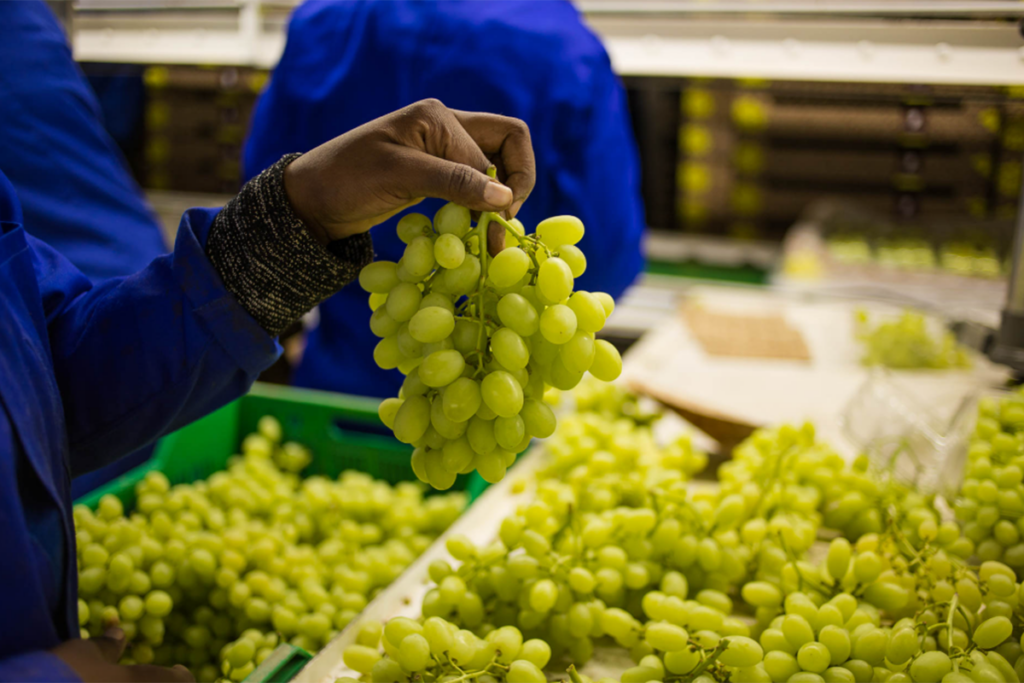
So far, the South African table grape season has been marked by a slower export pace, driven by increased inspections, adverse weather at the Port of Cape Town, and strong competition from the Southern Hemisphere.
The South African Table Grape Industry (SATI) reported that, as of week 48, the country had inspected five million 4.5kg boxes. This is 15 percent more than the same period last year.
To make matters worse, this figure is multiple times higher than the number of boxes that have actually been shipped, which amounts to only 1.02 million, representing less than half of the volume exported by this time last year.
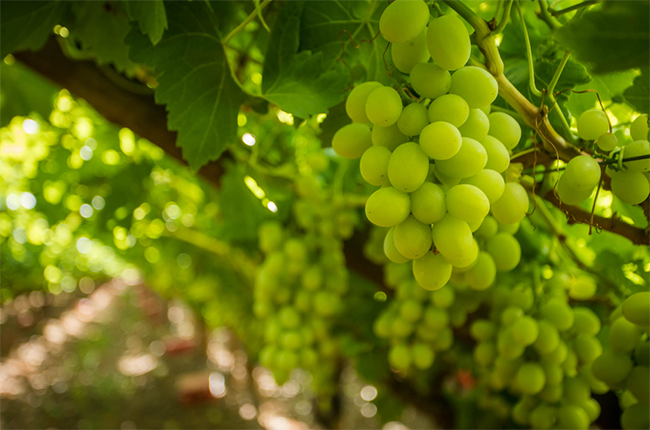
This stark contrast in the South African table grape season is the direct result of lengthy delays caused by wind and operational failures at the main port terminal. In November, the port of Cape Town accumulated 414 hours of wind-related stoppages, the highest number in five years, the entity reported.
The port delays have generated an accumulation of 3.98 million boxes between inspected fruit and fruit actually shipped, SATI noted. Part of the stock remains in cold storage or on vessels that have not yet sailed, while South African table grape associations are doubling their efforts to accelerate operations.
Nationally, the South African table grape harvest projection for the season remains at 79.4 million boxes, which is slightly higher than the previous season. The most exported varieties in week 48 were Early Sweet®, Prime, and Starlight.
Table grapes are currently being harvested and packed in the Northern Provinces, which have accumulated 2.25 million boxes (20 percent over the same period in 2024), with grapes in good condition despite isolated rainfall.
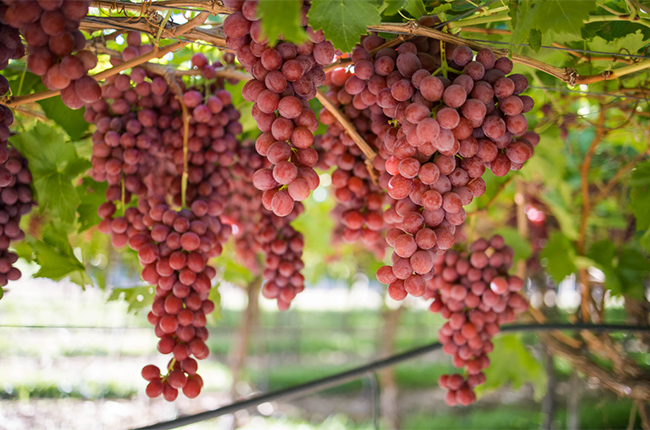
Meanwhile, Orange River registers 2.76 million (over 11 percent versus last season), showing good progress in sizing, color, and quality. Olifants River, Berg River, and Hex River are expected to start higher volumes between weeks 49 and 52, with favorable climatic conditions and stable estimates.
SATI warns that regional supply continues to increase pressure on the international table grape market.
Until week 48, Namibia has packed 3.7 million boxes (down 11 percent versus last year), while Peru maintains stable shipments with 48.4 million boxes and an annual estimate of 156 million (up four percent compared to 2024). Chile started with 15,234 boxes and projects 115 million, 6.9 percent less than last year.
Charl du Bois, general manager of distributor, marketer, and producer Capespan, indicated that the commercial window for Southern Hemisphere table grapes is increasingly competitive, as many of South Africa's peak export weeks—from week 49 to week 8—coincide with the peaks of Peru (at the start of the season) and Chile (at the end).
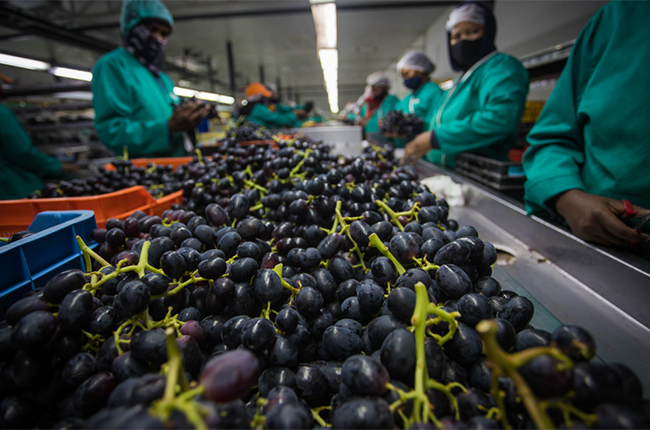
Furthermore, the volume of grapes from Southern Hemisphere producing countries has increased over the last three years.
"The varietal composition of South Africa, Peru, and Chile has also changed. For example, in the last 10 years, the share of new, higher-yielding varieties in Chile's table grape export basket has risen from eight percent to 72 percent," he said in statements to SATI.
He also indicated that Northern Hemisphere producing countries had a longer production window, and large volumes are projected from most Southern Hemisphere producing countries. The start of the season in Namibia and South Africa has been slightly delayed due to logistical problems, but both countries anticipate a favorable season in terms of harvest size and quality.
"It is most likely that there will be no grape shortage during the Southern Hemisphere season before February 2026," he said, stressing that it is key for producers and exporters to focus on quality and supply consistency.
A predictive model developed by Transnova warns that, faced with severe delays in Cape Town during weeks 50 and 51, industries like the Orange River should divert most of their shipments to the port of Coega to avoid multimillion-dollar losses.
In high-impact scenarios, failing to take alternative measures could result in up to $6.7 million in claims losses, in addition to additional storage costs.
Related stories
SATI reports strong outlook for 2025-26 South African table grape exports
South Africa projects stable table grape harvest at 79.4M cartons